Tutorial

GCSE History: Reactions to, and the end of, US involvement in Vietnam, 1964–75

This deck explores the domestic reactions to the Vietnam War, the peace process, and the reasons for US failure. It covers the growth of opposition, key events like the My Lai Massacre and Kent State shootings, continued support for the war, and the human and economic costs for the USA.
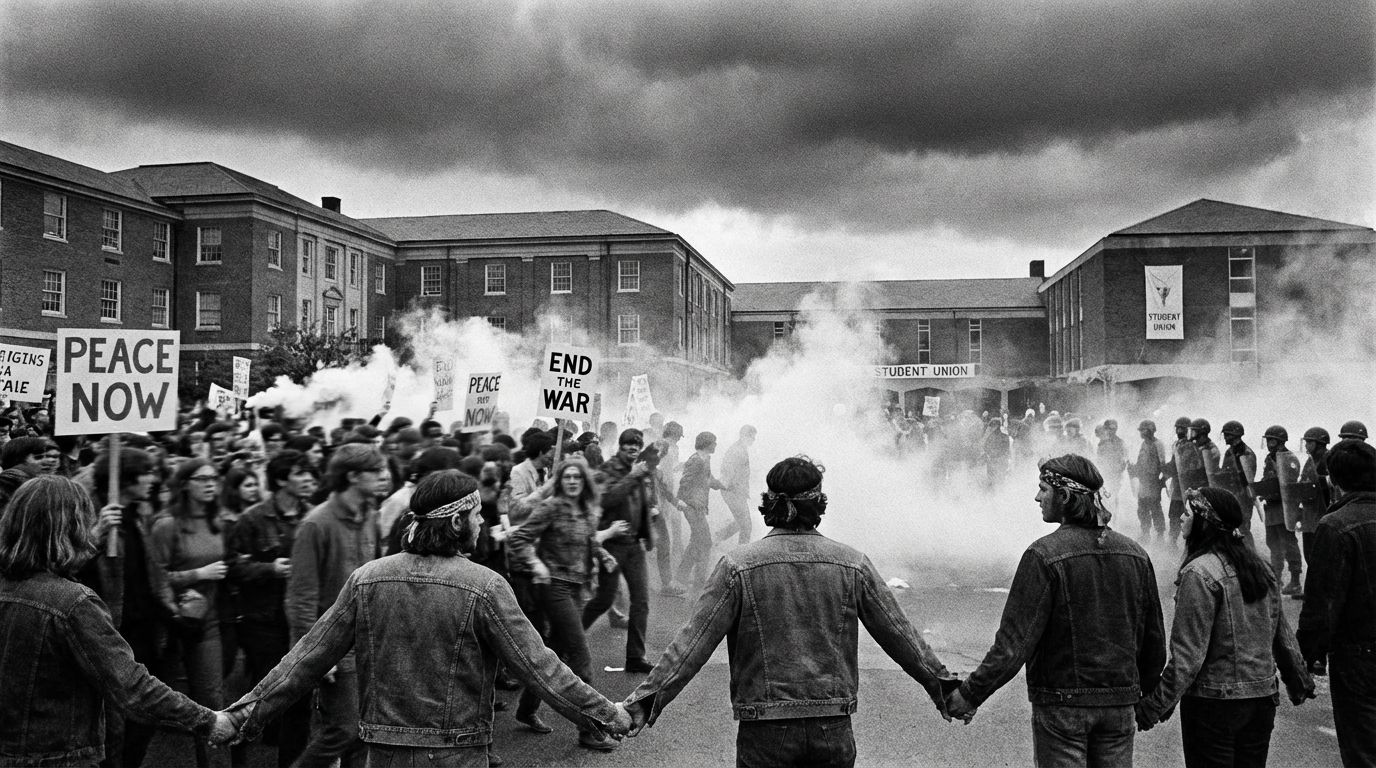
A dramatic, wide-angle photograph of a turbulent scene on an American university campus in the late 1960s, with a diverse crowd of young student protestors facing an unseen force, amidst a haze of smoke or tear gas under a dramatic, overcast sky, conveying a sense of societal division and conflict.

Management & Tools

Deck Contents

37 Cards
Lesson#1
In this deck, we'll explore the final, turbulent years of US involvement in Vietnam. We will examine why so many Americans turned against the war, looking at the student movement, media coverage, and shocking events like the My Lai Massacre. We'll also see why many others, the so-called 'silent majority', continued to support it. Finally, we'll analyse the peace process and the complex reasons for America's ultimate failure in Vietnam.
Lesson#2
Opposition to the Vietnam War grew steadily throughout the 1960s. One major source of opposition was the student movement. University campuses became centres of protest, with organisations like Students for a Democratic Society, or SDS, organising rallies and demonstrations. They argued the war was immoral and unjust.
Quiz#3
What was a major student organisation that opposed the Vietnam War, known by the initials SDS?

Students for a Democratic Society

Lesson#4
Another key reason for growing opposition was media coverage. For the first time, television brought the brutal reality of combat into American homes, leading to the conflict being called the 'living-room war'. Images of civilian casualties and wounded soldiers contradicted the government's optimistic reports, creating a 'credibility gap' and making people question the war.
Quiz#5
What phrase describes the impact of television bringing the Vietnam War into American homes?

living-room war

Lesson#6
The draft system, which required young men to serve in the military, was also deeply unpopular. It was seen as unfair because wealthy, often white, students could get 'deferments' to avoid service by staying in college. This meant that a disproportionate number of soldiers were from poorer and minority backgrounds, which fuelled anger and protest.

Login to View Content

Create a free account or log in to see all 37 cards and start studying this deck.

Learn GCSE History: Reactions to, and the end of, US involvement in Vietnam, 1964–75 differently

Auracle is an audio-first learning platform built for busy people. Memorize anything without looking at a screen.

Hands-Free Learning

Listen, interact, and review cards entirely through audio. Perfect for commuting, walking, or at the gym.

Spaced Repetition

Auracle uses a scientific algorithm to schedule your reviews at the optimal time, ensuring you never forget what you learn.

Learn how it works

Ready to start the GCSE History: Reactions to, and the end of, US involvement in Vietnam, 1964–75 audio deck?