Tutorial

AQA GCSE Combined Science: Magnetism and Electromagnetism

This deck covers the key concepts of magnetism and electromagnetism for the AQA Combined Science: Trilogy specification. It includes the poles of a magnet, magnetic fields, how to plot a magnetic field, the magnetic effect of a current, electromagnets (solenoids), and a qualitative description of the motor effect.
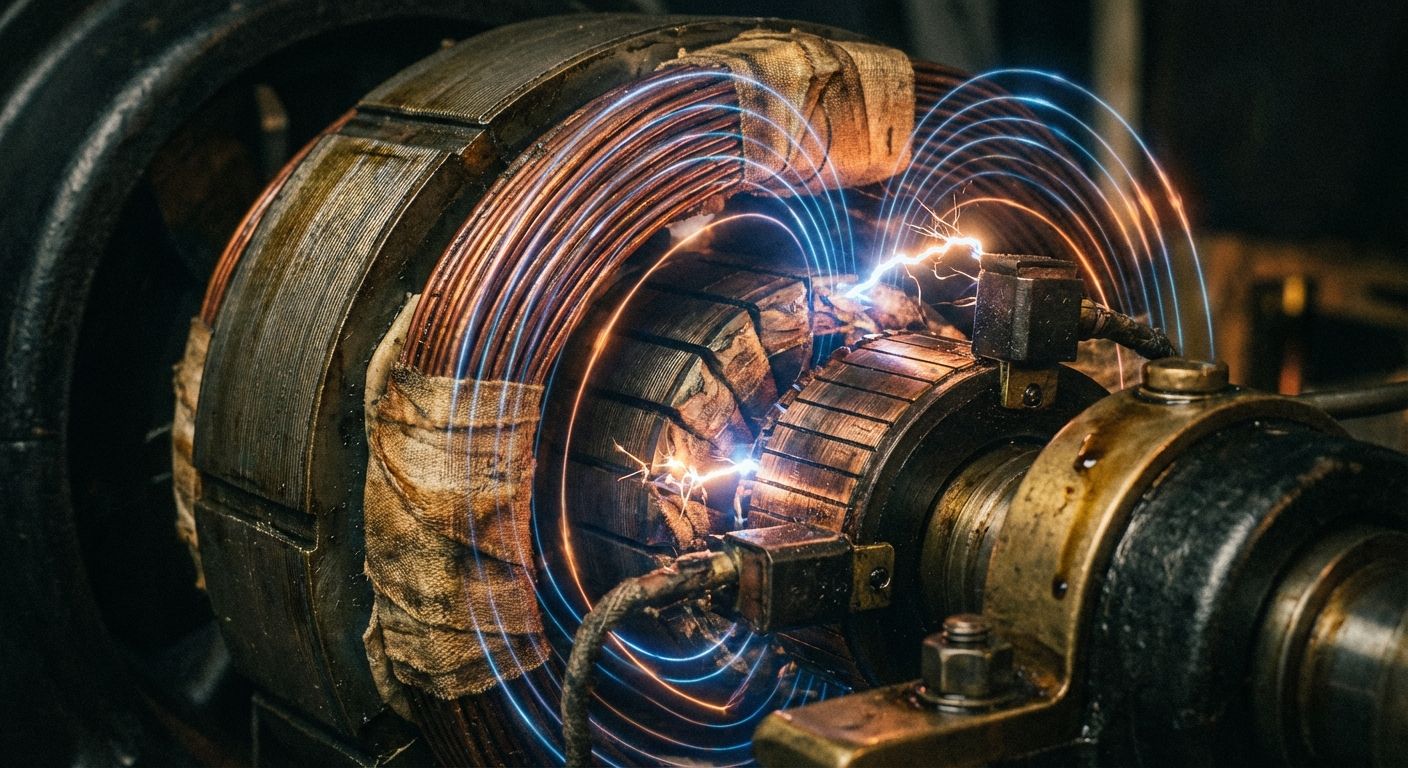
A close-up shot of the inner workings of a vintage dynamo, focusing on the copper coils and the magnetic field lines, with sparks visible in the gaps. The image is dimly lit, emphasizing the contrast between the glowing sparks and the dark machinery.

Management & Tools

Deck Contents

21 Cards
Lesson#1
In this deck, we'll explore the fascinating world of magnetism and electromagnetism. We'll start with permanent magnets, like the ones you might find on a fridge, and understand their poles and magnetic fields. Then, we'll discover the deep connection between electricity and magnetism, learning how to create our own magnets, called electromagnets, and how to make them stronger. Finally, we'll look at the motor effect, which is the fundamental principle that makes electric motors work.
Lesson#2
Let's begin with permanent magnets. Every magnet has two ends, called poles. One is the north pole, and the other is the south pole. These poles exert forces on each other. The rule is very simple: opposite poles attract, and like poles repel. So, a north pole will attract a south pole, but it will push away another north pole.
Quiz#3
What are the two types of poles on a permanent magnet?

north and south

Quiz#4
What happens when two like magnetic poles, such as two north poles, are brought close together?

they repel

Quiz#5
What happens when two opposite magnetic poles, such as a north and a south pole, are brought close together?

they attract

Lesson#6
A magnet creates an invisible area of influence around it called a magnetic field. This is the region where other magnets or magnetic materials will experience a force. We can represent this field using lines called magnetic field lines. For a simple bar magnet, these lines emerge from the north pole, curve around the outside, and enter the south pole. The closer the lines are together, the stronger the magnetic field is in that region.

Login to View Content

Create a free account or log in to see all 21 cards and start studying this deck.

Learn AQA GCSE Combined Science: Magnetism and Electromagnetism differently

Auracle is an audio-first learning platform built for busy people. Memorize anything without looking at a screen.

Hands-Free Learning

Listen, interact, and review cards entirely through audio. Perfect for commuting, walking, or at the gym.

Spaced Repetition

Auracle uses a scientific algorithm to schedule your reviews at the optimal time, ensuring you never forget what you learn.

Learn how it works

Ready to start the AQA GCSE Combined Science: Magnetism and Electromagnetism audio deck?