Tutorial

GCSE Biology: Microscopy

Learn the key differences between light and electron microscopes for GCSE Biology. This deck covers magnification, resolution, and how to use the magnification formula in calculations.
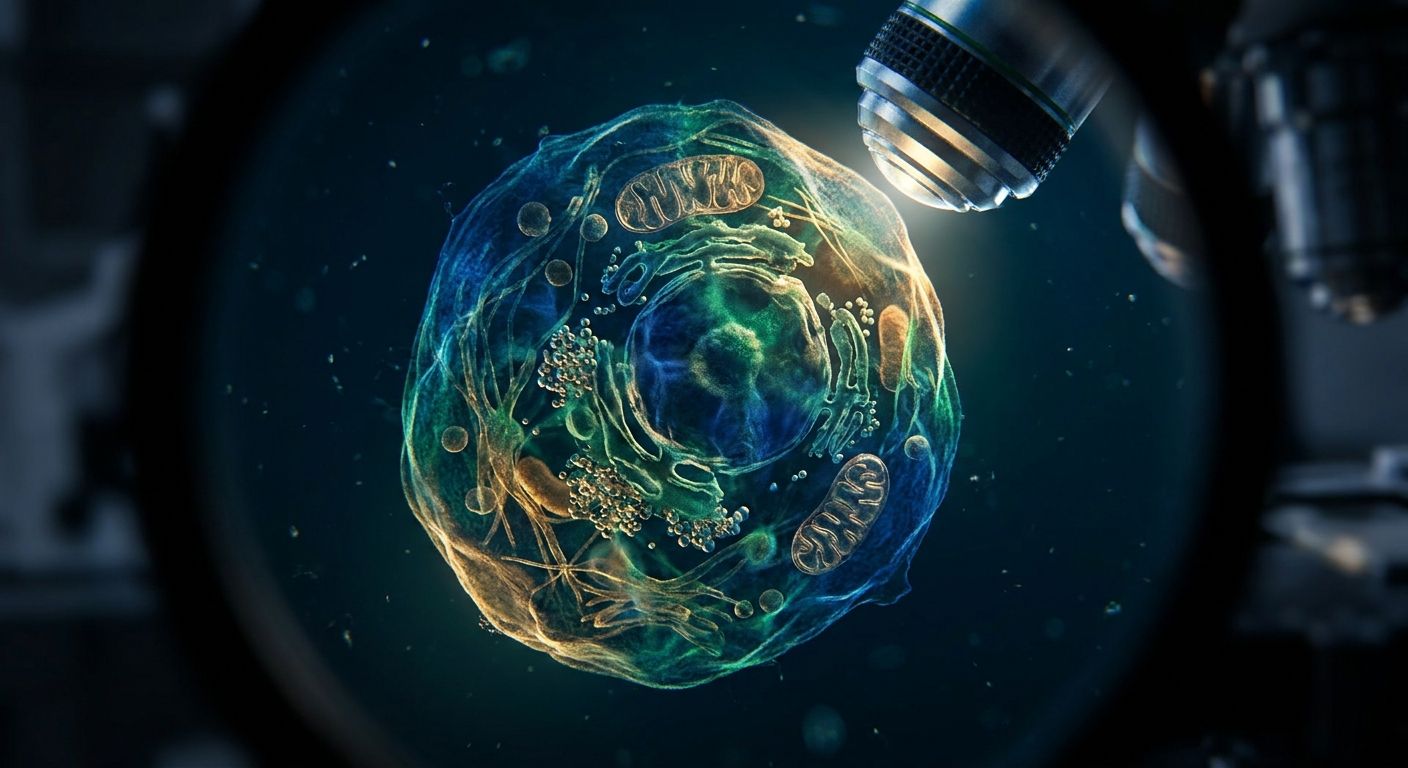
A dramatic, hyper-realistic extreme close-up photograph of a single vibrant biological cell, revealing intricate internal structures like mitochondria and ribosomes with stunning, crystal-clear detail. The scene is illuminated by a focused, intense light, emphasizing the power of high resolution and magnification.

Management & Tools

Deck Contents

27 Cards
Lesson#1
To see cells and their internal structures, we need microscopes. For your GCSE, you need to know about two main types: light microscopes, which you may have used in school, and the much more powerful electron microscopes.
Lesson#2
Let's start with two key terms: magnification and resolution. Magnification is simply how much larger an image appears compared to the actual object. If a microscope has a magnification of times 100, it makes the object look 100 times bigger.
Quiz#3
What is magnification in microscopy?

How much larger an image appears compared to the real object

Lesson#4
The second key term is resolution, which is sometimes called resolving power. This is a measure of the clarity of an image. Specifically, it's the ability to distinguish between two separate points that are very close together. The higher the resolution, the more detail you can see.
Quiz#5
In microscopy, what is resolution or resolving power?

The ability to distinguish between two separate points

Lesson#6
It's important not to confuse magnification and resolution. You can have a highly magnified image that is still blurry and lacks detail. This would be high magnification but low resolution.

Login to View Content

Create a free account or log in to see all 27 cards and start studying this deck.

Learn GCSE Biology: Microscopy differently

Auracle is an audio-first learning platform built for busy people. Memorize anything without looking at a screen.

Hands-Free Learning

Listen, interact, and review cards entirely through audio. Perfect for commuting, walking, or at the gym.

Spaced Repetition

Auracle uses a scientific algorithm to schedule your reviews at the optimal time, ensuring you never forget what you learn.

Learn how it works

Ready to start the GCSE Biology: Microscopy audio deck?