GCSE History: c1500–c1700: Warfare and English society in the early modern period
This deck examines continuity and change in warfare during the early modern period. It covers the evolving composition of the army with musketeers, pikemen, and dragoons, the development of a standing army, and the impact of new weapons like muskets and pistols. The experience of war is explored through recruitment, training (including the New Model Army), and the impact on civilians. The deck concludes with a case study of the Battle of Naseby (1645).
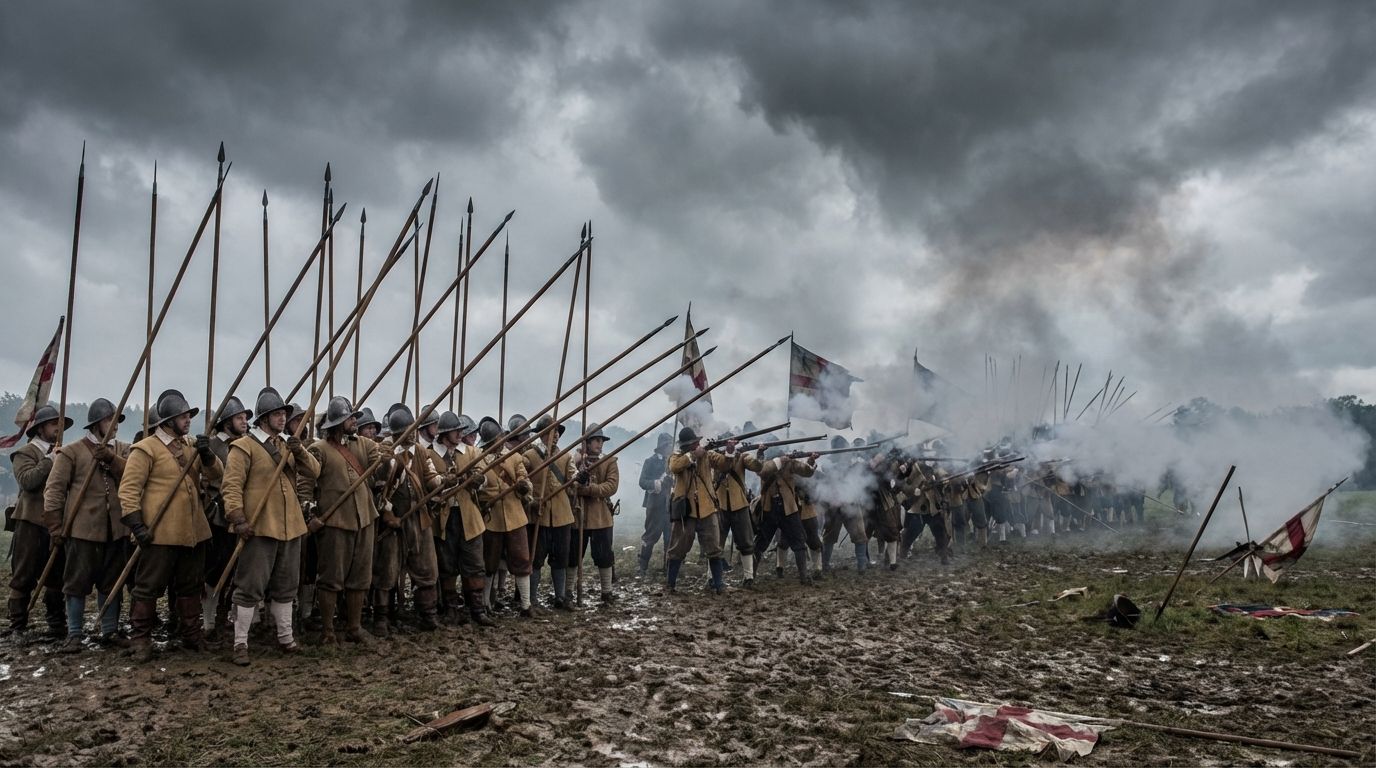
GCSE History: c1500–c1700: Warfare and English society in the early modern period
This deck examines continuity and change in warfare during the early modern period. It covers the evolving composition of the army with musketeers, pikemen, and dragoons, the development of a standing army, and the impact of new weapons like muskets and pistols. The experience of war is explored through recruitment, training (including the New Model Army), and the impact on civilians. The deck concludes with a case study of the Battle of Naseby (1645).
Management & Tools
Deck Contents
34 Cardscavalry
pikemen and musketeers
pike and shot
Login to View Content
Create a free account or log in to see all 34 cards and start studying this deck.
Learn GCSE History: c1500–c1700: Warfare and English society in the early modern period differently
Auracle is an audio-first learning platform built for busy people. Memorize anything without looking at a screen.
Hands-Free Learning
Listen, interact, and review cards entirely through audio. Perfect for commuting, walking, or at the gym.
Spaced Repetition
Auracle uses a scientific algorithm to schedule your reviews at the optimal time, ensuring you never forget what you learn.
Learn how it works