Tutorial

GCSE History: Protest, progress and radicalism, 1960–75

This deck covers the evolution of the US civil rights movement from 1960 to 1975, from the sit-ins and Freedom Rides to the rise of Black Power and the legislative victories of the mid-1960s. It explores the methods and beliefs of key figures like Martin Luther King and Malcolm X, and assesses the progress made by 1975.
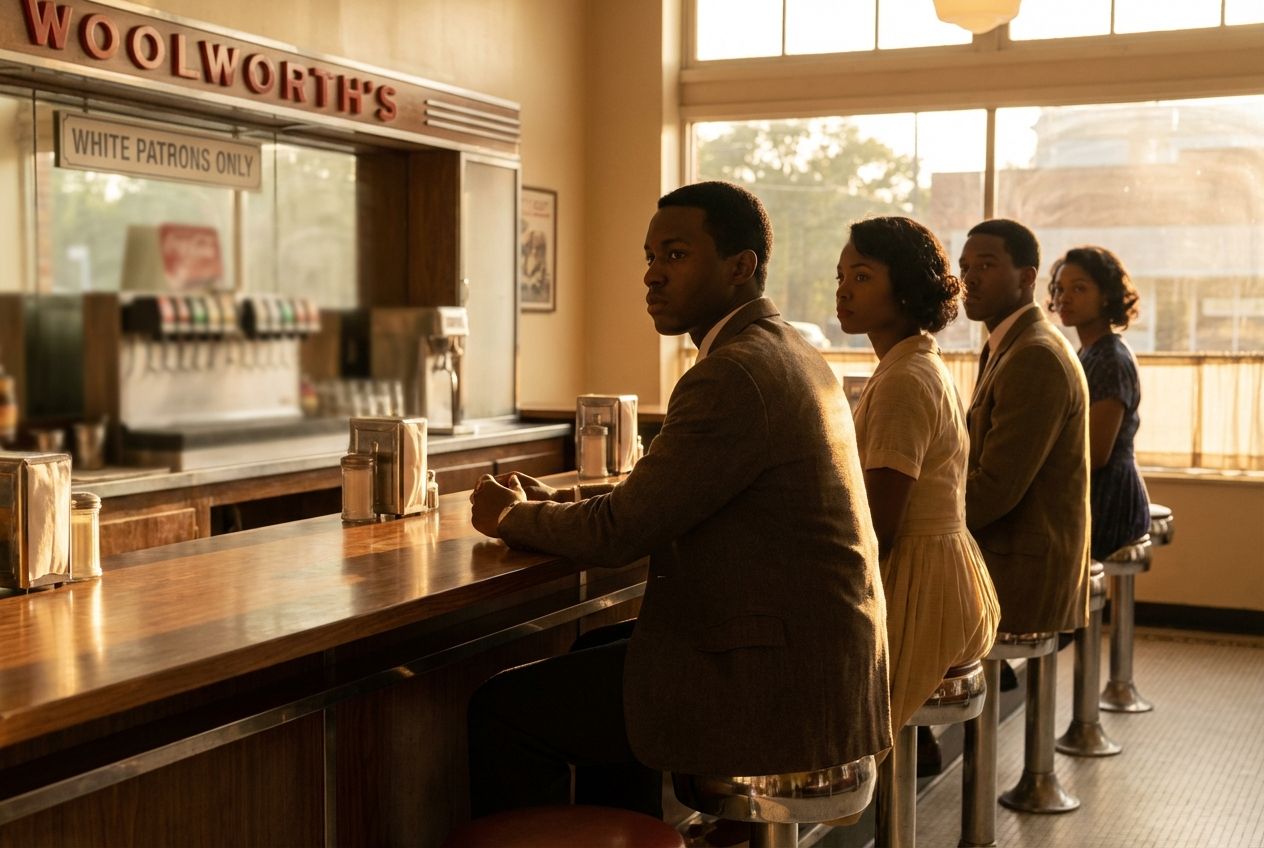
A powerful, cinematic photograph of four young African American students in neat attire, sitting defiantly at a polished, empty diner counter in a segregated Woolworth's. The scene is bathed in a warm, late afternoon glow, highlighting their quiet determination and the stark contrast of their presence against the backdrop of an implicitly unwelcoming establishment, composed for a 3:2 landscape frame.

Management & Tools

Deck Contents

41 Cards
Lesson#1
In this deck, we will trace the story of the civil rights movement through its most dramatic and impactful period, from 1960 to 1975. You will learn about the shift from legal challenges to direct action, including the sit-ins and Freedom Rides. We will cover the major peaceful protests that led to landmark laws, and explore the rise of more radical voices like Malcolm X and the Black Power movement. Finally, we'll assess how much had truly changed for Black Americans by 1975.
Lesson#2
The year 1960 marked a turning point. On February 1st, four Black students in Greensboro, North Carolina, sat down at a segregated Woolworth's lunch counter and politely asked to be served. They were refused, but they stayed until the store closed. This simple act of defiance, known as a sit-in, spread like wildfire across the South. It demonstrated the power of non-violent, youth-led direct action. For your exam, the Greensboro sit-in is a perfect example of a new, more confrontational protest tactic.
Quiz#3
In which North Carolina city did the first major student sit-in of 1960 take place at a Woolworth's lunch counter?

Greensboro

Lesson#4
The energy from the sit-ins led to the creation of a new, dynamic organisation: the Student Nonviolent Coordinating Committee, or SNCC. Pronounced 'snick', this group was led by students and played a crucial role in many of the major campaigns of the 1960s, including the Freedom Rides and Freedom Summer.
Quiz#5
What student-led civil rights group, known as SNCC, was formed in the wake of the 1960 sit-in movement?

Student Nonviolent Coordinating Committee

Lesson#6
In 1961, another civil rights group, CORE, the Congress of Racial Equality, organised the Freedom Rides. The goal was to test a Supreme Court ruling that had banned segregation on interstate buses and in bus terminals. Black and white activists rode together into the Deep South, deliberately violating segregation laws to force the federal government to act. They knew they would face violence, and they did.

Login to View Content

Create a free account or log in to see all 41 cards and start studying this deck.

Learn GCSE History: Protest, progress and radicalism, 1960–75 differently

Auracle is an audio-first learning platform built for busy people. Memorize anything without looking at a screen.

Hands-Free Learning

Listen, interact, and review cards entirely through audio. Perfect for commuting, walking, or at the gym.

Spaced Repetition

Auracle uses a scientific algorithm to schedule your reviews at the optimal time, ensuring you never forget what you learn.

Learn how it works

Ready to start the GCSE History: Protest, progress and radicalism, 1960–75 audio deck?