Tutorial

GCSE History: Stalin’s rise to power and dictatorship, 1924–41

This deck covers Joseph Stalin's rise to become the undisputed leader of the USSR and the nature of his dictatorship. It details the power struggle after Lenin's death, the mechanisms of control in the 1930s including the purges and show trials, and the use of propaganda to create the Cult of Stalin.
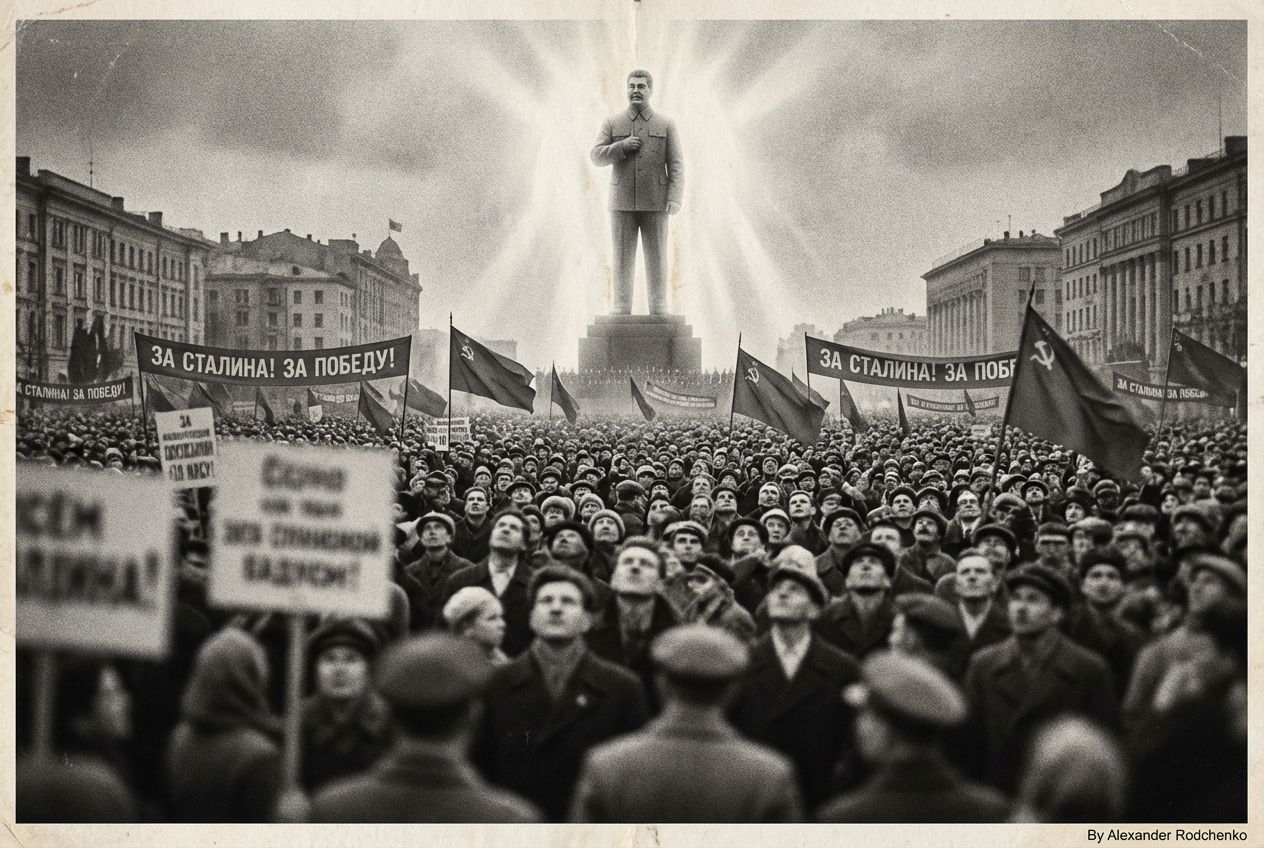
A black and white photograph in the style of Soviet propaganda art, showing a massive crowd with banners and flags, all focused on a single, towering figure of Joseph Stalin in the distance, bathed in light. The foreground is slightly out of focus to emphasize the scale and power dynamic.

Management & Tools

Deck Contents

31 Cards
Lesson#1
In this deck, we will explore how Joseph Stalin went from being one of several leading Bolsheviks to the absolute dictator of the Soviet Union. We'll examine the power struggle that followed Lenin's death in 1924, and then look at the brutal methods Stalin used to control the country in the 1930s, including the Great Terror, the Gulag labour camps, and all-encompassing propaganda.
Lesson#2
When Lenin died in 1924, he did not name a successor. This triggered a power struggle between the most powerful figures in the Communist Party. The main contenders were Leon Trotsky, Grigory Zinoviev, Lev Kamenev, Nikolai Bukharin, and Joseph Stalin. At first, nobody considered Stalin the most likely leader.
Lesson#3
Stalin's power base was his position as General Secretary of the Communist Party. While it seemed like a dull administrative role, it gave him enormous influence. He could appoint his supporters to key posts and control the party's membership. In your exam, this is a crucial point to explain how Stalin built up a loyal following within the party structure.
Quiz#4
What position in the Communist Party gave Stalin control over appointments and membership, forming his power base?

General Secretary

Lesson#5
Before his death, Lenin wrote a document known as his Testament. In it, he criticised all the leading Bolsheviks but was especially critical of Stalin, describing him as 'too rude' and recommending he be removed from his post. However, the other leaders decided to keep the Testament secret, partly to show party unity and partly because they underestimated the threat Stalin posed.
Quiz#6
What was the name of the document where Lenin criticised Stalin and recommended his removal from power?

Lenin's Testament

Login to View Content

Create a free account or log in to see all 31 cards and start studying this deck.

Learn GCSE History: Stalin’s rise to power and dictatorship, 1924–41 differently

Auracle is an audio-first learning platform built for busy people. Memorize anything without looking at a screen.

Hands-Free Learning

Listen, interact, and review cards entirely through audio. Perfect for commuting, walking, or at the gym.

Spaced Repetition

Auracle uses a scientific algorithm to schedule your reviews at the optimal time, ensuring you never forget what you learn.

Learn how it works

Ready to start the GCSE History: Stalin’s rise to power and dictatorship, 1924–41 audio deck?