Tutorial

Ionic bonding

Master ionic bonding for AQA GCSE Combined Science Chemistry. Learn electron transfer between metals and non-metals, ion charges, electrostatic attraction, and ionic formulae.
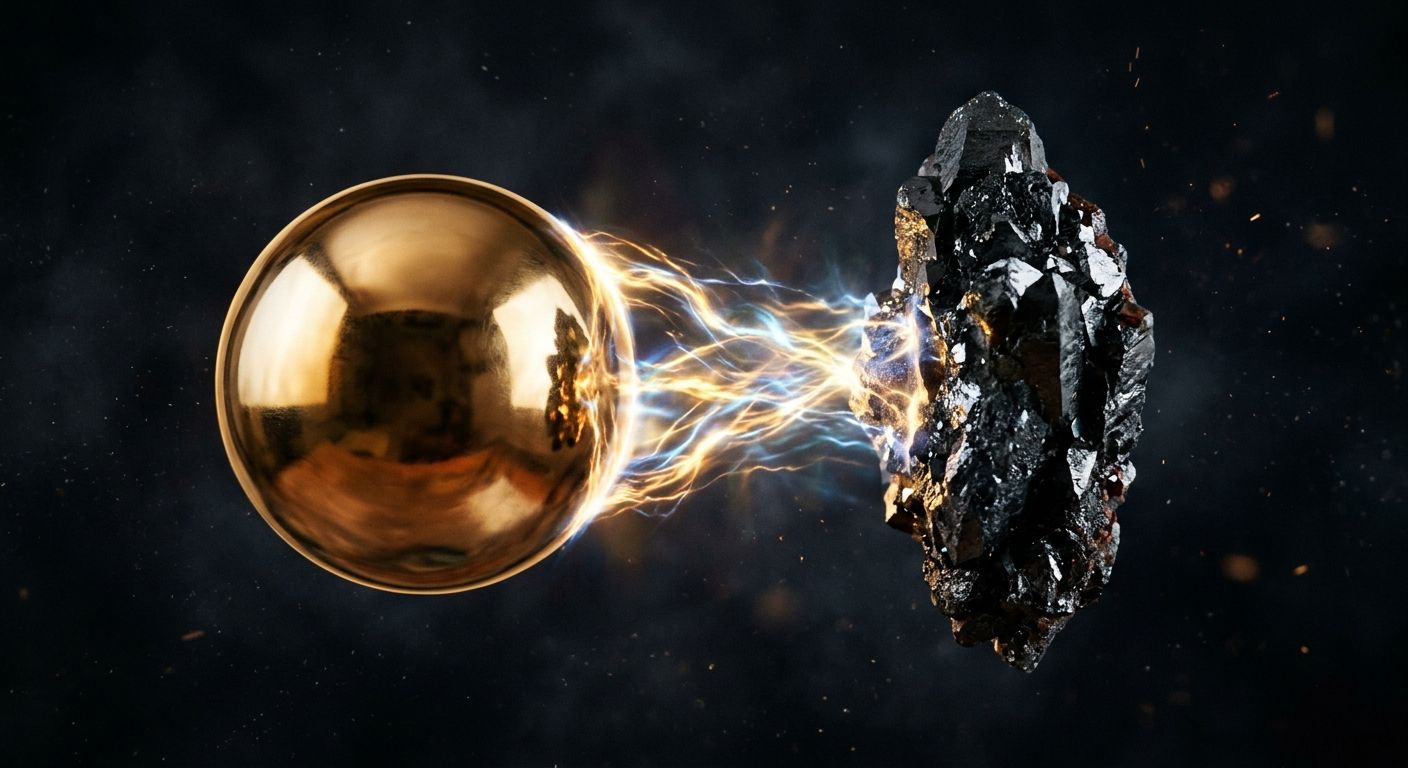
A striking close-up photograph captures a polished, warm gold sphere and a rough, dark crystalline mineral shard, suspended inches apart. A subtle, shimmering energy field visibly connects them, illustrating an intense, invisible force of attraction in a dramatic, focused composition.

Management & Tools

Deck Contents

26 Cards
Lesson#1
In this deck, you'll learn how ionic bonding occurs through the transfer of electrons between metal atoms and non-metal atoms. We'll cover how atoms form positive and negative ions, how oppositely charged ions attract, the charges formed by specific groups, and how to deduce ionic formulae.
Lesson#2
Ionic bonding occurs between metals and non-metals. During ionic bonding, electrons are transferred from metal atoms to non-metal atoms. Metal atoms lose electrons to form positive ions. Non-metal atoms gain electrons to form negative ions.
Quiz#3
Between what two general types of elements does ionic bonding occur?

metals and non-metals

Quiz#4
In ionic bonding, what particles are transferred from metal atoms to non-metal atoms?

electrons

Quiz#5
When metal atoms lose electrons during ionic bonding, what type of ions do they form?

positive ions

Quiz#6
During ionic bonding, what type of ions do non-metal atoms form when they gain electrons?

negative ions

Login to View Content

Create a free account or log in to see all 26 cards and start studying this deck.

Learn Ionic bonding differently

Auracle is an audio-first learning platform built for busy people. Memorize anything without looking at a screen.

Hands-Free Learning

Listen, interact, and review cards entirely through audio. Perfect for commuting, walking, or at the gym.

Spaced Repetition

Auracle uses a scientific algorithm to schedule your reviews at the optimal time, ensuring you never forget what you learn.

Learn how it works

Ready to start the Ionic bonding audio deck?