Tutorial

GCSE History: Cold War crises, 1958–70

This deck covers the period of intense superpower confrontation from 1958 to 1970. It focuses on three key crises: the Berlin Crisis, which led to the building of the Berlin Wall; the Cuban Missile Crisis, which brought the world to the brink of nuclear war; and the Prague Spring in Czechoslovakia. You will learn the causes, events, and consequences of these crises, and the first attempts at arms control that followed.
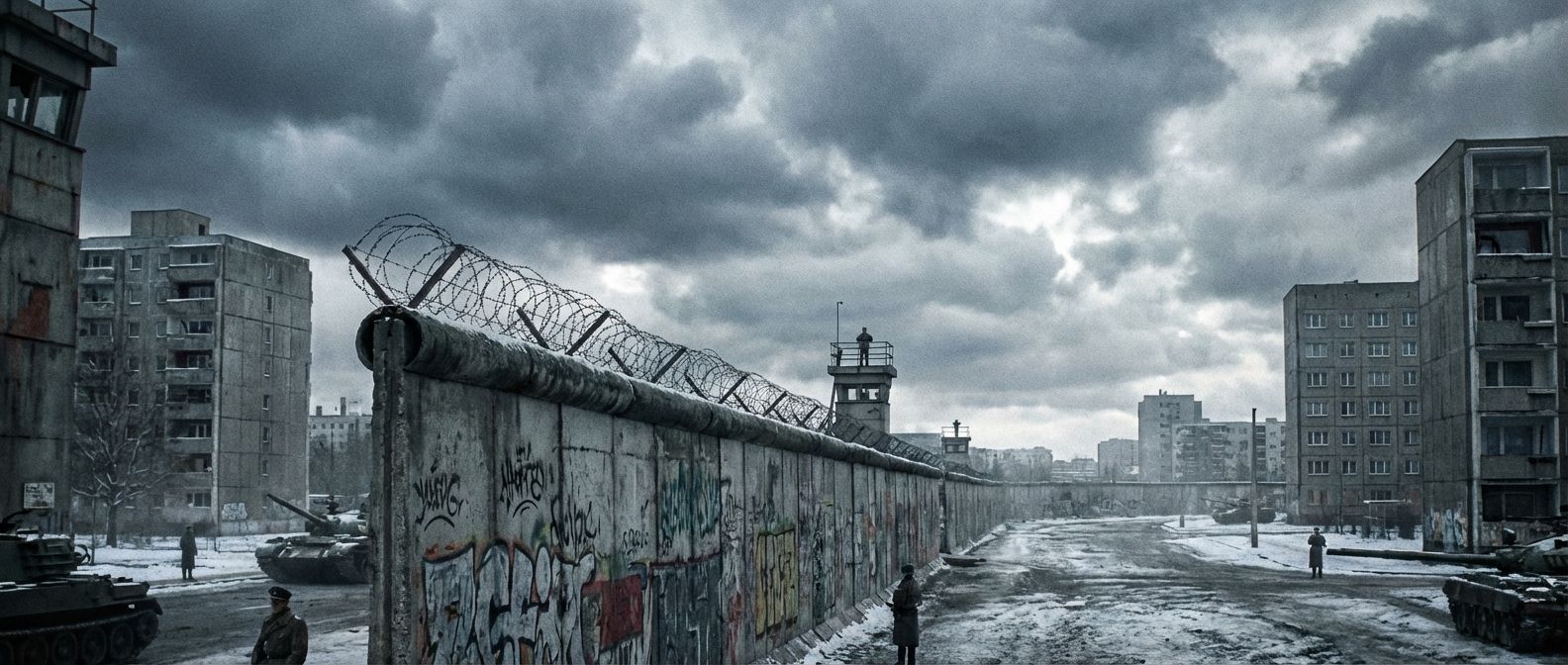
A dramatic, wide-angle photograph of a stark, imposing section of the Berlin Wall, made of weathered concrete and topped with barbed wire, stretching into the distance across a desolate, cold urban landscape. The scene is lit by the harsh, grey light of a dramatic, overcast sky, conveying the intense tension and division of the Cold War era.

Management & Tools

Deck Contents

35 Cards
Lesson#1
In this deck, we'll explore a period of intense superpower confrontation from 1958 to 1970. You'll learn about three major Cold War crises: the Berlin Crisis, which led to the building of the Berlin Wall; the Cuban Missile Crisis, which brought the world to the brink of nuclear war; and the Prague Spring in Czechoslovakia. We'll examine not just what happened, but why these events were so significant for US-Soviet relations.
Lesson#2
The first major crisis we'll cover is Berlin. By the late 1950s, West Berlin was a prosperous, capitalist island inside communist East Germany. This created a huge problem for the communists: the refugee crisis. Many highly skilled and educated East Germans were using West Berlin as an escape route to the West. This 'brain drain' weakened the East German economy and was a major propaganda failure for the Soviet Union.
Quiz#3
What was the main problem for East Germany caused by the open border in Berlin before 1961?

the refugee problem

Lesson#4
In November 1958, Soviet leader Nikita Khrushchev decided to force the issue. He issued the Berlin Ultimatum, demanding that Western powers withdraw their troops from West Berlin within six months and declare it a 'free city'. If they refused, he threatened to hand over control of all routes into Berlin to the East German government. This was a direct challenge to the West's presence in Berlin.
Quiz#5
In his 1958 Berlin Ultimatum, what did Khrushchev demand Western powers do within six months?

withdraw from West Berlin

Lesson#6
The ultimatum led to a series of summit meetings between the superpowers, but they failed to find a solution. The new US President, John F. Kennedy, refused to give in to Soviet pressure. With the refugee crisis worsening, the East German government took drastic action. On the night of the 12th of August 1961, they began building a barbed wire fence, which was soon replaced by a concrete wall, sealing the border between East and West Berlin.

Login to View Content

Create a free account or log in to see all 35 cards and start studying this deck.

Learn GCSE History: Cold War crises, 1958–70 differently

Auracle is an audio-first learning platform built for busy people. Memorize anything without looking at a screen.

Hands-Free Learning

Listen, interact, and review cards entirely through audio. Perfect for commuting, walking, or at the gym.

Spaced Repetition

Auracle uses a scientific algorithm to schedule your reviews at the optimal time, ensuring you never forget what you learn.

Learn how it works

Ready to start the GCSE History: Cold War crises, 1958–70 audio deck?