Tutorial

AQA GCSE Combined Science: Particle Model of Matter

This deck explains the particle model of matter for solids, liquids, and gases as required by the AQA Combined Science: Trilogy specification. It covers density, internal energy, changes of state, specific latent heat, and the relationship between the temperature and pressure of a gas at constant volume. This deck includes Required Practical 4 (Density).
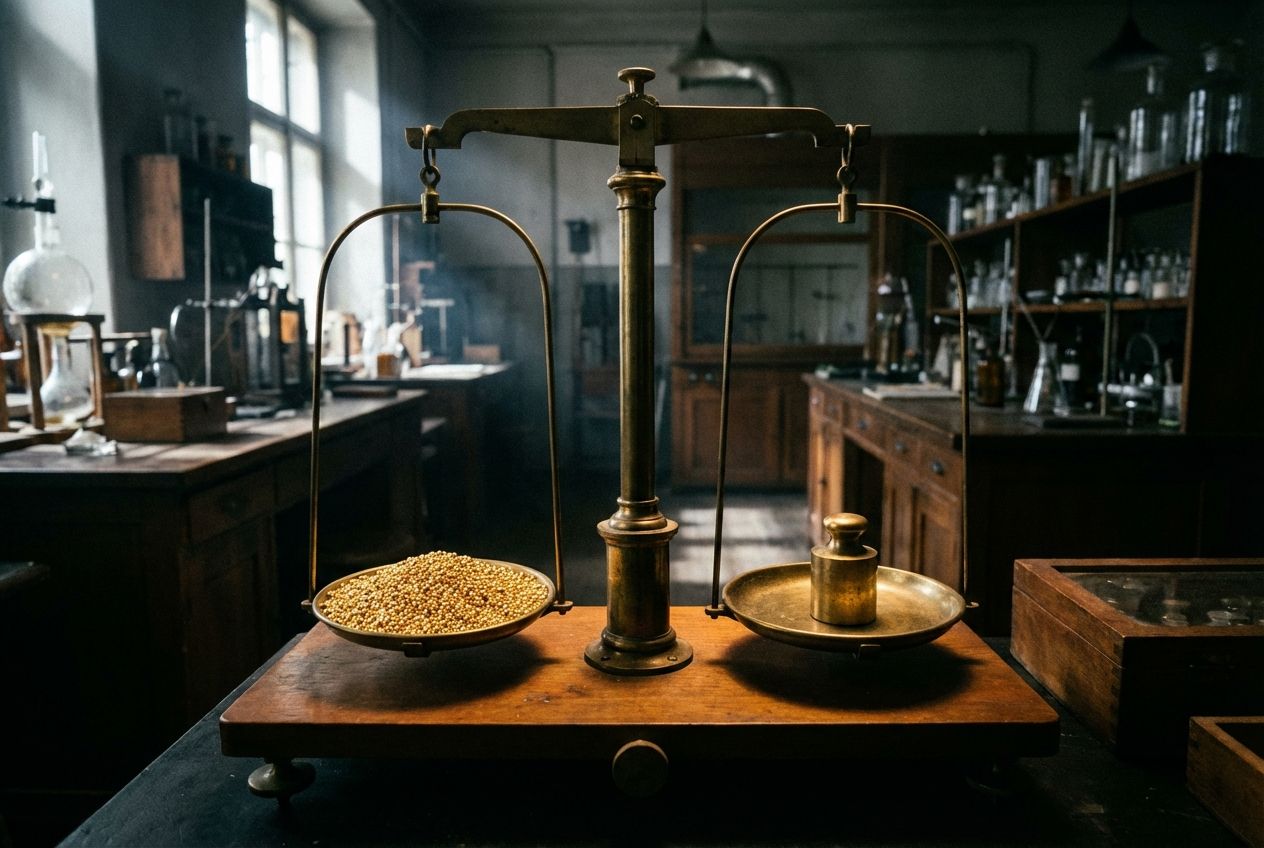
A dramatic, high-contrast photograph of a vintage analytical balance scale in an elegant, dimly lit laboratory setting. On one pan, a meticulously arranged, shimmering pile of countless tiny, identical, golden spheres, representing atoms or molecules. On the other pan, a single, precisely calibrated weight, perfectly balancing the vast quantity of spheres, emphasizing precision and the abstract nature of chemical measurement, composed for a 3:2 landscape frame with soft, focused lighting.

Management & Tools

Deck Contents

50 Cards
Lesson#1
Welcome to this deck on the particle model of matter. We'll explore how everything around us is made of tiny, moving particles. You'll learn how the arrangement and energy of these particles explain the properties of solids, liquids, and gases. We will also cover key concepts like density, internal energy, and changes of state, including the required practical for measuring density.
Lesson#2
The particle model is a simple but powerful idea. It states that all substances are made up of a huge number of tiny particles, which are constantly moving. The state of a substance – whether it's a solid, liquid, or gas – depends on how these particles are arranged and how much energy they have.
Lesson#3
Let's start with solids. In a solid, the particles are packed very closely together in a fixed, regular pattern, often called a lattice. There are strong forces of attraction holding them in place. This is why solids have a fixed shape and volume. The particles don't stay completely still, however; they vibrate about their fixed positions.
Quiz#4
In the particle model, what is the arrangement of particles in a solid?

a regular lattice

Quiz#5
According to the particle model, how do particles move within a solid?

they vibrate

Quiz#6
In a solid, what is the strength of the forces of attraction between particles?

strong

Login to View Content

Create a free account or log in to see all 50 cards and start studying this deck.

Learn AQA GCSE Combined Science: Particle Model of Matter differently

Auracle is an audio-first learning platform built for busy people. Memorize anything without looking at a screen.

Hands-Free Learning

Listen, interact, and review cards entirely through audio. Perfect for commuting, walking, or at the gym.

Spaced Repetition

Auracle uses a scientific algorithm to schedule your reviews at the optimal time, ensuring you never forget what you learn.

Learn how it works

Ready to start the AQA GCSE Combined Science: Particle Model of Matter audio deck?