Tutorial
GCSE Biology: Fossils
Learn how fossils form, why the fossil record is incomplete, and how evolutionary trees illustrate common ancestry for GCSE Biology.
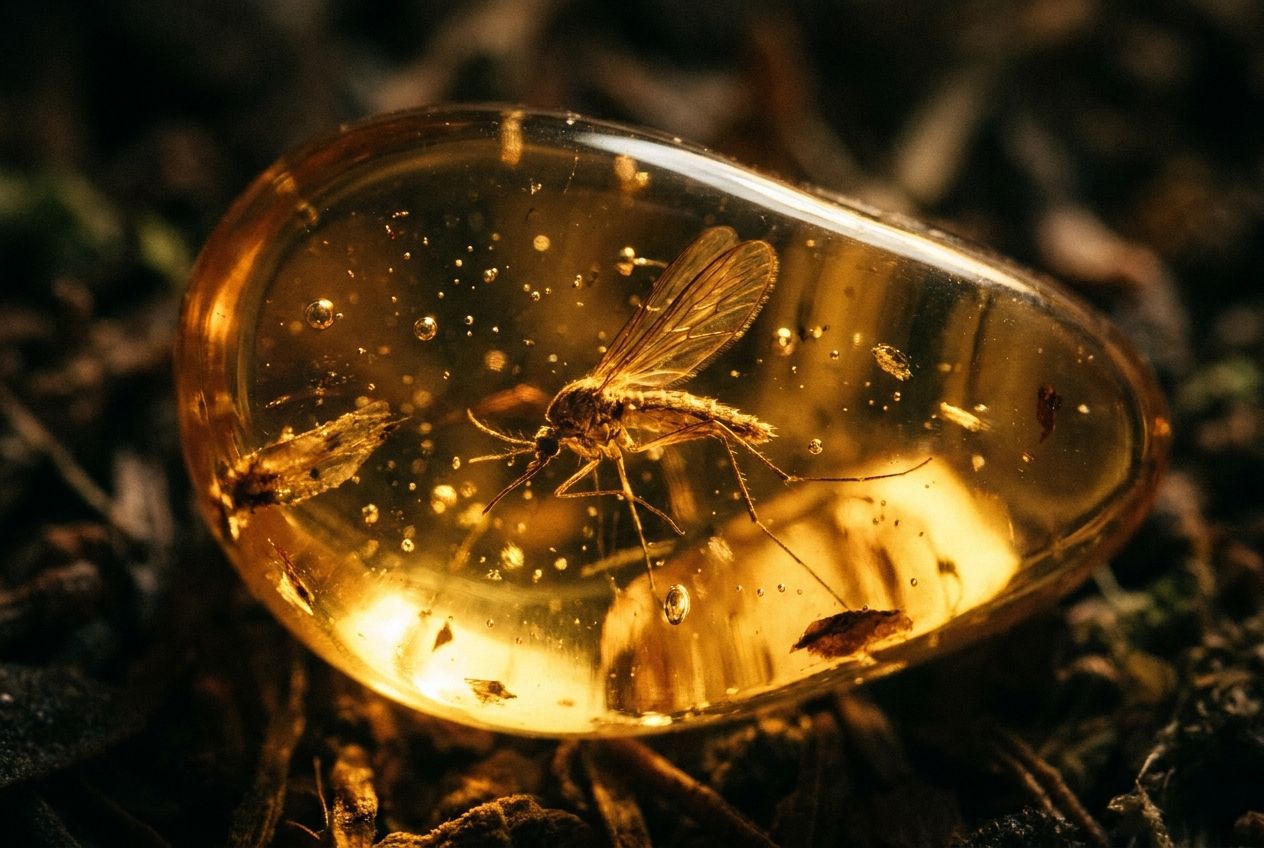
Tutorial
GCSE Biology: Fossils
Learn how fossils form, why the fossil record is incomplete, and how evolutionary trees illustrate common ancestry for GCSE Biology.
Management & Tools
Deck Contents
28 CardsLesson#1
In this deck, you will learn what fossils are, the different ways they form, and why the fossil record has gaps. We will also explore how fossil evidence helps scientists build evolutionary trees to understand common ancestry and evolutionary relationships.
Lesson#2
Fossils are the remains or traces of organisms from the past, preserved in rock. They provide evidence of ancient life and reveal how organisms have changed over time. By comparing fossils from different rock layers, scientists can track evolutionary change.
Quiz#3
What scientific term describes the remains or traces of organisms from the past?
fossils
Quiz#4
Fossils provide evidence for evolution by revealing what about organisms over time?
how organisms have changed
Lesson#5
The most common way fossils form is through mineral replacement. When an animal dies, its soft tissues decay quickly, leaving behind hard parts like bones and teeth. Over millions of years, as these hard parts slowly decay, minerals gradually replace them, turning the remains into stone.
Quiz#6
During fossilisation by mineral replacement, which parts of an organism decay quickly?
soft tissues
Login to View Content
Create a free account or log in to see all 28 cards and start studying this deck.
Learn GCSE Biology: Fossils differently
Auracle is an audio-first learning platform built for busy people. Memorize anything without looking at a screen.
Hands-Free Learning
Listen, interact, and review cards entirely through audio. Perfect for commuting, walking, or at the gym.
Spaced Repetition
Auracle uses a scientific algorithm to schedule your reviews at the optimal time, ensuring you never forget what you learn.
Learn how it works