Tutorial
Graphene and fullerenes
Learn about the structures, properties, and uses of graphene, fullerenes, and carbon nanotubes for GCSE Chemistry.
Tutorial
Graphene and fullerenes
Learn about the structures, properties, and uses of graphene, fullerenes, and carbon nanotubes for GCSE Chemistry.
Management & Tools
Deck Contents
22 CardsLesson#1
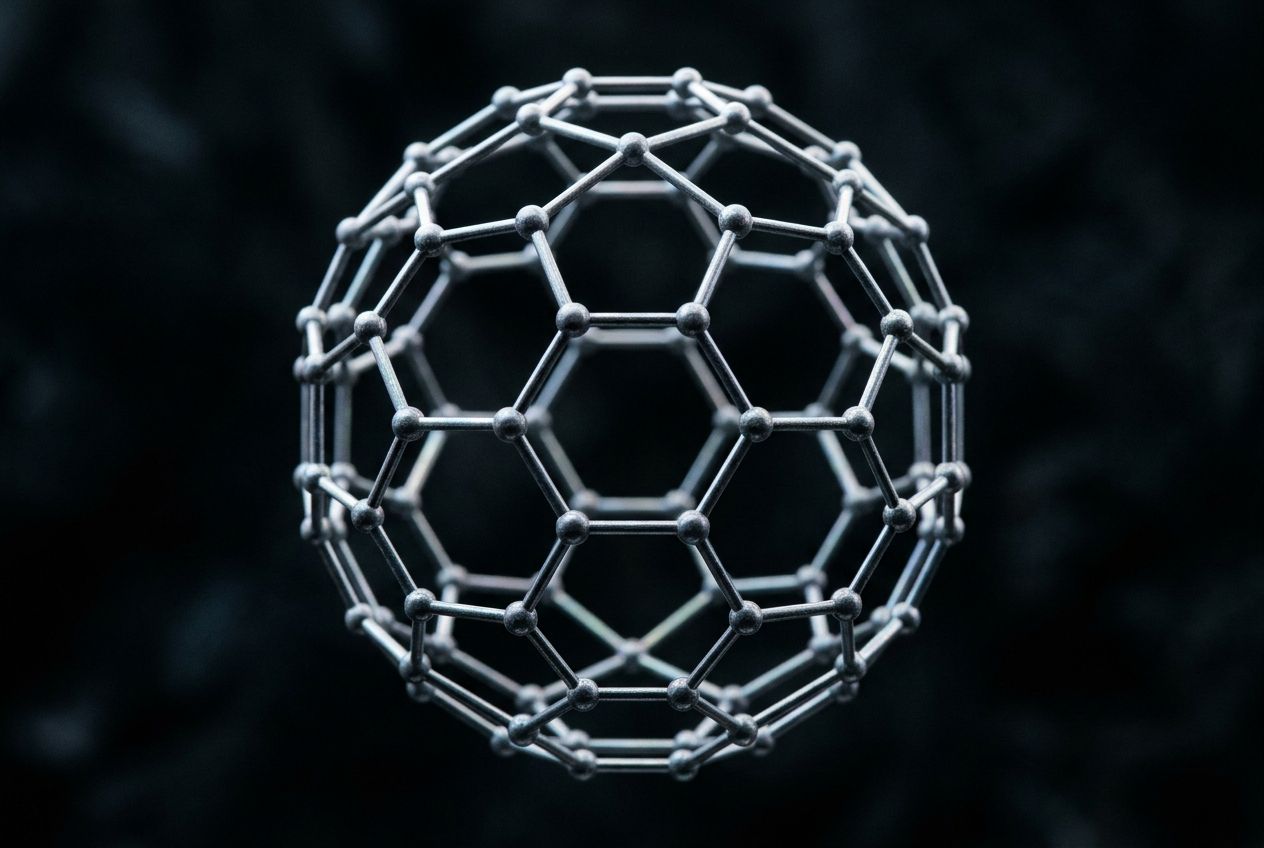
Carbon can form remarkable structures beyond diamond and graphite. In this deck, you will explore graphene, spherical fullerenes, and carbon nanotubes. You will learn their structures, their key properties, and how they are used in modern technology.
Lesson#2
Graphene is a single layer of graphite. In graphene, its carbon atoms are connected by covalent bonds. Graphene is strong because its carbon atoms are connected by covalent bonds.
Quiz#3
What substance is a single layer of graphite?
graphene
Quiz#4
What type of bonds connect the carbon atoms in graphene?
covalent bonds
Quiz#5
Why is graphene strong?
its carbon atoms are connected by covalent bonds
Lesson#6
Graphene conducts electricity because it has delocalised electrons that are free to move. Because graphene is strong and conducts electricity, it is useful in electronics and composite materials.
Login to View Content
Create a free account or log in to see all 22 cards and start studying this deck.
Learn Graphene and fullerenes differently
Auracle is an audio-first learning platform built for busy people. Memorize anything without looking at a screen.
Hands-Free Learning
Listen, interact, and review cards entirely through audio. Perfect for commuting, walking, or at the gym.
Spaced Repetition
Auracle uses a scientific algorithm to schedule your reviews at the optimal time, ensuring you never forget what you learn.
Learn how it works