GCSE Hinduism: Beliefs and teachings
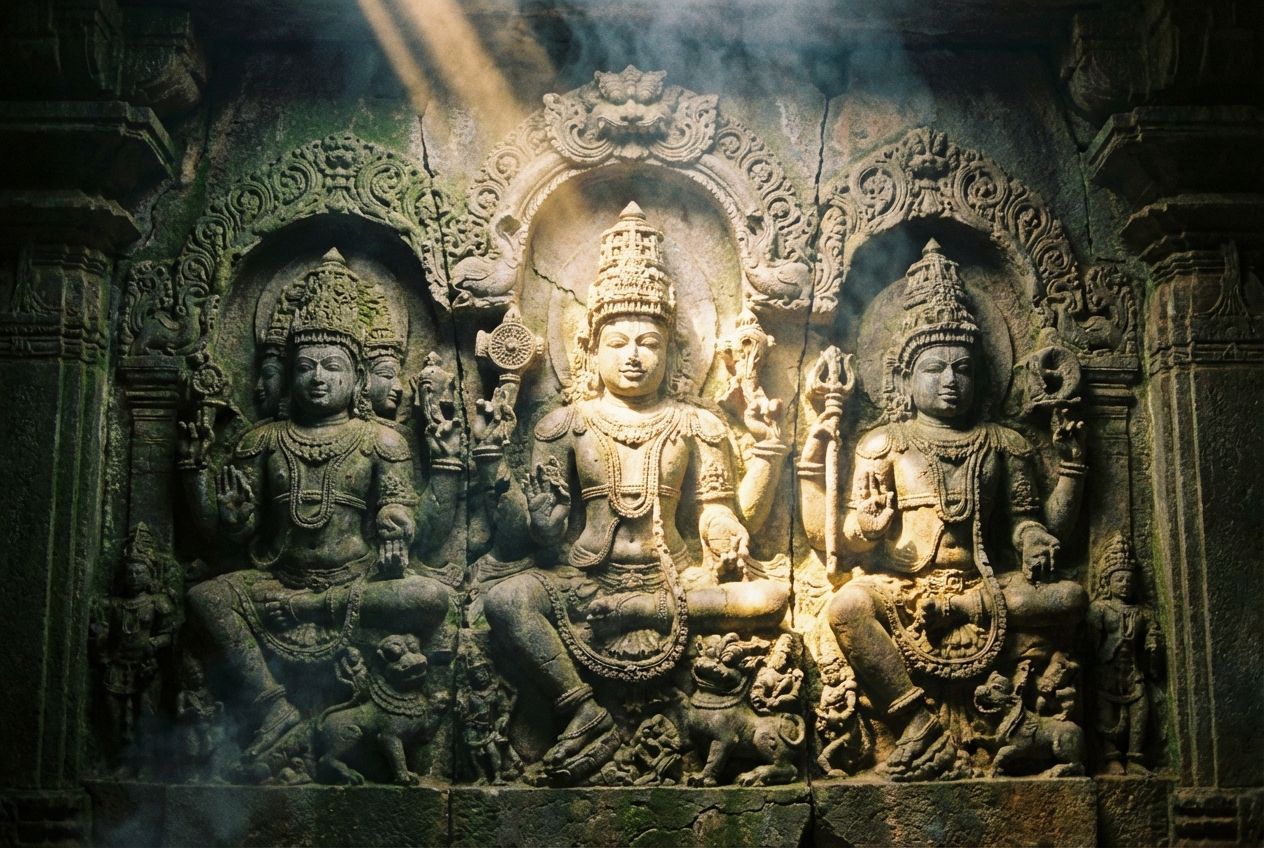
This deck covers all AQA specification points on Hindu beliefs and teachings. It includes: the nature of God (Brahman as nirguna and saguna), the three features of the divine, the Tri-murti (Brahma, Vishnu, Shiva), other deities and avataras (Krishna, Rama). It also covers Hindu cosmology, including prakriti, the tri-guna, maya, the cycle of four ages, and many worlds. The deck then explores beliefs about human life: atman, samsara, karma, moksha, free will, suffering, personal virtues (e.g., ahimsa), the four aims of life (dharma, artha, kama, moksha), and the different meanings of dharma. Key scriptural quotes from the Brihadaranyaka Upanishad and Rig Veda are included.
GCSE Hinduism: Beliefs and teachings
This deck covers all AQA specification points on Hindu beliefs and teachings. It includes: the nature of God (Brahman as nirguna and saguna), the three features of the divine, the Tri-murti (Brahma, Vishnu, Shiva), other deities and avataras (Krishna, Rama). It also covers Hindu cosmology, including prakriti, the tri-guna, maya, the cycle of four ages, and many worlds. The deck then explores beliefs about human life: atman, samsara, karma, moksha, free will, suffering, personal virtues (e.g., ahimsa), the four aims of life (dharma, artha, kama, moksha), and the different meanings of dharma. Key scriptural quotes from the Brihadaranyaka Upanishad and Rig Veda are included.
Management & Tools
Deck Contents
46 CardsBrahman
nirguna
saguna
Login to View Content
Create a free account or log in to see all 46 cards and start studying this deck.
Learn GCSE Hinduism: Beliefs and teachings differently
Auracle is an audio-first learning platform built for busy people. Memorize anything without looking at a screen.
Hands-Free Learning
Listen, interact, and review cards entirely through audio. Perfect for commuting, walking, or at the gym.
Spaced Repetition
Auracle uses a scientific algorithm to schedule your reviews at the optimal time, ensuring you never forget what you learn.
Learn how it works