Tutorial

GCSE History: The Spanish Empire c1528–c1555

This deck covers the consolidation of the Spanish Empire from c1528 to c1555. It details Pizarro's conquest of the Incas, the establishment of imperial governance, the debate over the treatment of Indigenous peoples led by Las Casas, and the economic impact of the New World on Spain.
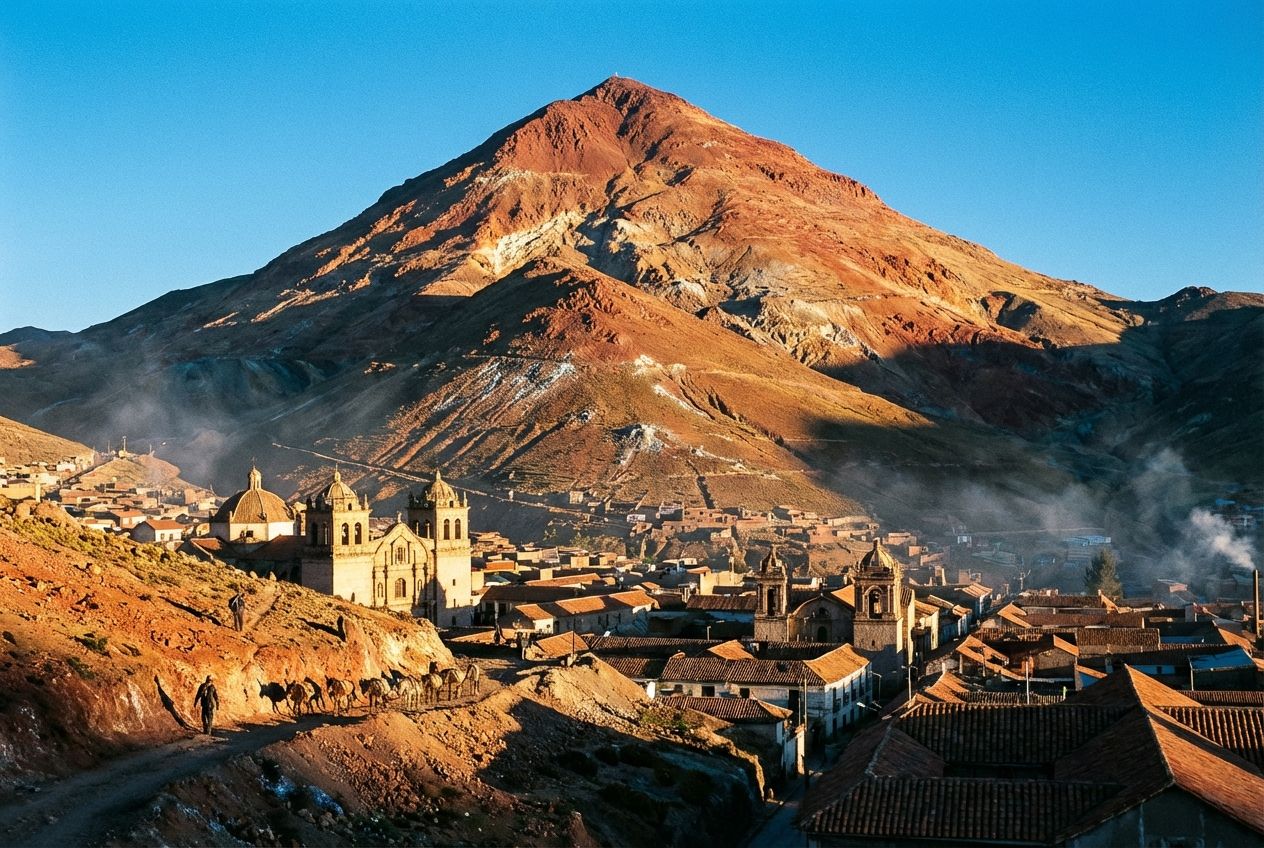
A dramatic wide-angle photograph of the Cerro Rico mountain in Potosí, Bolivia, at sunrise, casting long shadows over the historic colonial city nestled at its base. The mountain slopes subtly reveal the sparkle of exposed silver ore, symbolizing the immense wealth and economic foundation of the Spanish Empire. The scene is vivid and majestic, composed for a 3:2 landscape frame.

Management & Tools

Deck Contents

25 Cards
Lesson#1
In this deck, we'll explore how Spain consolidated its vast empire in the Americas between 1528 and 1555. We'll follow Pizarro's conquest of the wealthy Inca Empire, see how Spain established systems of government to control its new territories, and examine the huge economic impact of American gold and silver. We'll also cover the important debate about the treatment of Indigenous peoples, a key theme for your GCSE exam.
Lesson#2
The Spanish conquest of Peru began with a stroke of luck for the conquistadors. When Francisco Pizarro made contact with the Inca Empire in 1528, it was in turmoil. The emperor, Huayna Capac, had recently died, likely from a European disease like smallpox that had travelled ahead of the Spanish. His death sparked a brutal civil war for the throne between his two sons, Atahuallpa and Huascar. This division was a critical weakness that Pizarro would ruthlessly exploit.
Quiz#3
What were the names of the two Inca brothers fighting a civil war when Pizarro arrived in Peru?

Atahuallpa and Huascar

Lesson#4
In 1532, having just defeated his brother, the new Inca emperor Atahuallpa agreed to meet Pizarro in the town of Cajamarca. Atahuallpa arrived with thousands of lightly armed followers, expecting a diplomatic meeting. Instead, Pizarro launched a surprise attack. With steel swords, guns, and cavalry, his tiny force of fewer than 200 men massacred the Incas and captured Atahuallpa. For your exam, the Battle of Cajamarca is a key example of how Spanish military technology and ruthless tactics overcame vastly superior numbers.
Quiz#5
At which battle in 1532 did Pizarro's forces ambush and capture the Inca emperor Atahuallpa?

Battle of Cajamarca

Quiz#6
What was the name of the Inca emperor captured by Pizarro at the Battle of Cajamarca?

Atahuallpa

Login to View Content

Create a free account or log in to see all 25 cards and start studying this deck.

Learn GCSE History: The Spanish Empire c1528–c1555 differently

Auracle is an audio-first learning platform built for busy people. Memorize anything without looking at a screen.

Hands-Free Learning

Listen, interact, and review cards entirely through audio. Perfect for commuting, walking, or at the gym.

Spaced Repetition

Auracle uses a scientific algorithm to schedule your reviews at the optimal time, ensuring you never forget what you learn.

Learn how it works

Ready to start the GCSE History: The Spanish Empire c1528–c1555 audio deck?