Tutorial

AQA GCSE Geography: Paper 1 - Case Study of a LIC/NEE Tectonic Hazard: Nepal Earthquake 2015

Learn the specific details of the 2015 earthquake in Nepal as a named example of a tectonic hazard in a Low Income Country (LIC). This deck covers the causes, primary and secondary effects, and immediate and long-term responses.
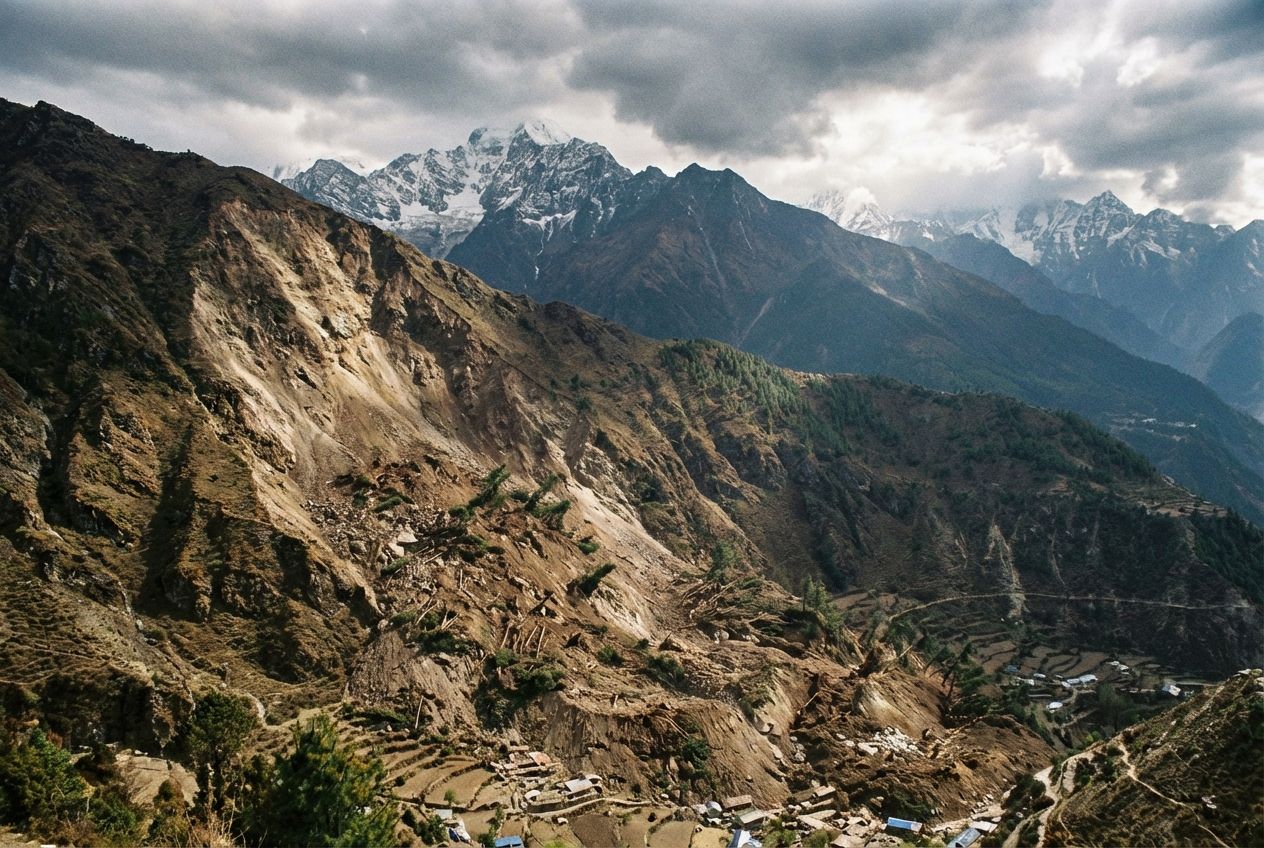
A dramatic wide-angle photograph of a massive, recent landslide scar on a steep, rugged Himalayan mountainside in Nepal, viewed from a high vantage point. The raw power of nature is evident in the churned earth and displaced trees, contrasting with the vast, majestic mountain range in the background. Overcast but dramatic lighting, composed for a 3:2 landscape frame.

Management & Tools

Deck Contents

27 Cards
Lesson#1
In this deck, we'll explore the 2015 Nepal earthquake. This is a key case study for your AQA GCSE Geography exam, showing the impacts of a tectonic hazard on a Low Income Country, or LIC. We'll cover the causes, the primary and secondary effects, and the immediate and long-term responses.
Lesson#2
Nepal is located in the Himalayas, one of the most tectonically active regions in the world. It sits on a collision plate margin, where the Indo-Australian plate is crashing into the Eurasian plate. This continuous pressure builds up, and when it's released, it causes powerful earthquakes.
Quiz#3
What type of plate margin caused the 2015 Nepal earthquake?

collision

Lesson#4
The earthquake struck on the 25th of April, 2015. It had a magnitude of 7.8 on the Richter scale. Crucially, it had a very shallow focus, only 15 kilometres deep. A shallow focus means the seismic waves have less distance to travel to the surface, making the ground shaking much more intense and destructive.
Quiz#5
What was the magnitude of the 2015 Nepal earthquake on the Richter scale?

7.8

Quiz#6
In the 2015 Nepal earthquake, what feature of the focus made the ground shaking more intense?

shallow focus

Login to View Content

Create a free account or log in to see all 27 cards and start studying this deck.

Learn AQA GCSE Geography: Paper 1 - Case Study of a LIC/NEE Tectonic Hazard: Nepal Earthquake 2015 differently

Auracle is an audio-first learning platform built for busy people. Memorize anything without looking at a screen.

Hands-Free Learning

Listen, interact, and review cards entirely through audio. Perfect for commuting, walking, or at the gym.

Spaced Repetition

Auracle uses a scientific algorithm to schedule your reviews at the optimal time, ensuring you never forget what you learn.

Learn how it works

Ready to start the AQA GCSE Geography: Paper 1 - Case Study of a LIC/NEE Tectonic Hazard: Nepal Earthquake 2015 audio deck?