Tutorial

Buddhist Death Rituals: Theravada, Japanese and Tibetan Traditions — AQA GCSE Religious Studies

Covers the death and mourning ceremonies of three Buddhist traditions as required by the AQA specification: Theravada, Japanese, and Tibetan. Connects each tradition's rituals to Buddhist beliefs about rebirth and karma. Includes the Bardo Thodol, the bardos, sky burial, ancestor veneration, and the role of monks and lamas.
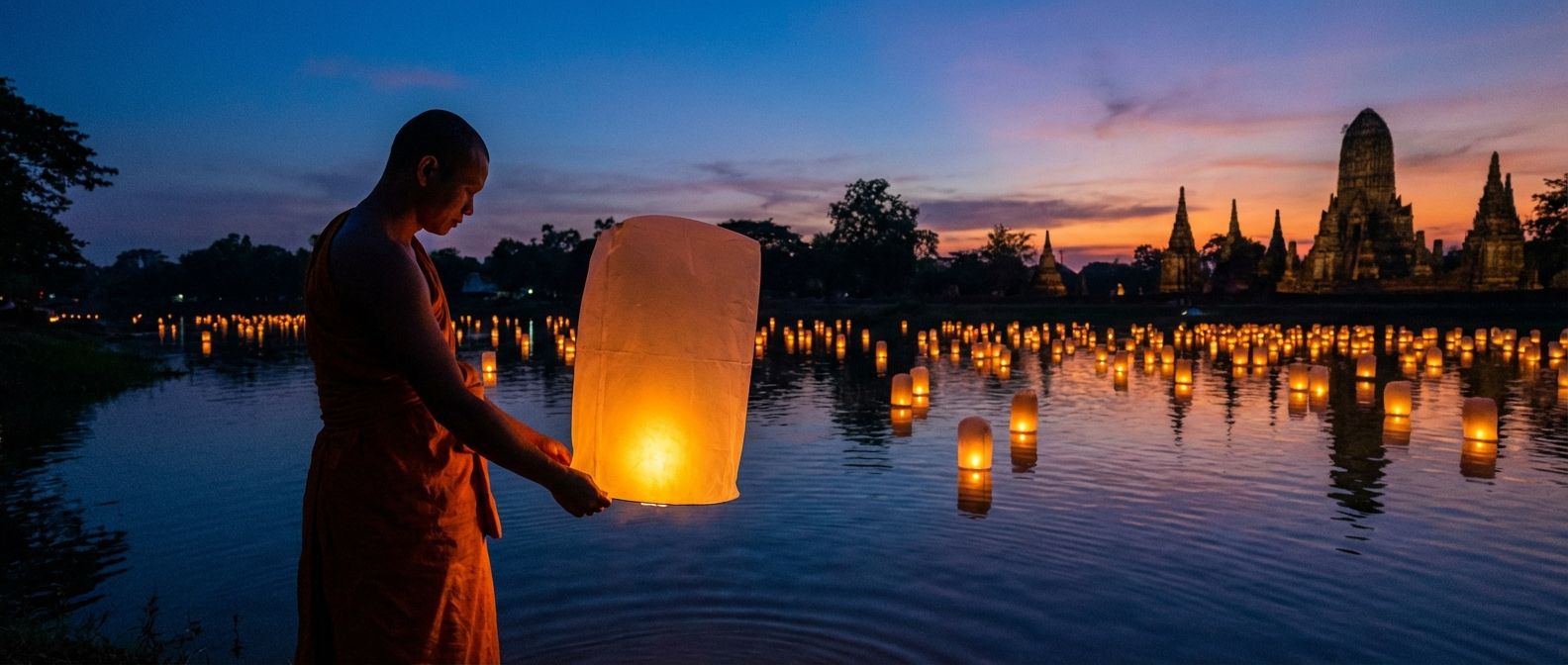
A Buddhist monk, cloaked in saffron robes, stands silhouetted against a twilight sky, releasing a glowing lantern onto a calm river. The soft light illuminates the water, with more lanterns gently drifting into the distance, symbolizing transition and remembrance in a serene, contemplative wide shot.

Management & Tools

Deck Contents

50 Cards
Lesson#1
In this deck you will learn about death rituals in three distinct Buddhist traditions: Theravada, Japanese, and Tibetan. Death is one of the most important moments in Buddhist life, not because it is an ending, but because it is a transition. What happens at the moment of death, and in the days and weeks that follow, is believed to have a direct impact on where a person is reborn next. Understanding how each tradition approaches death will help you answer exam questions about Buddhist practices, and it will also give you powerful contrasting examples to use in 12-mark evaluation answers.
Lesson#2
Before we look at each tradition, it helps to understand the shared Buddhist framework that underlies all three. Buddhism teaches that death is not the end of existence. Because of kamma — the law of intentional action and its consequences — a person's mental and moral state at the moment of death, and the actions they have accumulated throughout their life, shape the nature of their next rebirth. The cycle of birth, death, and rebirth is called samsara. The goal of Buddhist practice is ultimately to escape samsara altogether and reach nibbana. Death rituals in all three traditions are therefore not simply about mourning. They are about supporting the dying person and the recently deceased through this critical transition, and about generating merit — positive kamma — that can benefit the deceased in their next life.
Quiz#3
In Buddhism, what is the term for the cycle of birth, death, and rebirth?

samsara

Quiz#4
In Buddhist teaching, what determines the nature of a person's next rebirth?

kamma

Lesson#5
Let us begin with Theravada death rituals. Theravada Buddhism is the dominant tradition in countries such as Sri Lanka, Thailand, Myanmar, and Cambodia. In Theravada teaching, the moment of death is spiritually significant because the last thought a person has is believed to condition the first moment of their next rebirth. This is why a calm, clear, and virtuous state of mind at death is so important. Family members and monks will often gather around the dying person to help create a peaceful atmosphere and to encourage positive thoughts.
Lesson#6
Monks play a central role in Theravada death rituals. When someone dies, monks are invited to the home or to the funeral to chant passages from the Pali scriptures. This chanting serves several purposes. It creates a spiritually positive environment. It reminds the living of the Buddha's teachings on impermanence and the nature of suffering. And it is believed to generate merit — positive kamma — which can be transferred to the deceased to support a better rebirth. The family listens to the chanting and participates by making offerings to the monks, such as food, robes, or other necessities. By giving generously, the family also generates merit, which they then formally dedicate to the deceased. This act of merit transfer is one of the most distinctive features of Theravada death practice.

Login to View Content

Create a free account or log in to see all 50 cards and start studying this deck.

Learn Buddhist Death Rituals: Theravada, Japanese and Tibetan Traditions — AQA GCSE Religious Studies differently

Auracle is an audio-first learning platform built for busy people. Memorize anything without looking at a screen.

Hands-Free Learning

Listen, interact, and review cards entirely through audio. Perfect for commuting, walking, or at the gym.

Spaced Repetition

Auracle uses a scientific algorithm to schedule your reviews at the optimal time, ensuring you never forget what you learn.

Learn how it works

Ready to start the Buddhist Death Rituals: Theravada, Japanese and Tibetan Traditions — AQA GCSE Religious Studies audio deck?