
GCSE Religious Studies (AQA): Buddhism
This is your complete AQA GCSE Religious Studies paper on Buddhism, covered. We go through all the required Beliefs and Practices – from the life of the Buddha and the Four Noble Truths to meditation and festivals.
GCSE Religious Studies (AQA): Buddhism
This is your complete AQA GCSE Religious Studies paper on Buddhism, covered. We go through all the required Beliefs and Practices – from the life of the Buddha and the Four Noble Truths to meditation and festivals.
Decks in this Course
10 items
The Dhamma and the Three Marks of Existence: AQA GCSE Religious Studies Buddhism
Covers the concept of Dhamma as natural law and the Buddha's teaching, dependent arising and the twelve nidanas, and all three Marks of Existence: anicca, anatta, and dukkha. Includes the critical anatta misconception and exam application guidance.
Human Personality and Destiny in Theravada and Mahayana Buddhism: AQA GCSE Religious Studies
Covers the Theravada account of human personality through the Five Aggregates, the Mahayana account through sunyata and Buddha-nature, and human destiny in both traditions including the Arhat ideal, the Bodhisattva ideal, full Buddhahood, and the Pure Land with Amitabha Buddha. Explicitly contrasts Theravada and Mahayana throughout as a high-priority exam comparison.

The Life of the Buddha: AQA GCSE Religious Studies Buddhism
Covers the key events of the Buddha's life and their significance for Buddhist teaching, including his birth and sheltered upbringing, the Four Sights from Jataka 075, the ascetic life and its abandonment, the Middle Way, and the Enlightenment at Bodh Gaya. Each event is taught as both narrative and exam evidence for 4-mark and 5-mark answers.

The Four Noble Truths and the Eightfold Path: AQA GCSE Religious Studies Buddhism
Covers all four Noble Truths in full including the three types of dukkha, the Three Poisons, interpretations of nibbana and parinirvana, the Noble Eightfold Path with all eight steps assigned to the Threefold Way, and active memorisation of Dhammapada 190 to 191 with exam deployment guidance.
Buddhist Places of Worship and Puja: AQA GCSE Religious Studies Buddhism
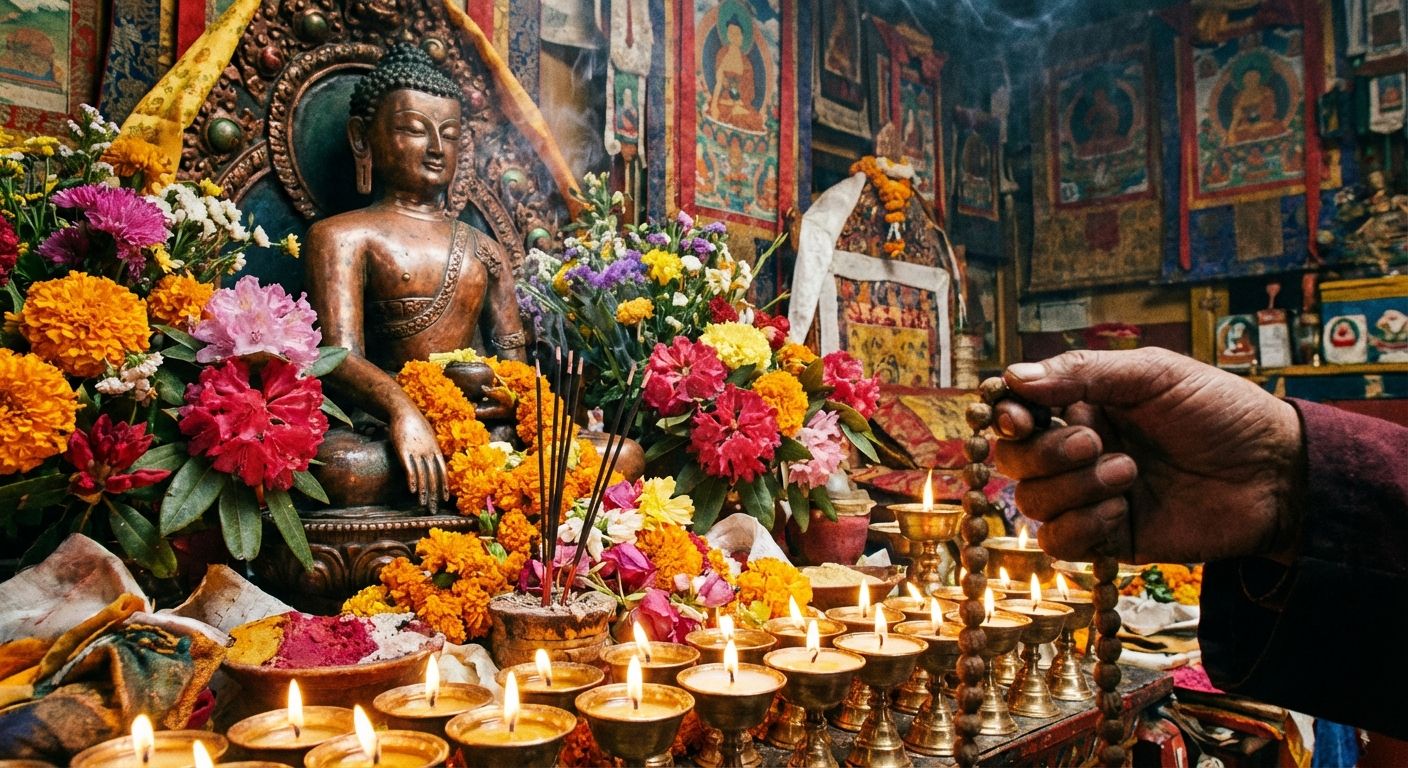
Covers Buddhist places of worship including temples, shrines, viharas and gompas; the key features and symbolic meanings of offerings at shrines; and the full practice of puja including chanting, mantra recitation and the use of malas.

Buddhist Meditation: Samatha, Vipassana and Visualisation: AQA GCSE Religious Studies
Covers the three forms of meditation on the AQA GCSE Religious Studies specification: Samatha concentration meditation including mindfulness of breathing, Vipassana insight meditation including zazen, and visualisation of Buddhas and Bodhisattvas in Mahayana and Vajrayana contexts. Explicitly contrasts the aims and methods of Samatha and Vipassana.
Buddhist Death Rituals: Theravada, Japanese and Tibetan Traditions — AQA GCSE Religious Studies
Covers the death and mourning ceremonies of three Buddhist traditions as required by the AQA specification: Theravada, Japanese, and Tibetan. Connects each tradition's rituals to Buddhist beliefs about rebirth and karma. Includes the Bardo Thodol, the bardos, sky burial, ancestor veneration, and the role of monks and lamas.

Buddhist Festivals and Retreats in Britain: Wesak and Parinirvana Day: AQA GCSE Religious Studies
Covers the origins, dates, celebrations and significance of Wesak and Parinirvana Day for Buddhists in Great Britain today, plus the purpose and significance of retreats, as required by the AQA GCSE Religious Studies A specification.

Buddhist Ethics: Kamma, Rebirth, Compassion and Loving Kindness: AQA GCSE Religious Studies
Covers the three core ethical teachings of Buddhism required for AQA GCSE Religious Studies: kamma and its relationship to rebirth and samsara; rebirth including the six realms and the distinction from reincarnation; compassion (karuna) and the Bodhisattva ideal; and loving kindness (metta) including the Metta Sutta and metta meditation.
The Five Moral Precepts and the Six Perfections: AQA GCSE Religious Studies Buddhism
This deck covers all five moral precepts of Buddhism with their correct wording, meaning and application, and all six perfections of the Mahayana tradition with their Sanskrit terms, how each is developed, and their significance on the Bodhisattva path.
Learn GCSE Religious Studies (AQA): Buddhism differently
Auracle is an audio-first learning platform built for busy people. Memorize anything without looking at a screen.
Hands-Free Learning
Listen, interact, and review cards entirely through audio. Perfect for commuting, walking, or at the gym.
Spaced Repetition
Auracle uses a scientific algorithm to schedule your reviews at the optimal time, ensuring you never forget what you learn.
Learn how it works