Tutorial

AQA GCSE Chemistry: Identify Properties of Transition Metals

This deck covers the typical properties of transition metals, such as high density, high melting points, and low reactivity. It focuses on their special characteristics, including their roles as catalysts, their ability to form ions with different charges, and their formation of coloured compounds, comparing them throughout with Group 1 metals.
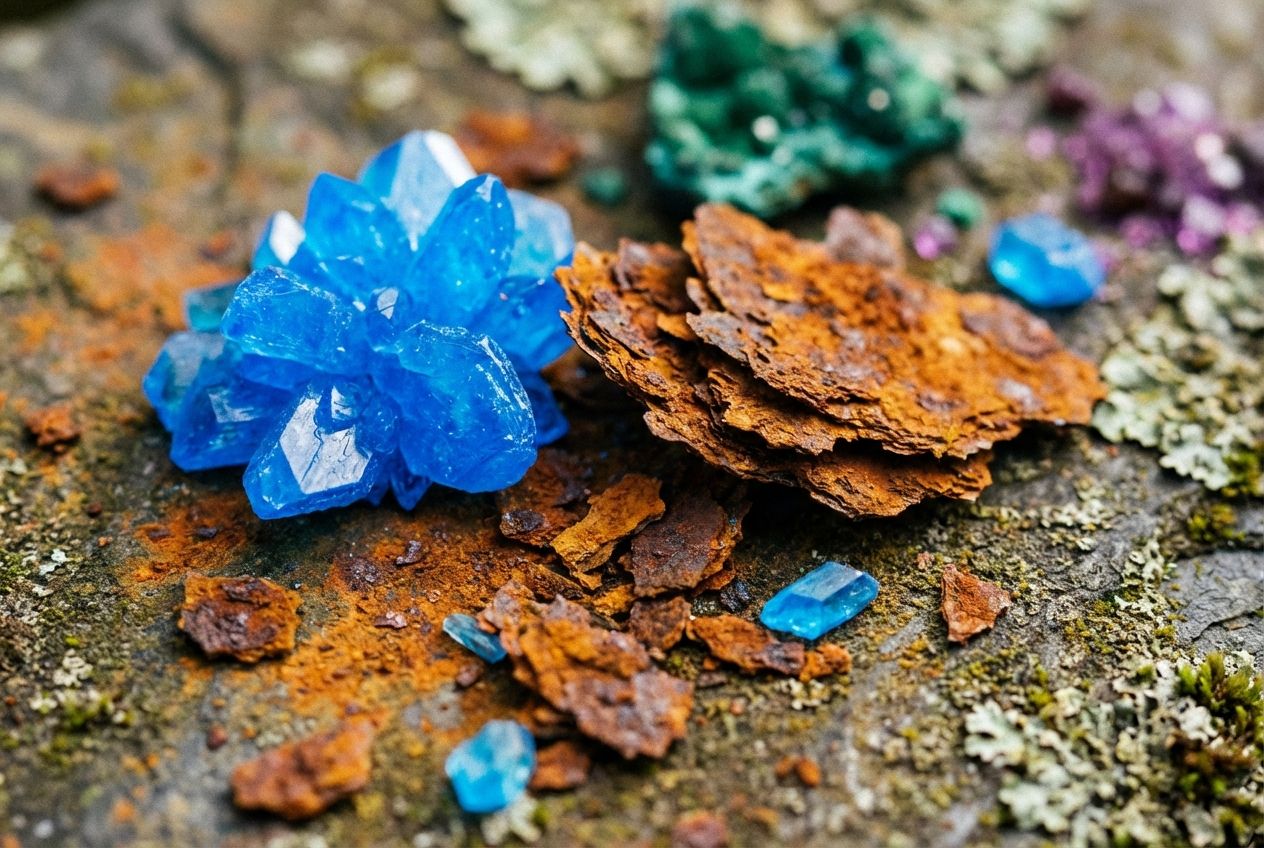
A dramatic, close-up photograph showcasing the vibrant, distinct colours of transition metal compounds, featuring brilliant blue copper sulfate crystals next to rich, earthy orange-brown rust (iron oxide). The scene is bathed in natural light, emphasizing the crystalline and textured surfaces, composed for a wide 3:2 landscape frame.

Management & Tools

Deck Contents

19 Cards
Lesson#1
In the last deck, we looked at the highly reactive Group 1 alkali metals. Now, we'll turn our attention to a different block of metals in the middle of the periodic table: the transition metals. You'll learn about their typical properties, such as high density and strength, and discover some special characteristics that make them so useful, like their ability to form coloured compounds and act as catalysts. We'll also compare them directly with the Group 1 metals you've already studied.
Lesson#2
Let's start by comparing the physical properties of transition metals with Group 1 metals. Think about a typical transition metal, like iron or copper. They are strong, hard, and dense. Now think about a Group 1 metal like sodium, which is so soft you can cut it with a knife. Transition metals have much higher melting points and boiling points than Group 1 metals. For example, iron melts at over 1500 degrees Celsius, while sodium melts at just under 100 degrees Celsius.
Quiz#3
Compared to Group 1 metals, are transition metals generally more or less dense?

more dense

Quiz#4
Compared to Group 1 metals, do transition metals generally have higher or lower melting points?

higher

Quiz#5
In terms of physical properties, are transition metals generally harder or softer than Group 1 metals?

harder

Lesson#6
Now let's consider chemical reactivity. You'll remember that Group 1 metals react vigorously, especially with water, oxygen, and halogens. Transition metals are a different story. They are much less reactive. For instance, iron rusts slowly in the presence of oxygen and water, whereas sodium reacts almost explosively. This lower reactivity is one reason why transition metals are so useful for construction and making everyday objects.

Login to View Content

Create a free account or log in to see all 19 cards and start studying this deck.

Learn AQA GCSE Chemistry: Identify Properties of Transition Metals differently

Auracle is an audio-first learning platform built for busy people. Memorize anything without looking at a screen.

Hands-Free Learning

Listen, interact, and review cards entirely through audio. Perfect for commuting, walking, or at the gym.

Spaced Repetition

Auracle uses a scientific algorithm to schedule your reviews at the optimal time, ensuring you never forget what you learn.

Learn how it works

Ready to start the AQA GCSE Chemistry: Identify Properties of Transition Metals audio deck?