Tutorial

AQA GCSE Physics: Radioactive Decay

Covers the process of radioactive decay in unstable atomic nuclei. Describes the nature, properties (penetrating power, ionising power, range in air), and symbols of alpha particles, beta particles, and gamma rays. Includes how to write and balance nuclear equations for radioactive decay.
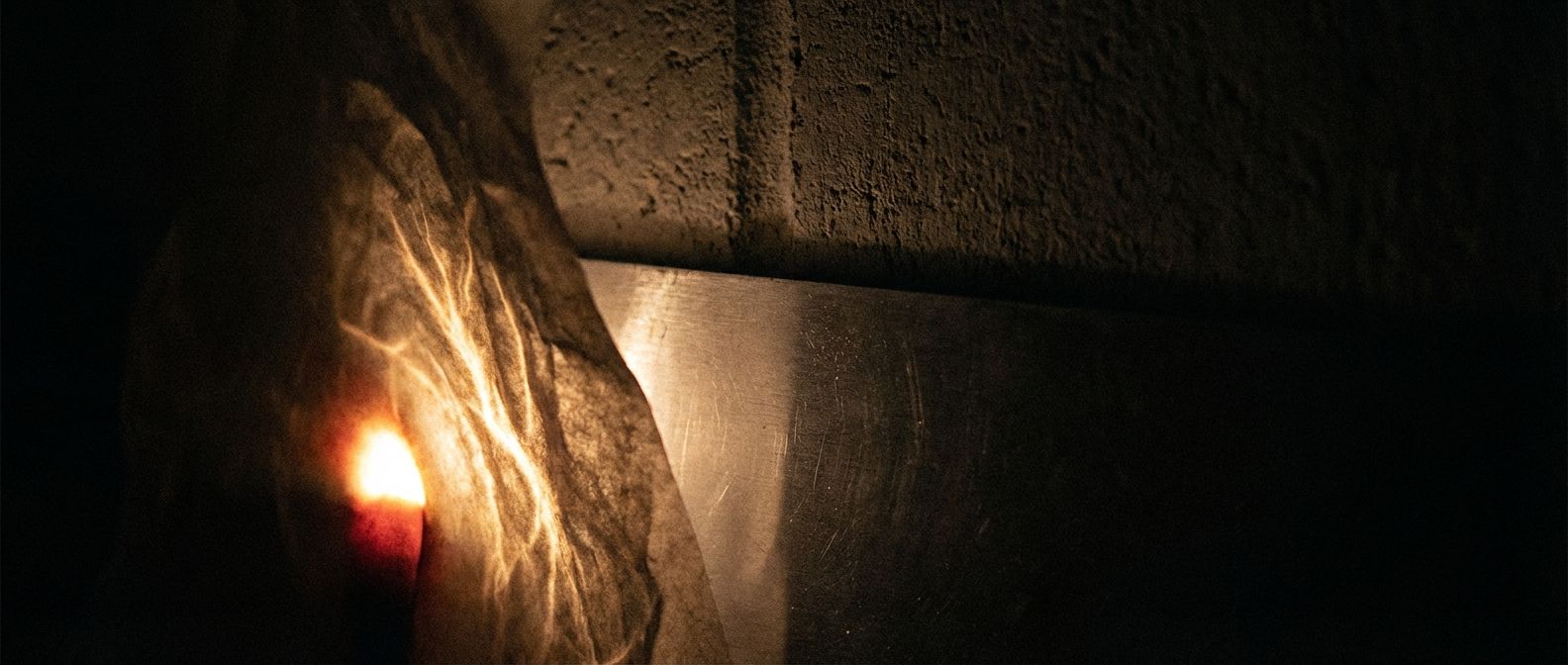
A dramatic, close-up photograph of an intense, ethereal glow emanating from a dark, unseen source. The powerful light pierces effortlessly through a delicate, crumpled sheet of paper, then struggles to faintly illuminate a thin sheet of brushed aluminum, before being completely absorbed by a thick, rough concrete wall in the background. The scene is cast in deep shadows with the glowing light as the sole, mysterious illumination, emphasizing the varying penetration of unseen forces in a wide, horizontal frame.

Management & Tools

Deck Contents

32 Cards
Lesson#1
In the previous deck, we looked at the structure of the atom. Now, we'll explore what happens when the nucleus of an atom is unstable. This deck covers radioactive decay, the different types of radiation, and how we represent these changes in nuclear equations.
Lesson#2
The nucleus of an atom contains protons and neutrons. For a nucleus to be stable, it needs a balanced ratio of these particles. If there are too many protons, too many neutrons, or if the nucleus is simply too large, it becomes unstable.
Quiz#3
In an atom, what causes the nucleus to be unstable?

An imbalance of protons and neutrons

Lesson#4
To become more stable, an unstable nucleus will break down and release energy in the form of radiation. This process is called radioactive decay. It's important to know that for any single nucleus, this process is completely random. We can't predict exactly when it will decay.
Quiz#5
What is the name for the process where an unstable nucleus emits radiation to become more stable?

Radioactive decay

Quiz#6
Is the decay of an individual atomic nucleus a predictable or a random process?

Random

Login to View Content

Create a free account or log in to see all 32 cards and start studying this deck.

Learn AQA GCSE Physics: Radioactive Decay differently

Auracle is an audio-first learning platform built for busy people. Memorize anything without looking at a screen.

Hands-Free Learning

Listen, interact, and review cards entirely through audio. Perfect for commuting, walking, or at the gym.

Spaced Repetition

Auracle uses a scientific algorithm to schedule your reviews at the optimal time, ensuring you never forget what you learn.

Learn how it works

Ready to start the AQA GCSE Physics: Radioactive Decay audio deck?