Tutorial

AQA GCSE Chemistry: Identifying Gases and Metal Ions

Covers the standard laboratory tests to identify common gases (hydrogen, oxygen, carbon dioxide, chlorine) and the use of flame tests to identify common metal cations (lithium, sodium, potassium, calcium, copper).
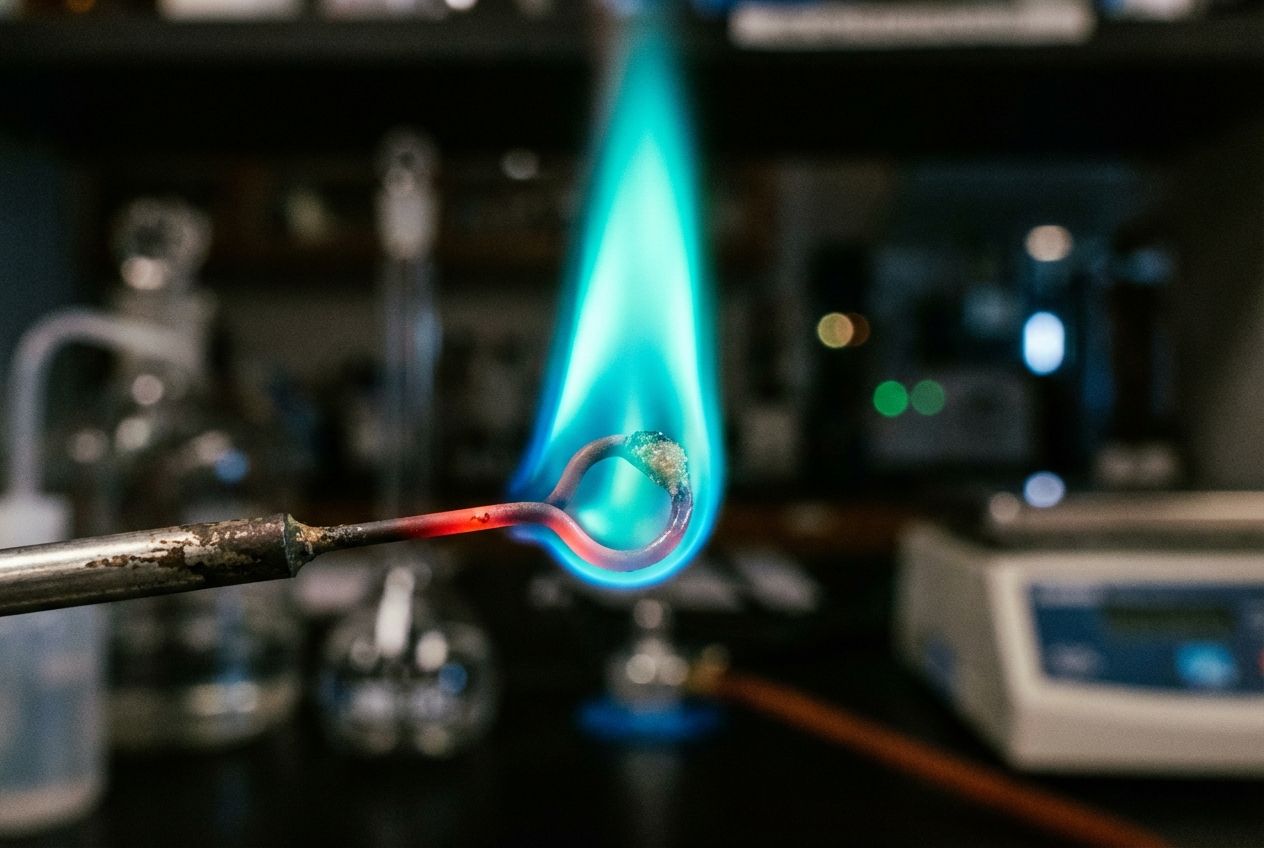
A dramatic close-up photograph of a nichrome wire loop holding a chemical sample, glowing with an intense, vibrant blue-green flame against a dark, blurred laboratory background, composed for a 3:2 landscape frame.

Management & Tools

Deck Contents

25 Cards
Lesson#1
In this deck, you'll learn some fundamental techniques used in chemical analysis. We'll cover the standard laboratory tests to identify four common gases: hydrogen, oxygen, carbon dioxide, and chlorine. Then, we'll look at how to use flame tests to identify different metal ions by the unique colours they produce in a flame.
Lesson#2
When chemical reactions happen, they often produce gases. To figure out what reaction has occurred, chemists need to identify these gases. There are simple, reliable tests for the most common ones you'll encounter at GCSE.
Lesson#3
First, let's look at hydrogen. Hydrogen is a very reactive gas and is highly flammable. The test for hydrogen uses this property. You place a lit splint into the test tube containing the gas. If hydrogen is present, it will burn with a distinctive 'squeaky pop' sound.
Quiz#4
What is the chemical test for hydrogen gas?

a lit splint

Quiz#5
What is the positive result for the hydrogen gas test?

a squeaky pop

Lesson#6
Next is oxygen. Oxygen isn't flammable itself, but it is essential for combustion, or burning. The test for oxygen uses this fact. You take a splint that is glowing, but not on fire, and place it into the test tube of gas. If oxygen is present, the glowing splint will relight.

Login to View Content

Create a free account or log in to see all 25 cards and start studying this deck.

Learn AQA GCSE Chemistry: Identifying Gases and Metal Ions differently

Auracle is an audio-first learning platform built for busy people. Memorize anything without looking at a screen.

Hands-Free Learning

Listen, interact, and review cards entirely through audio. Perfect for commuting, walking, or at the gym.

Spaced Repetition

Auracle uses a scientific algorithm to schedule your reviews at the optimal time, ensuring you never forget what you learn.

Learn how it works

Ready to start the AQA GCSE Chemistry: Identifying Gases and Metal Ions audio deck?