Tutorial

AQA GCSE Geography: Paper 2 - The UK Economy

Learn about the changing UK economy. This deck covers the move to a post-industrial economy, the development of science and business parks, the impacts of industry on the environment, and the UK's changing political and trading relationships.
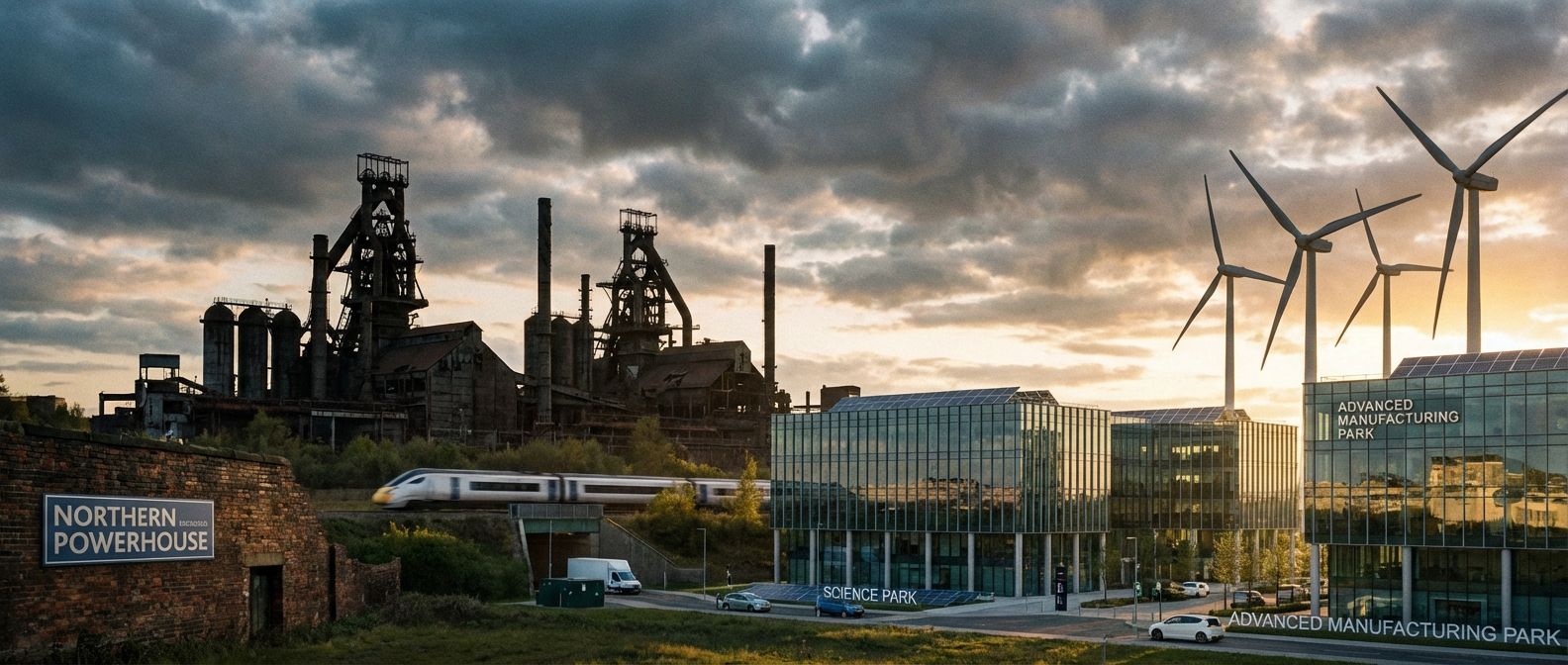
A dramatic wide-angle photograph capturing the UK's economic transition. In the background, the imposing, weathered ruins of an old coal mine or steel mill stand silhouetted against a cloudy sky. In the foreground, sleek, modern glass buildings of a science park and a cluster of gleaming wind turbines catch the light, symbolizing the shift to a post-industrial, sustainable future.

Management & Tools

Deck Contents

28 Cards
Lesson#1
In this deck, we'll explore the dynamic and changing economy of the UK. We'll examine the major shift from an industrial economy, based on making things, to a post-industrial economy, based on services and information. You'll learn about new developments like science parks, the environmental challenges of industry, the persistent north-south divide, and how the UK's place in the global economy continues to evolve.
Lesson#2
For much of the 19th and 20th centuries, the UK's economy was dominated by heavy industry like coal mining, steel production, and shipbuilding. This is known as an industrial economy. However, since the 1970s, these industries have declined significantly, a process called de-industrialisation. In their place, sectors based on services, finance, and high-tech research have grown. This new economic structure is called a post-industrial economy.
Quiz#3
What is the term for the decline of traditional manufacturing industries in a country like the UK?

de-industrialisation

Quiz#4
What term describes an economy where manufacturing has declined, and the service and research sectors have become dominant?

post-industrial

Quiz#5
In the UK's post-industrial economy, which two economic sectors have seen the most growth?

tertiary and quaternary

Lesson#6
So, why did de-industrialisation happen in the UK? There were several key reasons. Firstly, mechanisation and new technologies meant fewer people were needed to do the same work. Secondly, there was increasing competition from abroad, particularly from newly emerging economies where production costs were lower. Finally, government policies in the 1980s were aimed at shifting the economy away from these traditional industries. For your exam, being able to name a cause of de-industrialisation is a key piece of knowledge.

Login to View Content

Create a free account or log in to see all 28 cards and start studying this deck.

Learn AQA GCSE Geography: Paper 2 - The UK Economy differently

Auracle is an audio-first learning platform built for busy people. Memorize anything without looking at a screen.

Hands-Free Learning

Listen, interact, and review cards entirely through audio. Perfect for commuting, walking, or at the gym.

Spaced Repetition

Auracle uses a scientific algorithm to schedule your reviews at the optimal time, ensuring you never forget what you learn.

Learn how it works

Ready to start the AQA GCSE Geography: Paper 2 - The UK Economy audio deck?