Tutorial

GCSE History: Mao's China - Economic policy, 1949–65

This deck covers Mao's economic policies from 1949 to 1965. It details early agricultural changes like land redistribution and collectivisation, the first Five-Year Plan for industry, the Great Leap Forward (1958-62), and the period of economic reform under Liu Shaoqi and Deng Xiaoping from 1962 to 1965.
GCSE History: Mao's China - Economic policy, 1949–65

Management & Tools

Deck Contents

37 Cards
Lesson#1
In this deck, we'll explore the dramatic economic policies of Mao's China between 1949 and 1965. You'll learn how the Communists first reformed agriculture, then launched an ambitious Soviet-style industrial plan. We'll then dive deep into the disastrous Great Leap Forward and the terrible famine it caused, before looking at the pragmatic reforms that followed. Understanding these economic shifts is crucial for your GCSE History exam, as they reveal the clash between Mao's ideology and China's reality.
Lesson#2
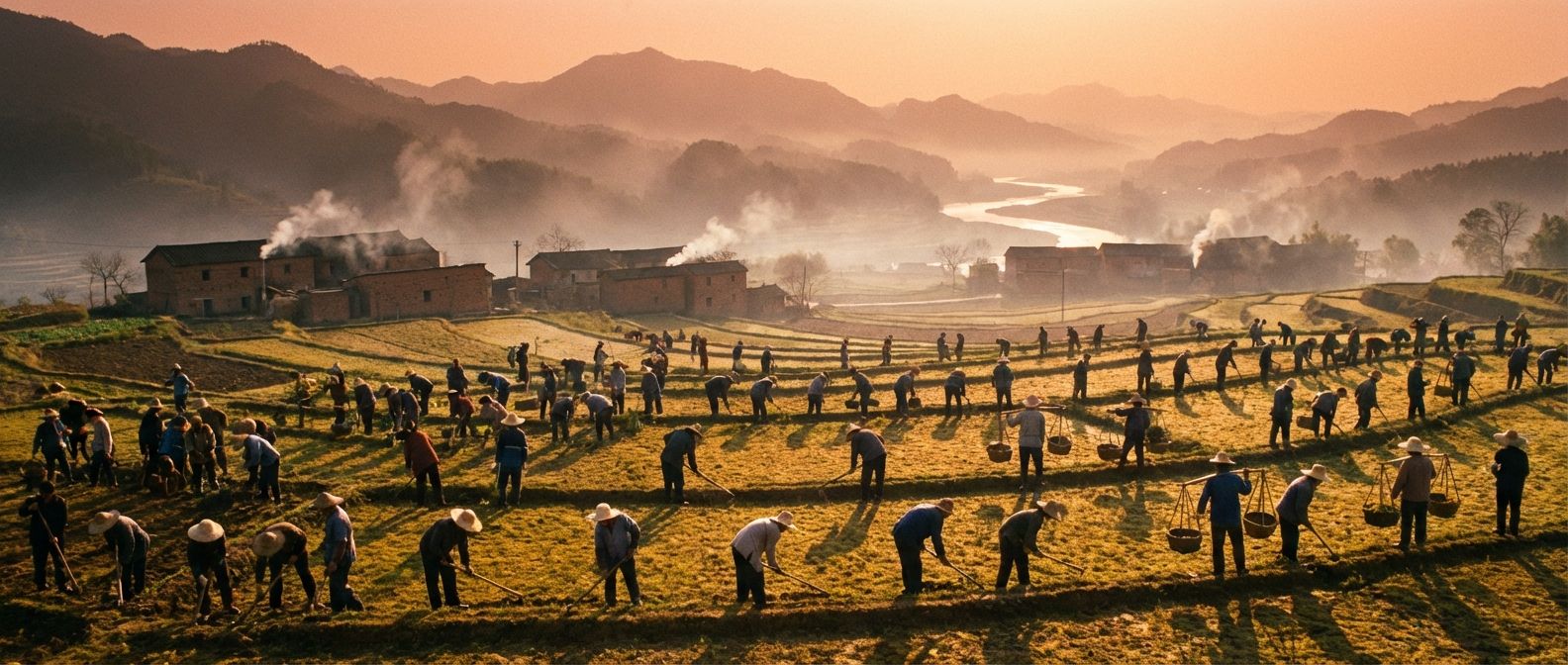
After winning the Civil War in 1949, the Communists faced a huge challenge: feeding China's massive population. Their first major economic policy targeted the countryside. The Agrarian Reform Law of 1950 seized land from wealthy landlords and redistributed it to millions of poor peasants. This was an incredibly popular move that helped secure support for the new regime. For the exam, this is a key example of how the CCP consolidated its power in its early years.
Quiz#3
What 1950 law redistributed land from landlords to peasants in China?

Agrarian Reform Law

Lesson#4
While popular, giving land to peasants was only a temporary step for Mao. The Communist Party believed that small, individual farms were inefficient. So, they encouraged peasants to form Mutual Aid Teams, where families would share tools, animals, and labour. This was the first step on the road to collectivisation, moving away from private ownership towards state control of agriculture.
Quiz#5
In the early 1950s, what were the small groups of Chinese peasants called who shared tools and labour?

Mutual Aid Teams

Lesson#6
These Mutual Aid Teams soon grew into larger Agricultural Producers' Co-operatives, or APCs, where peasants pooled their land as well as their tools. At first, this was voluntary. But from 1953, the process was sped up and became enforced. Peasants were forced to join collectives, giving up their newly-acquired land. This policy was designed to increase state control over food supply to feed the growing cities and fund industrialisation.

Login to View Content

Create a free account or log in to see all 37 cards and start studying this deck.

Learn GCSE History: Mao's China - Economic policy, 1949–65 differently

Auracle is an audio-first learning platform built for busy people. Memorize anything without looking at a screen.

Hands-Free Learning

Listen, interact, and review cards entirely through audio. Perfect for commuting, walking, or at the gym.

Spaced Repetition

Auracle uses a scientific algorithm to schedule your reviews at the optimal time, ensuring you never forget what you learn.

Learn how it works

Ready to start the GCSE History: Mao's China - Economic policy, 1949–65 audio deck?