Tutorial

AQA GCSE Geography: Paper 1 (Optional) - The Living World: Hot Deserts

This is an optional topic. Check with your teacher before studying. Learn about the characteristics of hot deserts, including their climate and soil, and how plants and animals adapt to these extreme conditions. This deck also covers development opportunities and challenges in hot deserts, including a case study.
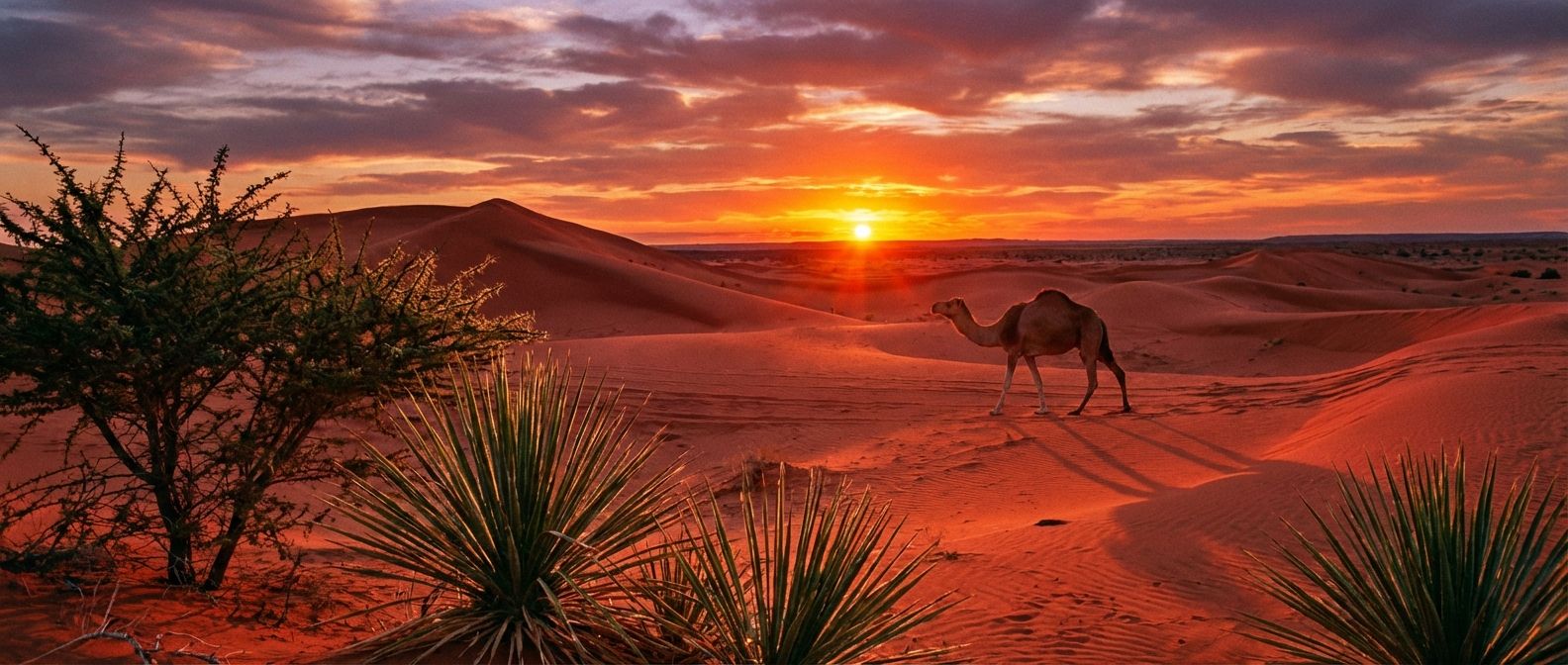
A dramatic wide-angle photograph of a lone dromedary camel walking across vast, undulating red sand dunes at sunset, with a few spiky, adapted desert plants in the foreground, emphasizing the extreme yet beautiful and living desert landscape.

Management & Tools

Deck Contents

50 Cards
Lesson#1
In this deck, we'll explore the extreme environment of hot deserts. This is an optional topic in Paper 1 of your AQA GCSE Geography exam, so make sure to check with your teacher that you are studying it. We will cover the unique climate and characteristics of hot deserts, look at the incredible ways plants and animals have adapted to survive there, and investigate the opportunities and challenges for human development in these arid landscapes.
Lesson#2
Hot deserts are mainly found in a belt between 15 and 30 degrees north and south of the equator. These are areas of high atmospheric pressure, where air sinks, meaning very few clouds form and rainfall is extremely low. Famous examples include the Sahara in North Africa, the Arabian Desert, and the Great Victoria Desert in Australia.
Quiz#3
In GCSE Geography, near what lines of latitude are most hot deserts found?

Tropics of Cancer and Capricorn

Lesson#4
The climate in a hot desert is one of extremes. Daytime temperatures can soar to over 40 degrees Celsius, but at night, with no cloud cover to trap the heat, they can plummet to below freezing. This huge difference between day and night temperature is a key characteristic.
Quiz#5
What is the geographical term for the large difference between the maximum and minimum temperature in a 24-hour period, common in hot deserts?

diurnal range

Lesson#6
Rainfall is the other defining feature. Hot deserts are defined as having less than 250 millimetres of rain per year. And when it does rain, it's often in short, intense, and unreliable downpours.

Login to View Content

Create a free account or log in to see all 50 cards and start studying this deck.

Learn AQA GCSE Geography: Paper 1 (Optional) - The Living World: Hot Deserts differently

Auracle is an audio-first learning platform built for busy people. Memorize anything without looking at a screen.

Hands-Free Learning

Listen, interact, and review cards entirely through audio. Perfect for commuting, walking, or at the gym.

Spaced Repetition

Auracle uses a scientific algorithm to schedule your reviews at the optimal time, ensuring you never forget what you learn.

Learn how it works

Ready to start the AQA GCSE Geography: Paper 1 (Optional) - The Living World: Hot Deserts audio deck?