Tutorial

AQA GCSE Geography: Paper 1 - Introduction to Natural Hazards

Understand the key concepts of natural hazards, including the definition of a hazard, factors affecting hazard risk, and the distinction between different types of natural hazards.
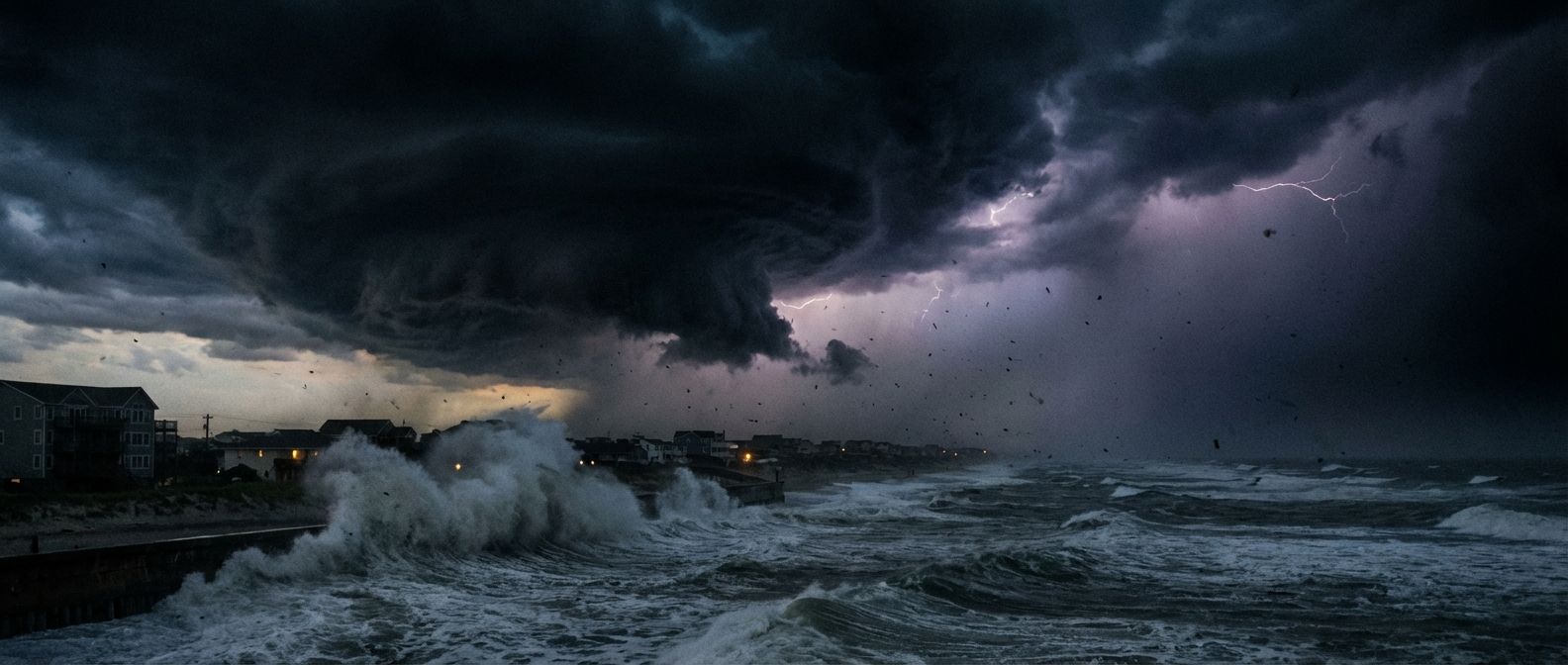
A dramatic wide-angle photograph captures the dark, swirling eye wall of a powerful hurricane approaching a vulnerable coastal town at dusk. Massive waves crash against the shore, and the few lights from the town appear dim against the overwhelming force of the looming storm, emphasizing nature's immense power against human settlements.

Management & Tools

Deck Contents

21 Cards
Lesson#1
Welcome to this deck on natural hazards, a key topic for Paper 1 of your AQA GCSE Geography exam. We'll explore what a natural hazard is, why some places are more at risk than others, and the different types of hazards that can affect our planet and its people. Understanding these core concepts is essential for building strong exam answers.
Lesson#2
To start, let's be clear about the difference between a natural event and a natural hazard. A natural event is simply a process that occurs in the physical environment, like an earthquake shaking the ground or a tropical storm forming over the ocean. By itself, an earthquake in an unpopulated desert is just a natural event.
Lesson#3
So, when does a natural event become a natural hazard? The crucial factor is people. A natural hazard is a natural event that has the potential to threaten human life and property. That earthquake in the desert becomes a hazard when it happens under a city, threatening buildings, infrastructure, and people's lives. The key takeaway for your exam is that a hazard is the interaction between a natural process and human activity.
Quiz#4
In GCSE Geography, what term describes a natural event that threatens human life and property?

natural hazard

Quiz#5
What factor turns a natural event, like an earthquake, into a natural hazard?

threat to people

Lesson#6
Now let's look at hazard risk. This is the probability or chance that a natural hazard may actually take place and affect people. For example, people living on the coast of the Caribbean have a high risk from hurricanes. But the level of risk isn't just about where you live. It's also affected by how prepared a community is, and how easily they can be harmed.

Login to View Content

Create a free account or log in to see all 21 cards and start studying this deck.

Learn AQA GCSE Geography: Paper 1 - Introduction to Natural Hazards differently

Auracle is an audio-first learning platform built for busy people. Memorize anything without looking at a screen.

Hands-Free Learning

Listen, interact, and review cards entirely through audio. Perfect for commuting, walking, or at the gym.

Spaced Repetition

Auracle uses a scientific algorithm to schedule your reviews at the optimal time, ensuring you never forget what you learn.

Learn how it works

Ready to start the AQA GCSE Geography: Paper 1 - Introduction to Natural Hazards audio deck?