Tutorial

AQA GCSE Geography: Paper 2 - Case Study of a Major City in a LIC/NEE: Lagos

Learn about the city of Lagos, Nigeria. This deck covers its location and importance, causes of growth, opportunities created (social and economic), and challenges of growth such as managing squatter settlements, water, sanitation, and traffic.
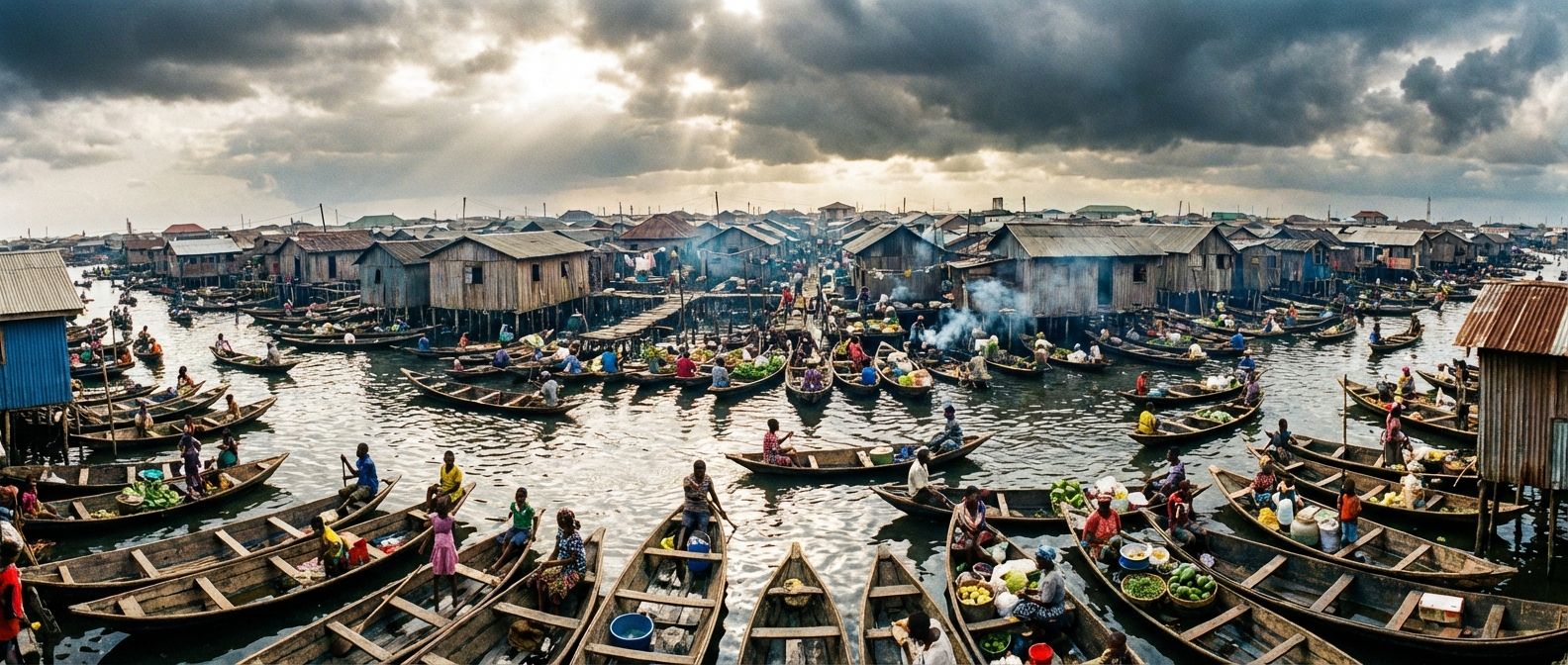
A wide-angle, vivid photograph capturing the bustling Makoko floating community in Lagos, Nigeria, built on stilts over the lagoon. The scene shows an intricate network of wooden structures and pathways, with small boats navigating the waterways, and people engaged in daily life amidst a dynamic, atmospheric sky.

Management & Tools

Deck Contents

30 Cards
Lesson#1
In this deck, we'll explore Lagos, a major city in Nigeria. As a case study for your GCSE Geography exam, Lagos is a perfect example of rapid urban growth in a Lower Income Country, or LIC. We will look at why it has grown so quickly, the opportunities this creates, and the huge challenges the city faces, from managing squatter settlements to traffic congestion. Understanding Lagos will help you answer questions about urban issues in the developing world.
Lesson#2
First, where is Lagos? It's located in Nigeria, on the coast of West Africa, right on the Atlantic Ocean. Its location is key to its importance. Nationally, it's Nigeria's largest city and its main financial centre. Although it's not the capital anymore, it remains the economic powerhouse of the country. Internationally, its large port makes it a major hub for trade across West Africa and beyond. For your exam, being able to describe its location and importance is often the first step in a case study question.
Quiz#3
Lagos is the largest city in which West African country?

Nigeria

Quiz#4
What is the primary national importance of Lagos to Nigeria's economy?

main financial centre

Quiz#5
What coastal feature makes Lagos internationally important for trade?

major port

Lesson#6
Lagos is one of the fastest-growing cities in the world. This incredible growth is driven by two main factors. The first is natural increase, which is when the birth rate is higher than the death rate, causing the population to grow from within. The second, and more significant factor, is rural-to-urban migration. Millions of people have moved from the Nigerian countryside to Lagos in search of a better life. They are pushed from rural areas by factors like poverty and lack of jobs, and pulled to Lagos by the prospect of work, better education, and healthcare.

Login to View Content

Create a free account or log in to see all 30 cards and start studying this deck.

Learn AQA GCSE Geography: Paper 2 - Case Study of a Major City in a LIC/NEE: Lagos differently

Auracle is an audio-first learning platform built for busy people. Memorize anything without looking at a screen.

Hands-Free Learning

Listen, interact, and review cards entirely through audio. Perfect for commuting, walking, or at the gym.

Spaced Repetition

Auracle uses a scientific algorithm to schedule your reviews at the optimal time, ensuring you never forget what you learn.

Learn how it works

Ready to start the AQA GCSE Geography: Paper 2 - Case Study of a Major City in a LIC/NEE: Lagos audio deck?