Tutorial

AQA GCSE Chemistry: Master Molar Solutions and Gas Volumes (Higher Tier)

Covers calculating concentration in moles per decimetre cubed and converting between mol/dm³ and g/dm³. Also covers calculations involving the volume of gases, using the molar gas volume.
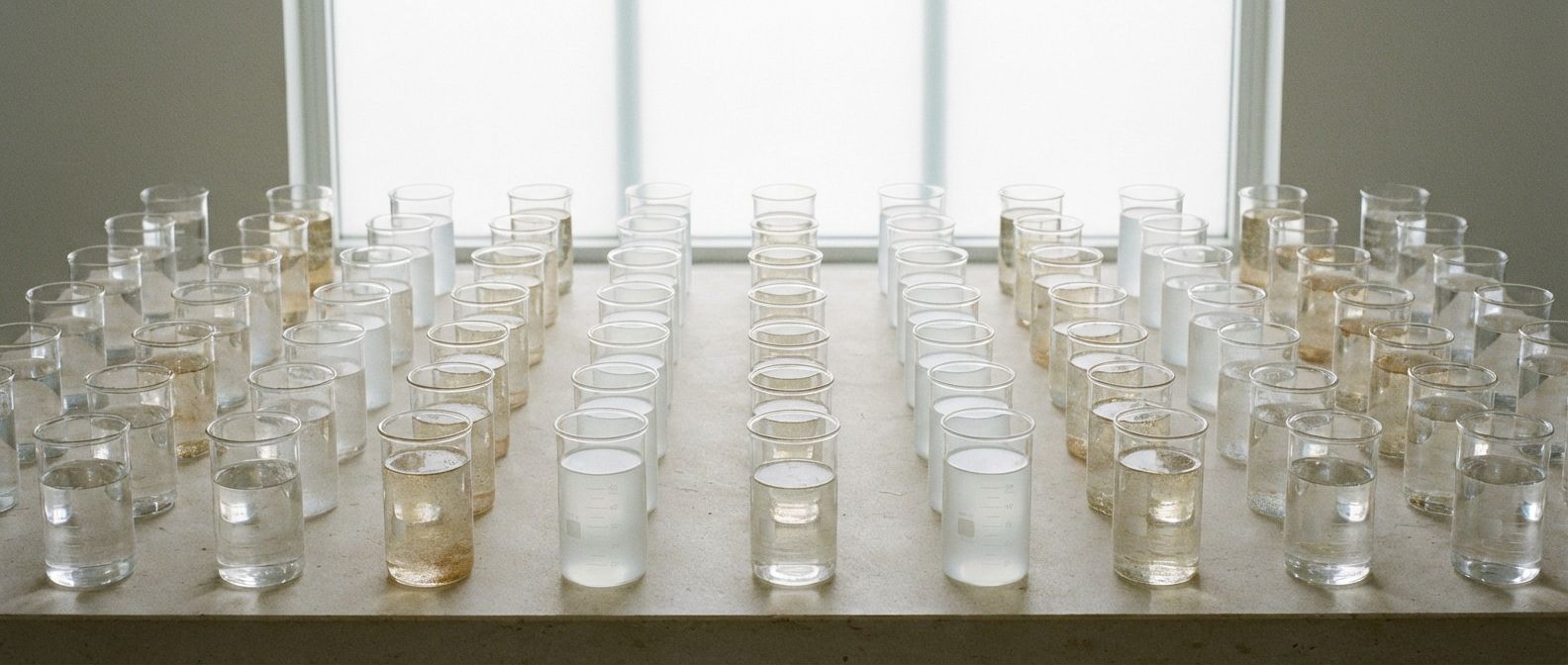
A wide, horizontal photograph of several perfectly identical, minimalist glass vessels of varying sizes, some containing clear liquids with subtly different concentrations of fine, shimmering particles, others appearing empty but with a barely perceptible, uniform, ethereal glow within, all meticulously arranged on a clean, light-coloured surface under soft, diffused light, emphasizing precision and the concept of quantifiable matter in defined spaces.

Management & Tools

Deck Contents

28 Cards
Lesson#1
Welcome to this deck on molar solutions and gas volumes. This is Higher Tier content, and it builds on your knowledge of moles. We will cover how to calculate the concentration of solutions in moles per decimetre cubed, and how to calculate the volume of gases.
Lesson#2
First, let's look at concentration. In chemistry, concentration tells us how much of a substance, called the solute, is dissolved in a certain volume of a solvent. For Higher Tier, you need to be able to calculate concentration in moles per decimetre cubed. A decimetre cubed is the same as one litre, or one thousand cubic centimetres.
Quiz#3
In GCSE Chemistry, what are the units for concentration when calculating with moles and volume in decimetres cubed?

moles per decimetre cubed

Quiz#4
How many cubic centimetres are there in one decimetre cubed?

1000

Lesson#5
The equation linking these quantities is: concentration equals the number of moles divided by the volume. It's crucial that the volume is in decimetres cubed. If you are given the volume in cubic centimetres, you must divide by one thousand to convert it first.
Quiz#6
What is the equation linking concentration, moles, and volume?

concentration equals moles divided by volume

Login to View Content

Create a free account or log in to see all 28 cards and start studying this deck.

Learn AQA GCSE Chemistry: Master Molar Solutions and Gas Volumes (Higher Tier) differently

Auracle is an audio-first learning platform built for busy people. Memorize anything without looking at a screen.

Hands-Free Learning

Listen, interact, and review cards entirely through audio. Perfect for commuting, walking, or at the gym.

Spaced Repetition

Auracle uses a scientific algorithm to schedule your reviews at the optimal time, ensuring you never forget what you learn.

Learn how it works

Ready to start the AQA GCSE Chemistry: Master Molar Solutions and Gas Volumes (Higher Tier) audio deck?