Tutorial

The Art of Living: Epicureanism

An exploration of Epicurean philosophy, covering the distinction between types of desires, the goals of ataraxia and aponia, the importance of friendship, and the Epicurean argument against fearing death.
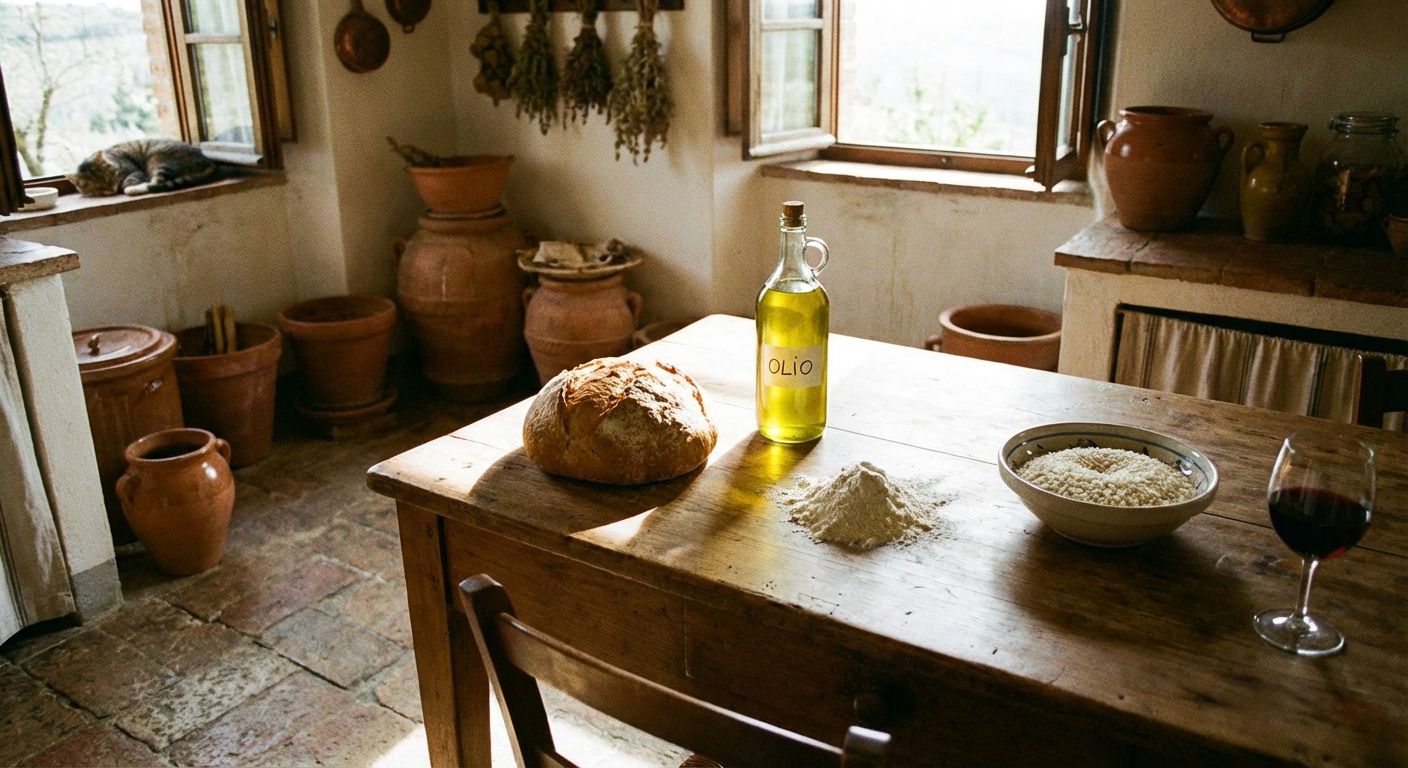
A rustic wooden table in a sunlit Italian kitchen, showcasing a beautiful array of ingredients: a freshly baked loaf of crusty bread, a glass bottle of olive oil, a small pile of flour, a bowl of uncooked rice, and a glass of red wine. The scene, bathed in warm natural light, evokes the simple pleasure of having "some" of each essential component for an Italian meal.

Management & Tools

Deck Contents

23 Cards
Lesson#1
When most people hear the word Epicurean today, they picture someone who lives for fine dining, expensive wine, and sensory indulgence. A connoisseur of pleasures. But this is almost the exact opposite of what Epicurus actually taught. The real Epicurus lived on bread, olives, and water, and considered this a feast. He wrote to a friend: 'Send me a pot of cheese, that when I like I may have a feast.' This is a man who could be delighted by a small pot of cheese. So what was he actually about? And why has his name become so thoroughly misunderstood?
Lesson#2
Epicurus was born in 341 BC on the Greek island of Samos, and he founded his school in Athens around 306 BC. The school was called simply 'the Garden', because it was, literally, a garden on the outskirts of the city. What made it scandalous was not the philosophy taught there, but who was allowed in. At a time when respectable philosophical schools were exclusive male institutions, Epicurus welcomed women, enslaved people, and people from all walks of life. His school was a community, almost a commune, built around a shared commitment to living well together. This was radical. And it tells you something essential about what Epicurus valued most.
Lesson#3
At the heart of Epicureanism is a simple but carefully reasoned claim: the goal of life is pleasure. This makes Epicurus a hedonist, in the philosophical sense. But here is where it gets interesting. Epicurus was not a simple hedonist who thought you should grab every pleasure available to you. He was a calculated hedonist. He observed that many pleasures come with hidden costs. Eating too much feels good in the moment but leads to discomfort and regret. Pursuing fame and power might bring temporary satisfaction but creates anxiety, rivalry, and dependence on the opinions of others. The Epicurean project is not to maximise pleasure in the short term, but to engineer a life in which pleasure, on balance, outweighs pain over the long run.
Lesson#4
To do this carefully, Epicurus developed a taxonomy of desires. He divided all human desires into three categories. First, there are natural and necessary desires. These are things like food, shelter, warmth, and friendship. They are easy to satisfy, and satisfying them brings genuine relief from pain. Second, there are natural but unnecessary desires. These include things like gourmet food, fine wine, and sexual pleasure. They are natural in the sense that they arise from our nature, but they are not necessary, because simpler alternatives exist. Third, and most dangerous, are vain or empty desires. These are desires for things like fame, political power, and unlimited wealth. They are not rooted in any natural need, they are culturally constructed, and crucially, they can never be fully satisfied. The more you get, the more you want.
Quiz#5
Into how many categories did Epicurus divide human desires?

three

Lesson#6
Epicurus's practical advice follows directly from this taxonomy. Satisfy your natural and necessary desires. They are cheap, reliable, and genuinely fulfilling. Be cautious about natural but unnecessary desires. Enjoy them occasionally if you can do so without anxiety or dependence, but do not let them become needs. And avoid vain desires altogether. The pursuit of fame, power, and unlimited wealth is a trap. It creates a treadmill of dissatisfaction from which you can never escape, because the goal keeps moving. Think about someone you know who has spent years chasing status or recognition. Have they found peace at any particular level of achievement? Or does the target simply shift upward each time they arrive?

Login to View Content

Create a free account or log in to see all 23 cards and start studying this deck.

Learn The Art of Living: Epicureanism differently

Auracle is an audio-first learning platform built for busy people. Memorize anything without looking at a screen.

Hands-Free Learning

Listen, interact, and review cards entirely through audio. Perfect for commuting, walking, or at the gym.

Spaced Repetition

Auracle uses a scientific algorithm to schedule your reviews at the optimal time, ensuring you never forget what you learn.

Learn how it works

Ready to start the The Art of Living: Epicureanism audio deck?