
The Art of Living: A Practical Guide to the Philosophy of Life
How do you live a good life? What's the point of it all? This course gives you the toolbox of history's greatest thinkers so you can start building your own answers.
The Art of Living: A Practical Guide to the Philosophy of Life
How do you live a good life? What's the point of it all? This course gives you the toolbox of history's greatest thinkers so you can start building your own answers.
Decks in this Course
16 items
The Art of Living: Asking Life's Biggest Questions
Introduces the core questions of the philosophy of life course, defines key terms including philosophy, ethics, and eudaimonia, and sets the stage for a journey through global traditions of wisdom.
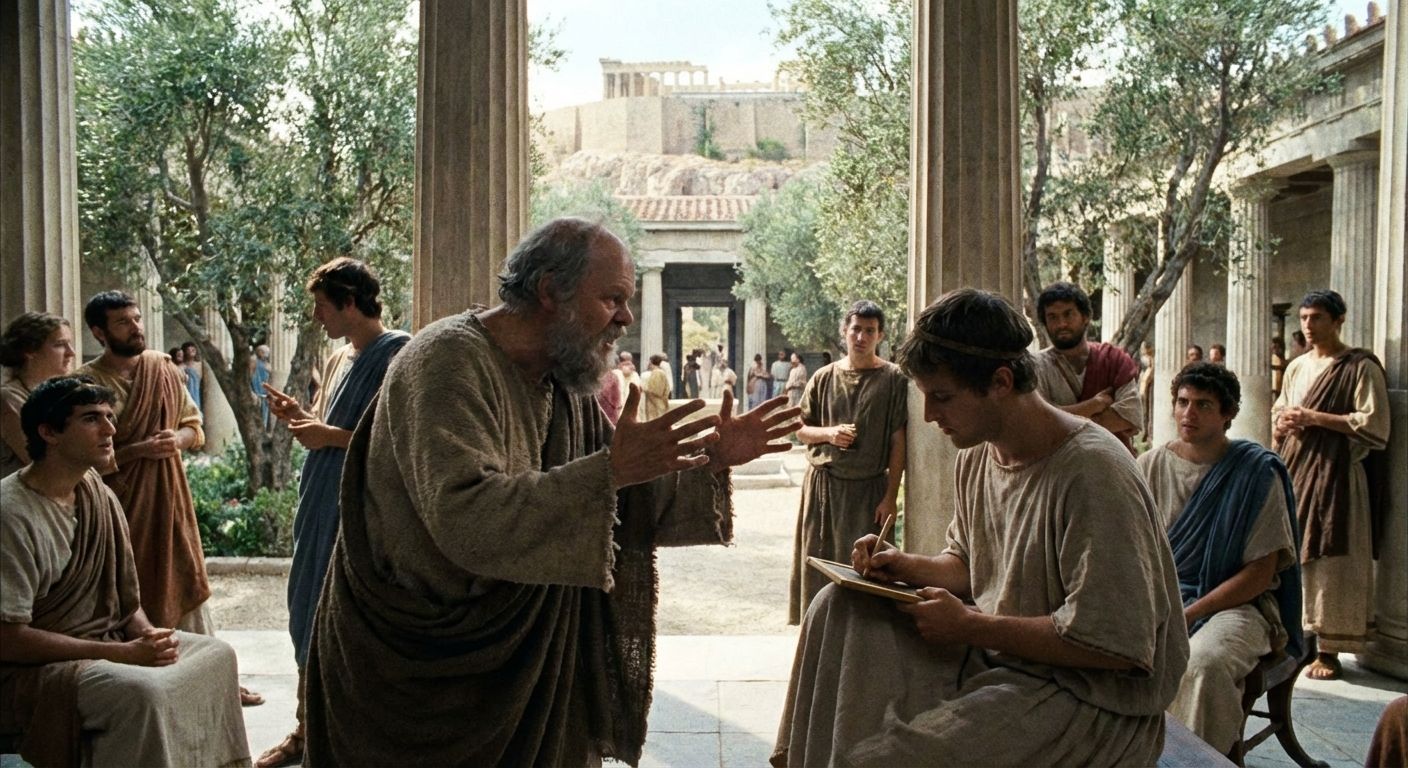
Ancient Greek Philosophy: Plato's Just Soul and Aristotle's Flourishing Life
An exploration of Plato's tripartite soul and the idea that justice is inner harmony, followed by Aristotle's virtue ethics, the concept of Eudaimonia as human flourishing, and the Doctrine of the Mean as a practical guide to developing good character.
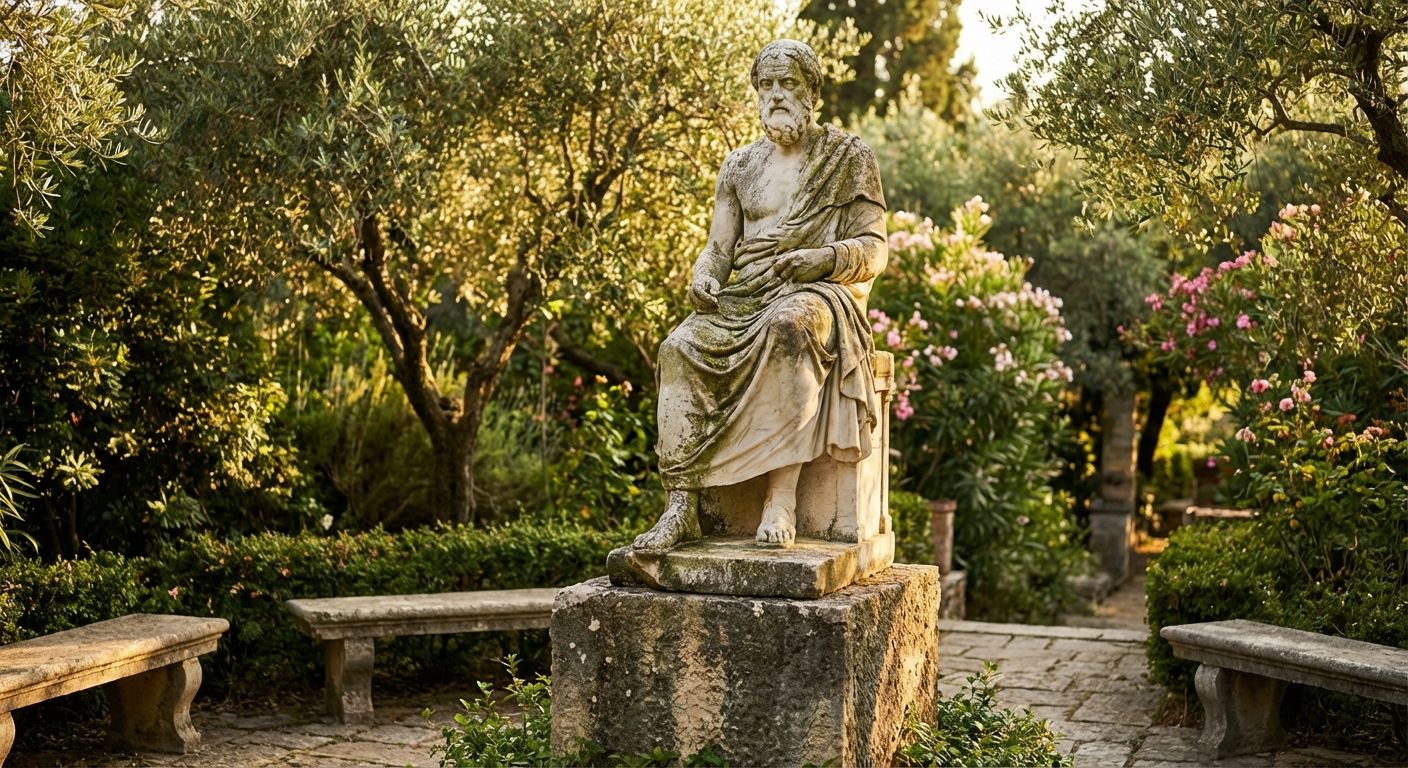
Stoicism: Finding Inner Peace with Epictetus, Seneca, and Marcus Aurelius
An in-depth, practical guide to Stoic philosophy. Covers the Dichotomy of Control, virtue as the sole good, key Stoic figures, and practical exercises including premeditatio malorum and the view from above.
The Art of Living: Epicureanism
An exploration of Epicurean philosophy, covering the distinction between types of desires, the goals of ataraxia and aponia, the importance of friendship, and the Epicurean argument against fearing death.
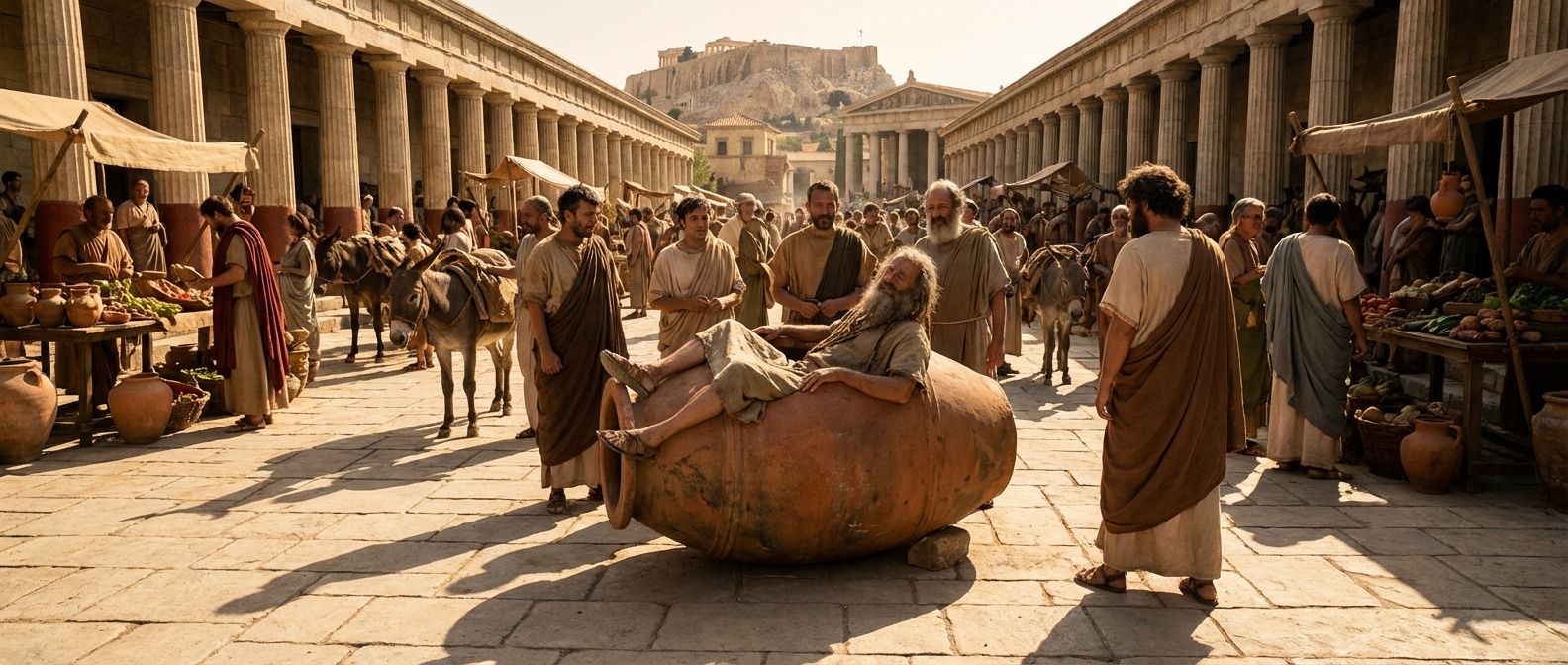
The Art of Living: Cynicism and Diogenes
An introduction to the philosophy of Cynicism through its most famous proponent, Diogenes of Sinope. Covers the core tenets of Cynicism, the concept of living in accordance with nature, and the practice of askesis.

Buddhist Philosophy: Understanding the Four Noble Truths and the Eightfold Path
A practical introduction to the core philosophical teachings of Buddhism, covering the Four Noble Truths, the concepts of Dukkha, Tanha, Anicca, and Anatta, and the Noble Eightfold Path as the practical route to liberation.

Hindu Philosophy: Living a Good Life Through Dharma, Karma, and Moksha
An exploration of the key ethical and existential concepts from Hindu philosophy relevant to living a good life, covering Dharma, Karma, the four Purusharthas, the four Ashramas, and the ultimate goal of Moksha.
Chinese Philosophy: Confucian Harmony and Taoist Flow
An introduction to the two most influential philosophies of China: Confucianism, with its focus on social harmony, virtue, and the cultivation of the self; and Taoism, with its emphasis on living in harmony with the natural order through effortless action and simplicity.

The Art of Living: The Good Life in Judaism, Christianity, and Islam
A comparative exploration of the ethical frameworks for a good life within the three Abrahamic faiths. Covers Tikkun Olam in Judaism, Agape love and the Beatitudes in Christianity, and the Five Pillars and Ihsan in Islam, highlighting both shared values and unique contributions.

The Art of Living: Utilitarianism and the Calculation of Happiness
An exploration of Utilitarian ethics, covering Jeremy Bentham's hedonic calculus and principle of utility, John Stuart Mill's distinction between higher and lower pleasures, classic thought experiments, and key critiques of the theory.

Kantian Ethics: Duty, Reason, and the Categorical Imperative
An exploration of Immanuel Kant's deontological ethics, covering the good will, the distinction between hypothetical and categorical imperatives, and the two main formulations of the Categorical Imperative: Universal Law and Humanity as an End.

Nietzsche: The Will to Power, the Übermensch, and Amor Fati
An introduction to Friedrich Nietzsche's most important ideas: his critique of traditional morality through the lens of master and slave morality, the concept of the Will to Power, the ideal of the Übermensch as a creator of meaning, and the life-affirming practice of Amor Fati.

The Art of Living: Existentialism with Sartre, de Beauvoir, and Camus
An exploration of 20th-century existentialism, covering Sartre's existence precedes essence and radical freedom, de Beauvoir's ethics of ambiguity, and Camus's philosophy of the absurd and rebellion.
Philosophy of Life: How to Think About Death
A comparative exploration of three major philosophical approaches to mortality: Epicurus's argument that death is nothing to us, the Stoic practice of memento mori, and the existentialist claim that awareness of death gives life its meaning.

Philosophy of Life: What is Happiness, Really?
A comparative deep-dive into four major philosophical accounts of happiness: Aristotle's eudaimonia, the Stoic apatheia, the Epicurean ataraxia, and the Utilitarian view of happiness as pleasure. Students will learn to distinguish these accounts, critique simple hedonism, and understand how each definition leads to a different way of living.

The Art of Living: Forging Your Personal Philosophy
A capstone deck guiding learners to synthesize ideas from across the course, evaluate philosophical traditions critically, identify personal values, and draft a coherent personal philosophy of life.
Learn The Art of Living: A Practical Guide to the Philosophy of Life differently
Auracle is an audio-first learning platform built for busy people. Memorize anything without looking at a screen.
Hands-Free Learning
Listen, interact, and review cards entirely through audio. Perfect for commuting, walking, or at the gym.
Spaced Repetition
Auracle uses a scientific algorithm to schedule your reviews at the optimal time, ensuring you never forget what you learn.
Learn how it works