Tutorial

AQA GCSE Physics: Half-Life and Radioactivity Hazards

Defines half-life and explains the random nature of radioactive decay. Covers how to determine half-life from a graph. Distinguishes between radioactive contamination and irradiation and describes the associated hazards. Also covers sources of background radiation.
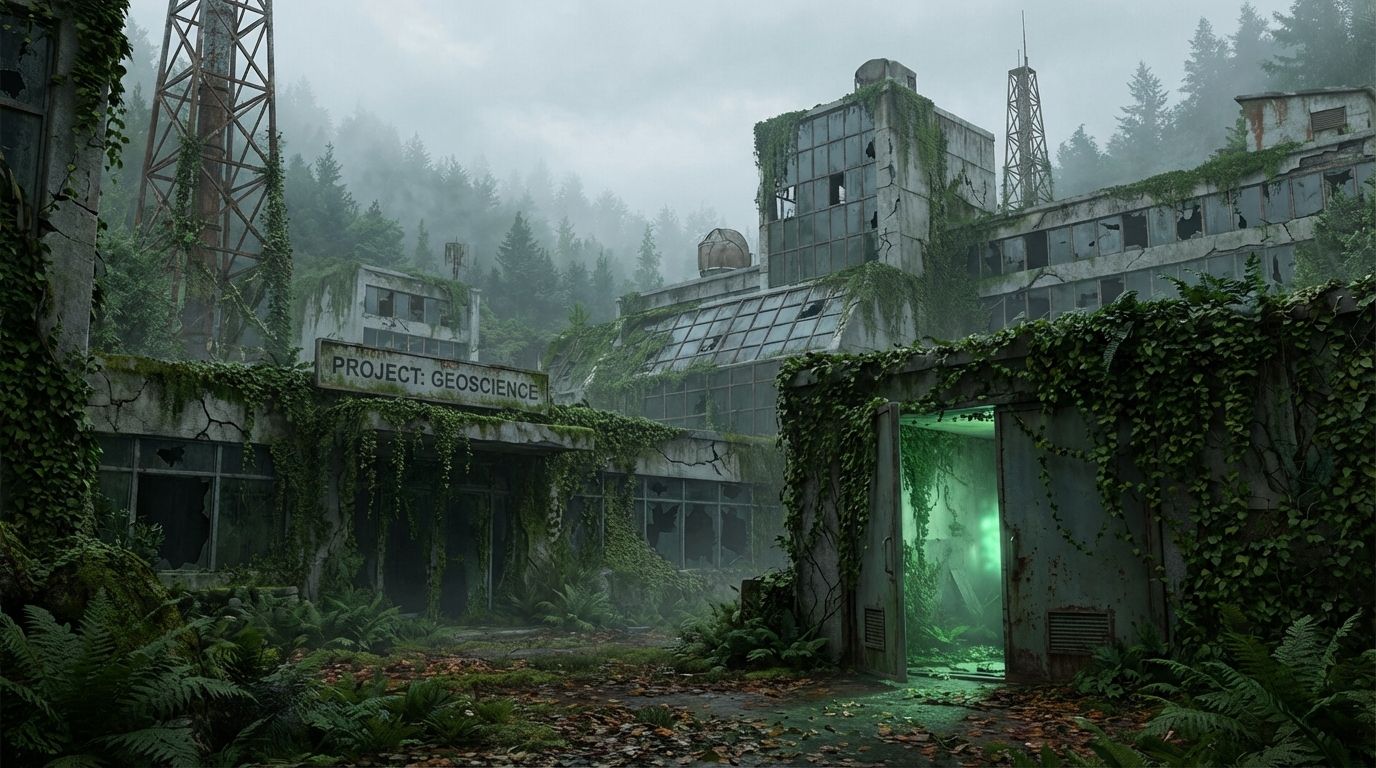
A wide-angle, atmospheric photograph of an old, abandoned scientific research facility, partially overgrown with lush vegetation, its structures showing signs of gradual decay and the passage of time. A subtle, ethereal green glow emanates from within a partially open doorway, hinting at unseen energies and residual scientific processes.

Management & Tools

Deck Contents

30 Cards
Lesson#1
In this deck, we'll explore the concept of half-life, a crucial idea for understanding how radioactive substances decay over time. You'll learn why radioactive decay is a random process and how to calculate the decline in radioactivity. We will also distinguish between the hazards of irradiation and contamination, and look at the sources of background radiation that are all around us.
Lesson#2
Imagine you're making popcorn. You can't predict exactly which kernel will be the next one to pop. All you know is that after a few minutes, most of them will have popped. Radioactive decay is similar. For a single unstable nucleus, its decay is a completely random event. We can't predict when it will happen. However, for a large number of nuclei, we can predict how long it will take for half of them to decay. This statistical predictability, despite individual randomness, is key to understanding radioactivity.
Quiz#3
What word describes the fact that it is impossible to predict when a specific atomic nucleus will decay?

random

Lesson#4
The predictability of radioactive decay for large numbers of atoms is described by the half-life. The half-life of a radioactive isotope is the time it takes for the number of undecayed nuclei in a sample to be reduced by half. Because the radioactivity, or 'activity', of a sample is proportional to the number of undecayed nuclei, the half-life can also be defined as the time required for the activity to fall to half its initial value. This is measured in units of time, such as seconds, years, or even millions of years.
Quiz#5
What is the term for the time it takes for the number of radioactive nuclei in a sample to halve?

half-life

Quiz#6
The half-life is also defined as the time it takes for the activity of a radioactive sample to fall to what fraction of its original level?

half

Login to View Content

Create a free account or log in to see all 30 cards and start studying this deck.

Learn AQA GCSE Physics: Half-Life and Radioactivity Hazards differently

Auracle is an audio-first learning platform built for busy people. Memorize anything without looking at a screen.

Hands-Free Learning

Listen, interact, and review cards entirely through audio. Perfect for commuting, walking, or at the gym.

Spaced Repetition

Auracle uses a scientific algorithm to schedule your reviews at the optimal time, ensuring you never forget what you learn.

Learn how it works

Ready to start the AQA GCSE Physics: Half-Life and Radioactivity Hazards audio deck?