Tutorial

Stoicism: Finding Inner Peace with Epictetus, Seneca, and Marcus Aurelius

An in-depth, practical guide to Stoic philosophy. Covers the Dichotomy of Control, virtue as the sole good, key Stoic figures, and practical exercises including premeditatio malorum and the view from above.
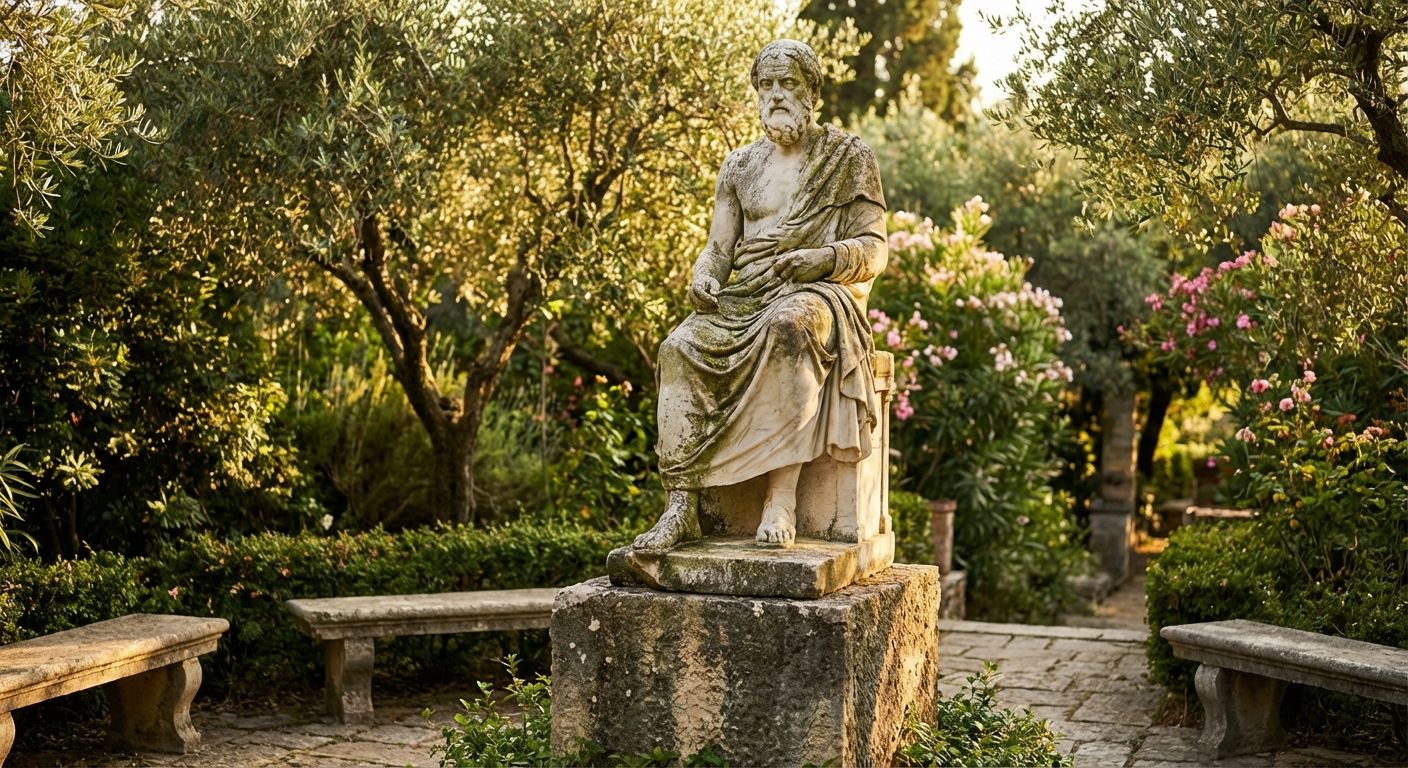
A weathered, ancient Greek statue stands in a serene garden, perfectly balanced on a stone pedestal. Golden sunlight bathes the scene, highlighting the statue's tranquil expression.

Management & Tools

Deck Contents

50 Cards
Lesson#1
Welcome to this deck on Stoic philosophy. Over the next few lessons, you will meet three of the most remarkable thinkers the ancient world produced: Epictetus, a man born into slavery who became one of Rome's most celebrated teachers; Seneca, a fabulously wealthy playwright and senator who knew exactly how a Stoic should live and spent his whole life struggling to do it; and Marcus Aurelius, the most powerful man in the world, who spent his nights writing a private journal reminding himself to be humble, patient, and good. What unites all three is a single, radical idea: that the secret to a good life has nothing to do with what happens to you, and everything to do with how you respond.
Lesson#2
Stoicism was born not in Rome but in Athens, around 300 BC. Its founder was a man named Zeno of Citium, a merchant from Cyprus who, according to legend, was shipwrecked on a voyage and lost everything. Stranded in Athens, he wandered into a bookshop and began reading about Socrates. He was so captivated that he asked the bookseller where he could find a man like that. The bookseller pointed to a philosopher passing in the street, and Zeno followed him. He spent the next years studying philosophy and eventually began teaching his own ideas. He did not have a school or a lecture hall. He taught in a public colonnade in the Athenian marketplace, a covered walkway decorated with painted murals. In Greek, a painted porch is called a stoa poikile. And that is where the word Stoicism comes from.
Quiz#3
Who founded the school of Stoicism?

Zeno of Citium

Quiz#4
Where did Zeno of Citium teach his philosophy, giving Stoicism its name?

the Painted Porch

Lesson#5
From Athens, Stoicism travelled to Rome, where it found its most famous voices. By the time of Epictetus, Seneca, and Marcus Aurelius, Stoicism had become the dominant philosophy of the Roman educated class. It was practical, serious, and deeply concerned with one question above all others: how should I live? The Stoics were not interested in abstract puzzles for their own sake. They wanted a philosophy you could actually use, a set of principles that would hold up under the pressure of real life, under illness, under loss, under the temptations of power and wealth. That is why Stoicism has survived for two thousand years and why it is more popular today than at almost any point in its history.
Lesson#6
Epictetus was born around 50 AD, probably in the city of Hierapolis in what is now Turkey. He was born into slavery. His master, a man named Epaphroditus, was himself a former enslaved person who had risen to become one of Emperor Nero's secretaries, a powerful and brutal man. According to one account, Epaphroditus once twisted Epictetus's leg to amuse himself, or perhaps to test him. Epictetus reportedly said, calmly, as it was happening: you are going to break it. And when it broke: I told you so. Whether or not this story is literally true, it has the ring of something Epictetus might actually have said. It perfectly captures the Stoic ideal: total composure in the face of things you cannot change. Your leg is not in your control. Your response to its breaking is.

Login to View Content

Create a free account or log in to see all 50 cards and start studying this deck.

Learn Stoicism: Finding Inner Peace with Epictetus, Seneca, and Marcus Aurelius differently

Auracle is an audio-first learning platform built for busy people. Memorize anything without looking at a screen.

Hands-Free Learning

Listen, interact, and review cards entirely through audio. Perfect for commuting, walking, or at the gym.

Spaced Repetition

Auracle uses a scientific algorithm to schedule your reviews at the optimal time, ensuring you never forget what you learn.

Learn how it works

Ready to start the Stoicism: Finding Inner Peace with Epictetus, Seneca, and Marcus Aurelius audio deck?