Tutorial

AQA GCSE Geography: Paper 1 - Case Study of a Tropical Storm: Typhoon Haiyan 2013

Learn the specific details of Typhoon Haiyan in the Philippines as a named example of a tropical storm. This deck covers the causes, primary and secondary effects, and immediate and long-term responses.
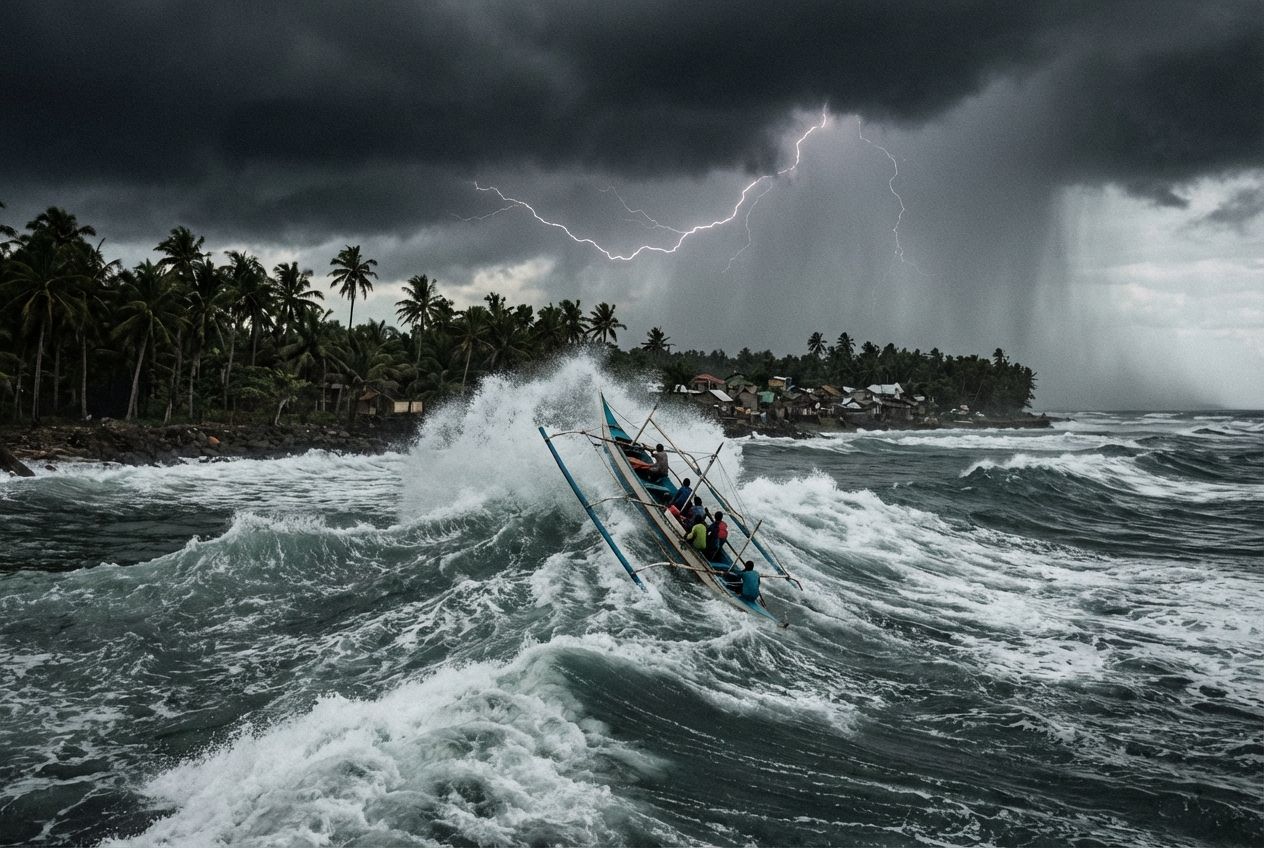
A dramatic wide-angle photograph capturing a traditional Filipino outrigger boat (banca) being tossed by colossal, churning ocean waves under a dark, stormy sky, hinting at an approaching storm surge. The scene emphasizes the raw, overwhelming power of nature with vivid realism, composed for a 3:2 landscape frame.

Management & Tools

Deck Contents

28 Cards
Lesson#1
In this deck, we'll cover a vital case study for your GCSE Geography exam: Typhoon Haiyan. This was one of the strongest tropical storms ever recorded. You'll learn where it happened, the devastating effects it had, and how the country and the world responded. Knowing these details is essential for answering higher-mark questions on managing weather hazards.
Lesson#2
Typhoon Haiyan, known locally as Typhoon Yolanda, made landfall in the Philippines in November 2013. It was a Category 5 storm on the Saffir-Simpson scale, which is the highest possible category. This means it had incredibly strong winds and brought enormous amounts of rain.
Quiz#3
In which country did Typhoon Haiyan make landfall in 2013?

Philippines

Quiz#4
What was the highest possible category reached by Typhoon Haiyan on the Saffir-Simpson scale?

Category 5

Quiz#5
What is the local name for Typhoon Haiyan in the Philippines?

Yolanda

Lesson#6
The impacts of a hazard are split into two types. Primary effects are the direct results of the storm itself. For Typhoon Haiyan, this included winds of up to 315 kilometres per hour, heavy rainfall, and most devastatingly, a massive storm surge. A storm surge is a rise in sea level caused by the storm's winds, which pushes a huge wall of water onto the coast.

Login to View Content

Create a free account or log in to see all 28 cards and start studying this deck.

Learn AQA GCSE Geography: Paper 1 - Case Study of a Tropical Storm: Typhoon Haiyan 2013 differently

Auracle is an audio-first learning platform built for busy people. Memorize anything without looking at a screen.

Hands-Free Learning

Listen, interact, and review cards entirely through audio. Perfect for commuting, walking, or at the gym.

Spaced Repetition

Auracle uses a scientific algorithm to schedule your reviews at the optimal time, ensuring you never forget what you learn.

Learn how it works

Ready to start the AQA GCSE Geography: Paper 1 - Case Study of a Tropical Storm: Typhoon Haiyan 2013 audio deck?