Tutorial

AQA GCSE Chemistry: Climate Change and Pollutants

Covers greenhouse gases and their role in maintaining Earth's temperature, the link between human activities and enhanced global warming, the potential consequences of climate change, and the formation and effects of common atmospheric pollutants from burning fuels.
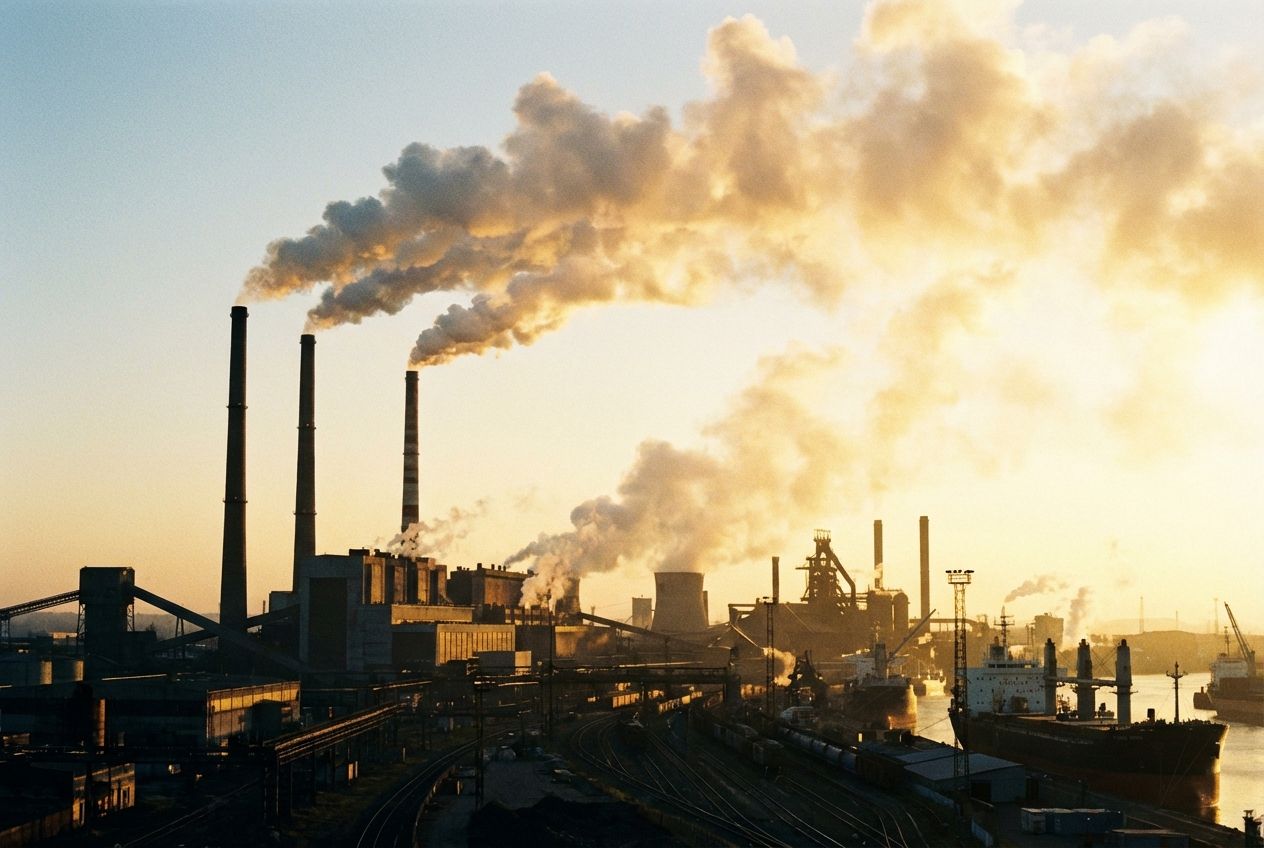
A dramatic wide-angle photograph of a sprawling industrial complex at dawn, with multiple towering smokestacks emitting plumes of smoke that catch the golden light, creating a powerful, almost ethereal haze against the emerging sky. The scene is composed for a 3:2 landscape frame, emphasizing both human activity and the vastness of the atmosphere.

Management & Tools

Deck Contents

37 Cards
Lesson#1
In this deck, we'll explore the science behind climate change and atmospheric pollution. You'll learn about the greenhouse effect, how human activities are changing our planet's climate, and the consequences of these changes. We'll also investigate the pollutants produced when we burn fuels, and their effects, such as acid rain and global dimming.
Lesson#2
The Earth's temperature is carefully balanced, partly by gases in the atmosphere that act like a blanket, trapping heat. This is called the greenhouse effect, and without it, the Earth would be too cold for life as we know it. The main gases responsible for this are called greenhouse gases.
Quiz#3
What are the three main greenhouse gases in the Earth's atmosphere?

water vapour, carbon dioxide, methane

Lesson#4
The greenhouse effect works in two steps. First, the sun emits energy that travels to Earth as short-wavelength radiation, like visible light and ultraviolet rays. This radiation passes through the atmosphere and warms the surface of the Earth.
Quiz#5
What type of radiation from the sun passes through the atmosphere to warm the Earth?

short wavelength radiation

Lesson#6
After the Earth's surface is warmed, it radiates some of this energy back towards space. However, this is now long-wavelength radiation, also known as infrared radiation or heat. Greenhouse gases in the atmosphere are very good at absorbing this long-wavelength radiation, preventing it from escaping and therefore keeping the atmosphere warm.

Login to View Content

Create a free account or log in to see all 37 cards and start studying this deck.

Learn AQA GCSE Chemistry: Climate Change and Pollutants differently

Auracle is an audio-first learning platform built for busy people. Memorize anything without looking at a screen.

Hands-Free Learning

Listen, interact, and review cards entirely through audio. Perfect for commuting, walking, or at the gym.

Spaced Repetition

Auracle uses a scientific algorithm to schedule your reviews at the optimal time, ensuring you never forget what you learn.

Learn how it works

Ready to start the AQA GCSE Chemistry: Climate Change and Pollutants audio deck?

AQA GCSE Chemistry: Climate Change & Pollutants