Tutorial

AQA GCSE Biology: Biodiversity & Human Impact

This deck defines biodiversity and explains its importance. It then explores the negative impact of human activities on ecosystems, including waste management issues, land use, deforestation, and global warming. Finally, it covers strategies for maintaining biodiversity.
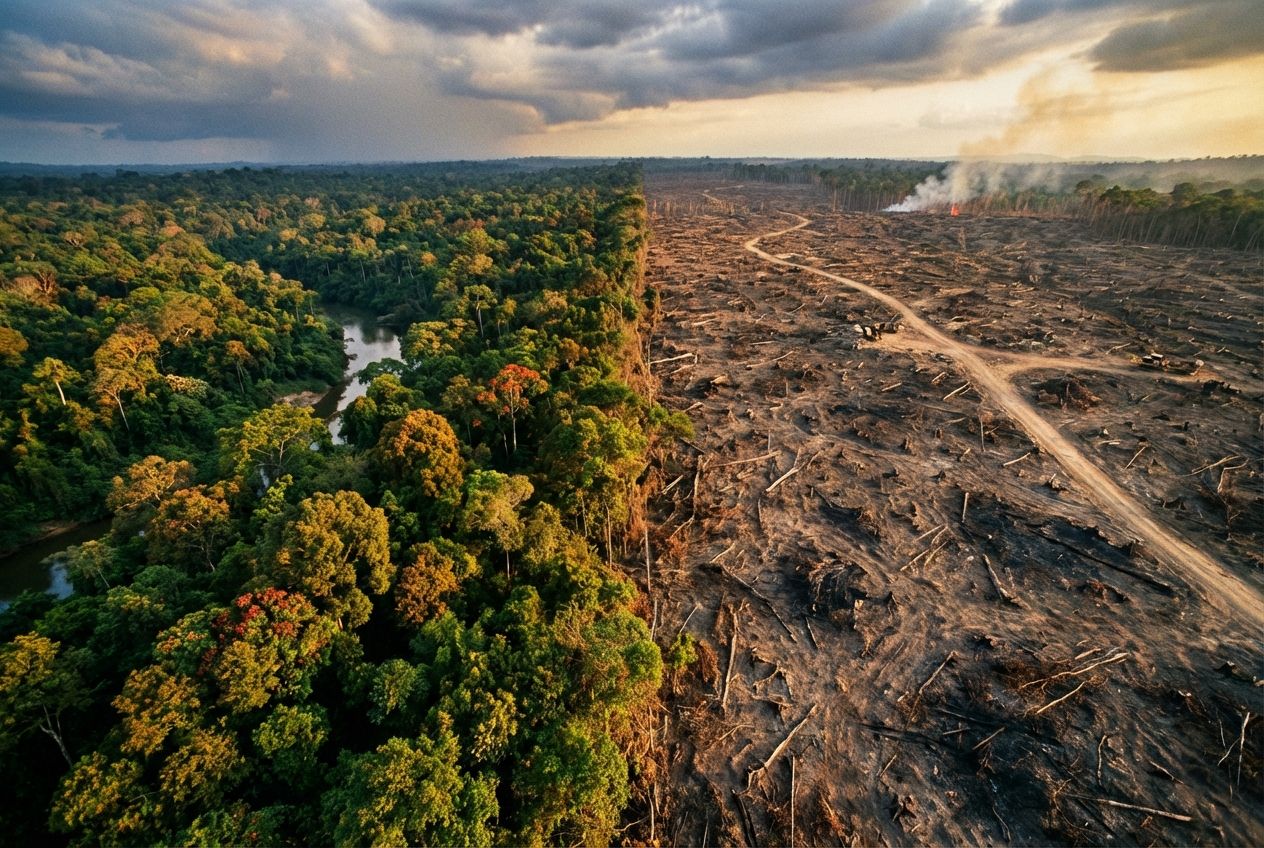
A dramatic wide-angle photograph from an elevated perspective captures the stark contrast between a vibrant, dense tropical rainforest canopy bursting with biodiversity on one side, and a barren, recently deforested landscape with scattered tree stumps and a faint plume of smoke on the other, hinting at human impact and land use. The scene is illuminated by dramatic natural light, composed for a 3:2 landscape frame.

Management & Tools

Deck Contents

43 Cards
Lesson#1
In this deck, we'll explore biodiversity, which is the incredible variety of life on Earth. We'll start by defining what it is and why it's so important for the health of our planet. Then, we'll examine the significant negative impacts human activities are having, from pollution and deforestation to global warming. Finally, we'll look at the positive steps we can take to protect and maintain biodiversity for the future.
Lesson#2
So, what exactly is biodiversity? The term refers to the variety of all the different species of organisms on our planet, or within a specific ecosystem. A rainforest, for example, has very high biodiversity because it's home to millions of different species of plants, animals, and microorganisms. A wheat field, on the other hand, has very low biodiversity.
Quiz#3
What is the term for the variety of all different species of organisms on Earth, or within an ecosystem?

biodiversity

Lesson#4
High biodiversity is crucial for the stability of ecosystems. When there's a wide variety of species, ecosystems are more resilient to change. It means species are less dependent on just one or two other species for things like food and shelter. If one species is affected by a disease, the others that rely on it have alternative sources to turn to, preventing a total collapse of the food web.
Quiz#5
In ecology, why is high biodiversity considered crucial for an ecosystem?

it ensures stability

Lesson#6
For most of human history, our population grew very slowly. However, in the last few centuries, it has increased dramatically. This rapid growth is largely thanks to modern medicine, which has reduced deaths from disease, and modern farming methods, which have allowed us to produce enough food to support a much larger population.

Login to View Content

Create a free account or log in to see all 43 cards and start studying this deck.

Learn AQA GCSE Biology: Biodiversity & Human Impact differently

Auracle is an audio-first learning platform built for busy people. Memorize anything without looking at a screen.

Hands-Free Learning

Listen, interact, and review cards entirely through audio. Perfect for commuting, walking, or at the gym.

Spaced Repetition

Auracle uses a scientific algorithm to schedule your reviews at the optimal time, ensuring you never forget what you learn.

Learn how it works

Ready to start the AQA GCSE Biology: Biodiversity & Human Impact audio deck?