Tutorial

AQA GCSE Geography: Paper 1 (Optional) - Physical Landscapes: Coasts

This is an optional topic. Check with your teacher before studying. Learn about coastal processes of erosion, transportation, and deposition, and the landforms they create. This deck covers headlands, bays, cliffs, wave-cut platforms, beaches, spits, and bars.
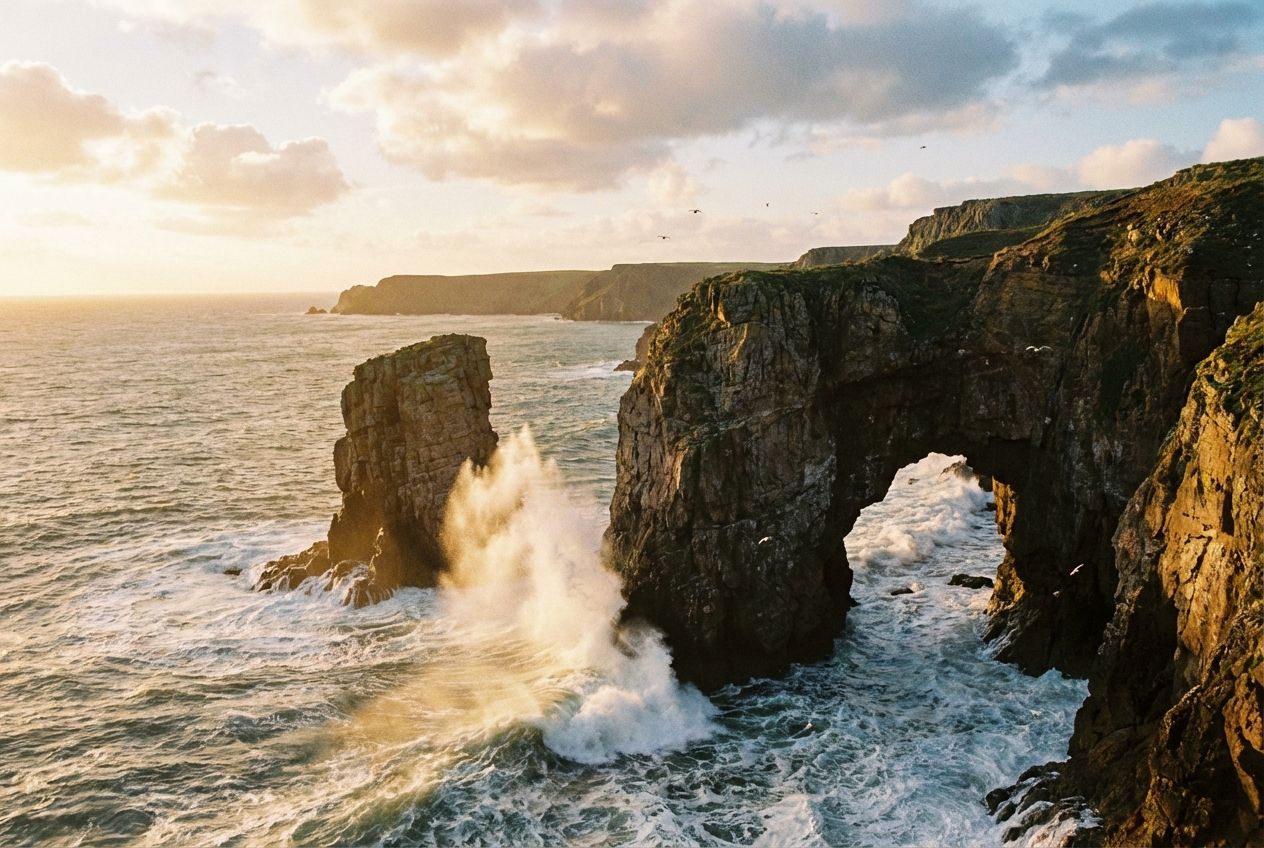
A stunning 3:2 landscape photograph of a rugged British coastline at golden hour, featuring a prominent sea arch or stack carved into a headland. Powerful waves crash against the rock formations, sending spray high into the air, emphasizing the dynamic processes of coastal erosion and landform creation.

Management & Tools

Deck Contents

39 Cards
Lesson#1
Welcome to this deck on Coastal Landscapes. This is an optional topic for Paper 1 of your AQA GCSE Geography exam, so it's important to check with your teacher that this is one of the topics your school has chosen to study. In this deck, we'll explore the powerful forces that shape our coastlines, looking at the processes of erosion, transportation, and deposition. You'll learn how these processes create dramatic landforms like cliffs, stacks, spits, and bars.
Lesson#2
Let's begin with coastal erosion, which is the wearing away and breaking up of rock along the coast. The sea is a relentless force, and it uses four main methods to attack the land. Understanding these four processes is essential for explaining how coastal landforms are created, which is a common exam requirement.
Lesson#3
The first process of coastal erosion is hydraulic action. This is the sheer power of the waves as they smash against a cliff. Water is forced into cracks in the rock, compressing the air inside. As the wave retreats, the air expands explosively, which weakens the rock and can break off pieces over time. Think of it like a constant series of mini-explosions shattering the rock from within.
Quiz#4
What is the name for the coastal erosion process where the force of water and compressed air breaks rock apart?

hydraulic action

Lesson#5
The second process is abrasion. This is when waves pick up and hurl sediment, like sand and pebbles, against the base of a cliff. This material acts like sandpaper, grinding away at the cliff face and smoothing it down. The larger the sediment and the more powerful the waves, the faster the rate of abrasion.
Quiz#6
What is the name for the coastal erosion process where waves use sediment to grind away at a cliff face?

abrasion

Login to View Content

Create a free account or log in to see all 39 cards and start studying this deck.

Learn AQA GCSE Geography: Paper 1 (Optional) - Physical Landscapes: Coasts differently

Auracle is an audio-first learning platform built for busy people. Memorize anything without looking at a screen.

Hands-Free Learning

Listen, interact, and review cards entirely through audio. Perfect for commuting, walking, or at the gym.

Spaced Repetition

Auracle uses a scientific algorithm to schedule your reviews at the optimal time, ensuring you never forget what you learn.

Learn how it works

Ready to start the AQA GCSE Geography: Paper 1 (Optional) - Physical Landscapes: Coasts audio deck?