Tutorial

AQA GCSE Geography: Paper 1 - Understand Weather Hazards

Learn about global atmospheric circulation patterns and how they lead to different weather hazards. This deck covers the three-cell model (Hadley, Ferrel, Polar), the formation of tropical storms, and examples of extreme weather in the UK.
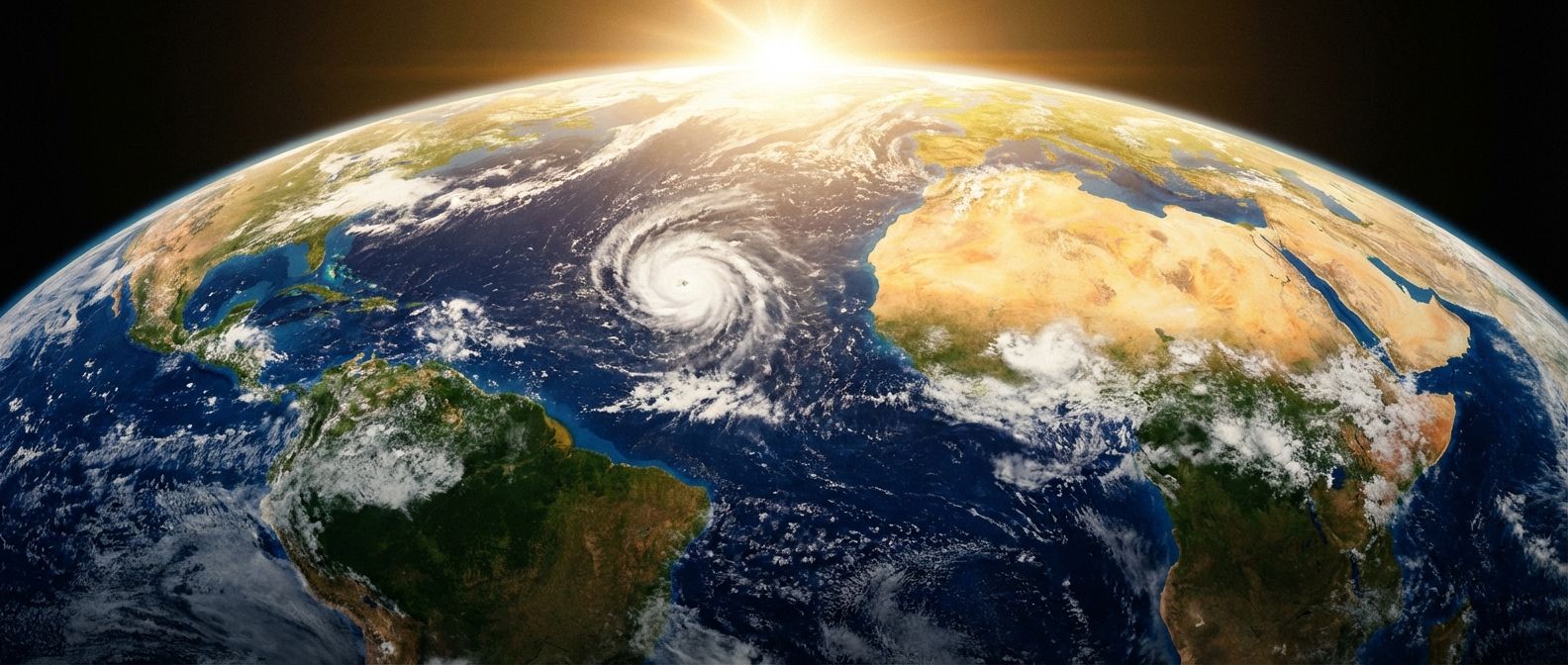
A dramatic, wide-angle photograph of the Earth from space, bathed in the golden light of the sun, with swirling, dynamic cloud formations visible over oceans, hinting at powerful weather systems and a distant tropical storm. The distinct bands of deserts and rainforests are subtly visible on the landmasses below.

Management & Tools

Deck Contents

43 Cards
Lesson#1
Welcome to this deck on weather hazards. We'll explore how the Earth's atmosphere works on a global scale, creating distinct climate zones and powerful weather systems. You'll learn about the three-cell model of atmospheric circulation, how this system leads to the formation of tropical storms, and we'll finish by looking at examples of extreme weather right here in the UK.
Lesson#2
The engine that drives all weather on Earth is the sun. Because the Earth is a sphere, the sun's energy is most concentrated at the equator, making it hottest there, and least concentrated at the poles, making them coldest. This difference in heating creates a global system of air circulation, as the atmosphere tries to move heat from the equator towards the poles to balance things out.
Quiz#3
What is the primary source of energy that drives global atmospheric circulation?

The Sun

Lesson#4
This global circulation system can be simplified into a model with three large loops of moving air in each hemisphere. These are called circulation cells. The three cells are the Hadley cell, the Ferrel cell, and the Polar cell. Together, they explain why we have rainforests at the equator, deserts at 30 degrees latitude, and unsettled weather in the UK.
Quiz#5
In the global atmospheric circulation model, what is the name of the cell found between the equator and approximately 30 degrees north and south?

Hadley cell

Lesson#6
Let's start with the Hadley cell. At the equator, the intense solar heating warms the air, causing it to rise. As it rises, it cools and condenses, forming huge clouds and leading to heavy rainfall. This is why tropical rainforests are found along the equator. This rising air creates a zone of low pressure.

Login to View Content

Create a free account or log in to see all 43 cards and start studying this deck.

Learn AQA GCSE Geography: Paper 1 - Understand Weather Hazards differently

Auracle is an audio-first learning platform built for busy people. Memorize anything without looking at a screen.

Hands-Free Learning

Listen, interact, and review cards entirely through audio. Perfect for commuting, walking, or at the gym.

Spaced Repetition

Auracle uses a scientific algorithm to schedule your reviews at the optimal time, ensuring you never forget what you learn.

Learn how it works

Ready to start the AQA GCSE Geography: Paper 1 - Understand Weather Hazards audio deck?