GCSE Physics (AQA): Paper 2
AQA GCSE Physics Paper 2, covered. Forces, waves, magnetism, space – all the topics, all the equations, all the required practicals.
GCSE Physics (AQA): Paper 2
AQA GCSE Physics Paper 2, covered. Forces, waves, magnetism, space – all the topics, all the equations, all the required practicals.
Decks in this Course
13 items
AQA GCSE Physics: Forces and Motion
Covers the fundamental concepts of forces and motion, including the distinction between scalar and vector quantities, contact and non-contact forces, gravity, mass vs weight, and calculating resultant forces.
AQA GCSE Physics: Work, Energy, and Elasticity
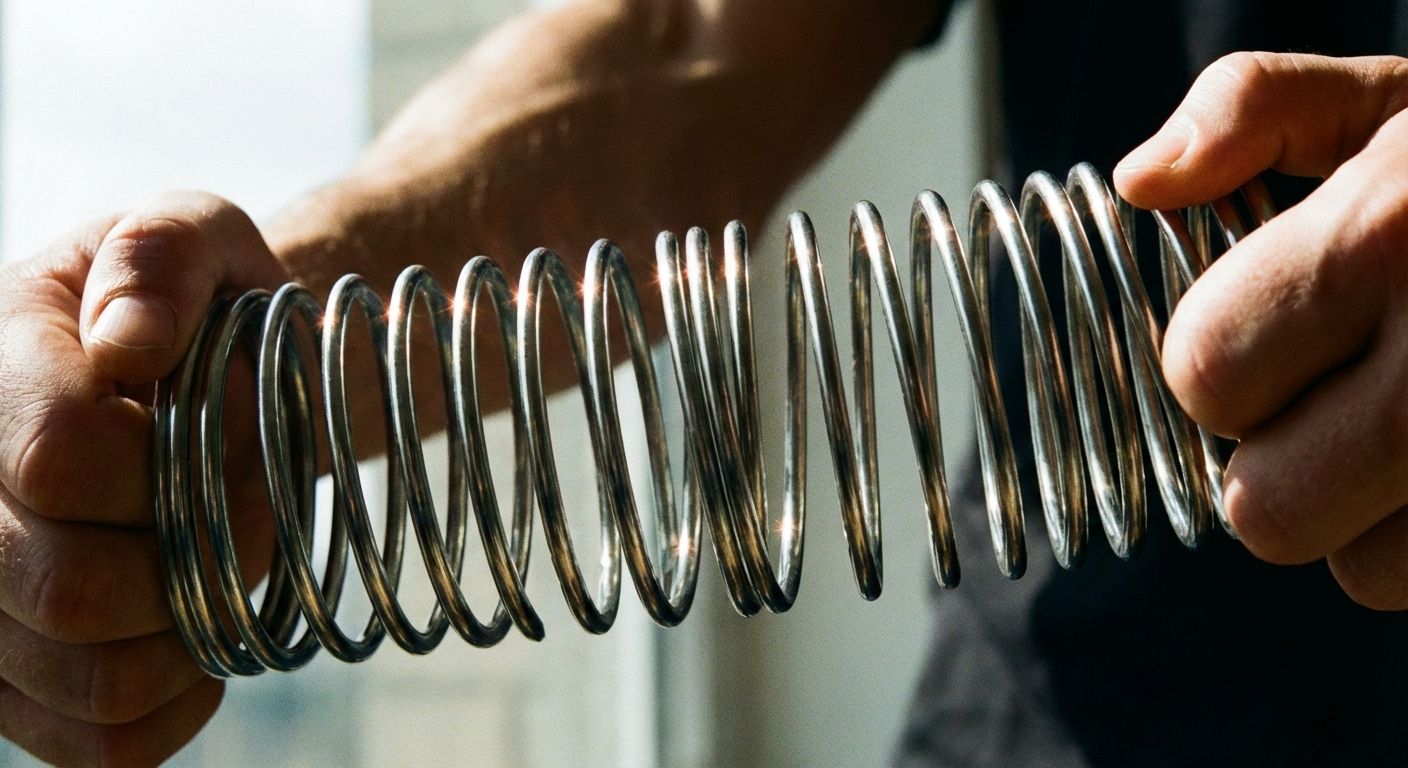
Explores the relationship between forces, energy transfer, and deformation. Covers work done, the link between work done and energy, Hooke's Law for springs, the limit of proportionality, and the difference between elastic and inelastic deformation.

AQA GCSE Physics: Newton's Laws and Momentum
Covers Newton's three laws of motion, the concept of inertia, acceleration, terminal velocity, the definition of momentum, and the principle of conservation of momentum in a closed system.

AQA GCSE Physics: Moments, Levers, and Pressure
Covers the turning effect of forces. Includes the concept of moments, the principle of moments for balanced objects, the function of levers and gears, and the concept of pressure in fluids, including atmospheric pressure.

AQA GCSE Physics: Properties of Waves
Introduces the fundamental properties of mechanical waves. Covers the distinction between transverse and longitudinal waves, key definitions (amplitude, wavelength, frequency, period), the wave speed equation, reflection, and the properties of sound waves.
AQA GCSE Physics: The Electromagnetic Spectrum
Covers the full range of electromagnetic waves, including their order, common properties, and the specific uses and dangers of each type.
AQA GCSE Physics: Light and Lenses
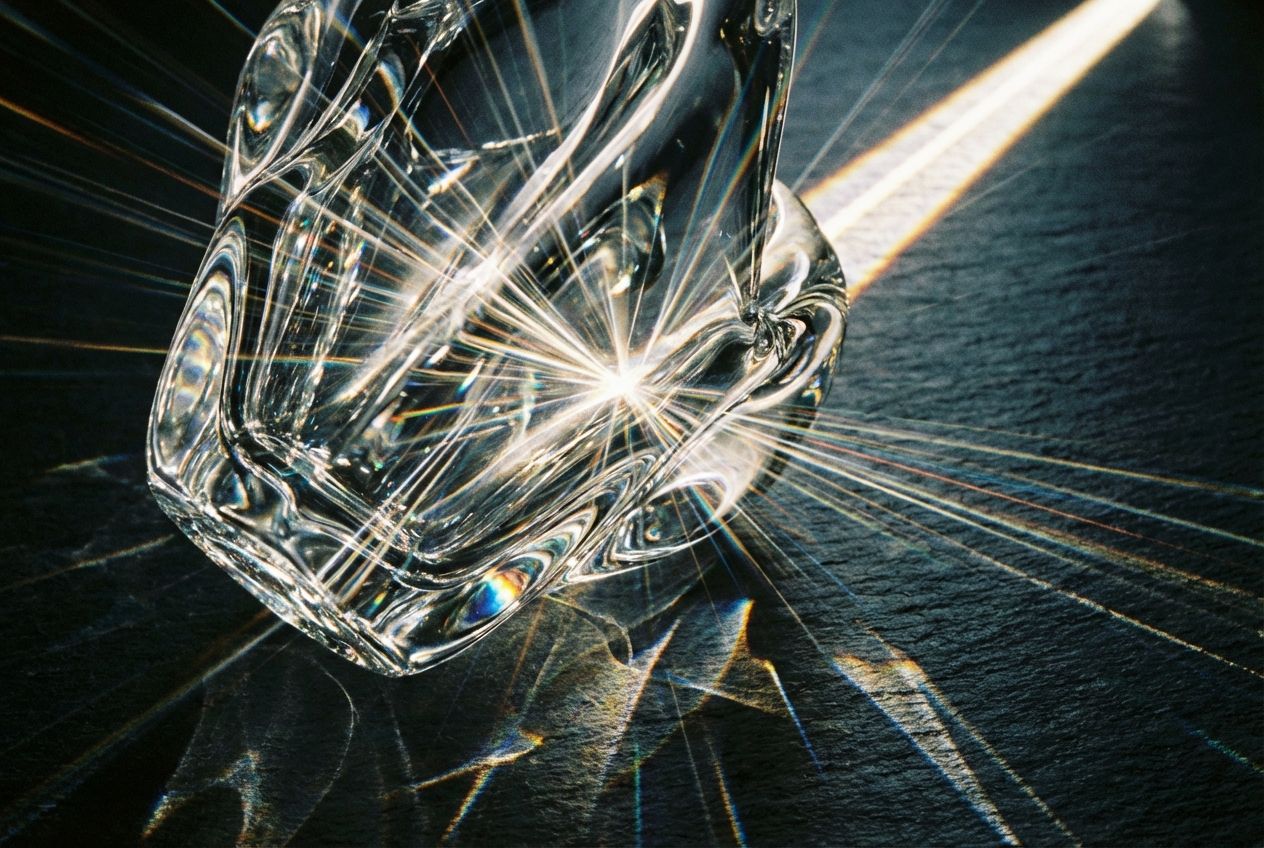
Learn about the behaviour of visible light, including reflection, refraction, and how convex and concave lenses form real and virtual images.
AQA GCSE Physics: Black Body Radiation
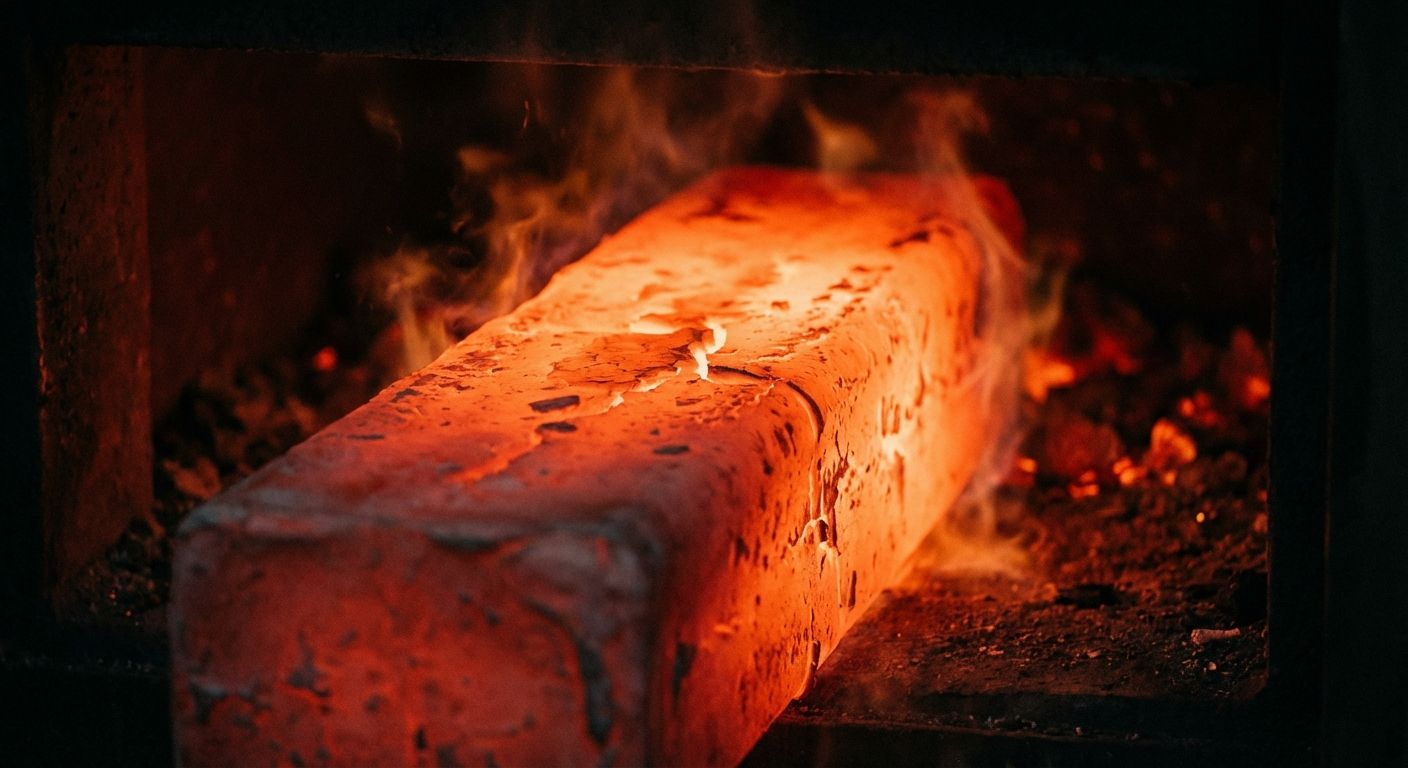
Covers thermal radiation. Includes the concepts of emission and absorption of infrared radiation, how the nature of a surface affects this, the definition of a perfect black body, and the relationship between an object's temperature and the radiation it emits.
AQA GCSE Physics: Magnetism and The Motor Effect
Covers permanent and induced magnetism, magnetic fields, and the motor effect. Includes the force on a current-carrying conductor in a magnetic field, Fleming's left-hand rule, and the application of the motor effect in electric motors and loudspeakers.
AQA GCSE Physics: The Generator Effect and Transformers
Covers electromagnetic induction. Includes how a potential difference can be induced in a conductor (the generator effect), and its application in alternators, dynamos, and microphones. Also covers the structure and function of step-up and step-down transformers.
AQA GCSE Physics: Our Solar System and Stars
Covers the structure of our solar system, the principles of orbital motion for planets, moons, and satellites (both natural and artificial), and the complete life cycle of stars, from protostar to their final stages (white dwarf, neutron star, or black hole).
AQA GCSE Physics: The Expanding Universe
Covers the evidence for the Big Bang theory. Includes the concept of red-shift in light from distant galaxies, how red-shift provides evidence for the expansion of the universe, and how this supports the Big Bang model for the origin of the universe.
AQA GCSE Physics: Paper 2 Required Practicals
A dedicated revision deck covering the five required practicals for AQA GCSE Physics Paper 2. For each practical, it covers the aim, independent, dependent and control variables, a summary of the method, potential sources of error, and safety precautions.
Learn GCSE Physics (AQA): Paper 2 differently
Auracle is an audio-first learning platform built for busy people. Memorize anything without looking at a screen.
Hands-Free Learning
Listen, interact, and review cards entirely through audio. Perfect for commuting, walking, or at the gym.
Spaced Repetition
Auracle uses a scientific algorithm to schedule your reviews at the optimal time, ensuring you never forget what you learn.
Learn how it works