
German A2: Everyday Foundations
You've learned the German basics. Now it's time to actually use them in the wild – to tell a story, navigate bureaucracy, and deal with things when they inevitably go wrong.
German A2: Everyday Foundations
You've learned the German basics. Now it's time to actually use them in the wild – to tell a story, navigate bureaucracy, and deal with things when they inevitably go wrong.
Decks in this Course
34 itemsReady to stop sounding like a textbook and start connecting ideas in German? This is your A2 upgrade, focused entirely on spoken language. We'll get you linking sentences together to give reasons, tell stories about your weekend, ask for things politely (without just saying 'bitte'), and describe the world around you with more detail. You'll learn how to handle conversations when you don't understand, ask indirect questions, and give directions that actually make sense. It's the practical grammar you need to move beyond basic phrases. This course is built for the A2 level of the CEFR. It's a big step up from A1, but we'll drill the core structures you need without burying you in grammar tables.

German A2: Polite Spoken Clarification
Learn essential German phrases for polite clarification, including how to ask someone to repeat themselves or speak more slowly.

German A2: Verb-Final Connector Clauses
Learn to connect your ideas in German using subordinate clauses with 'weil', 'wenn', 'dass', 'damit', and 'ob'. This deck focuses on the verb-final word order essential for A2 level fluency.

German A2: Indirect Spoken Questions
Learn to ask polite indirect questions in spoken German using common frames like 'Können Sie mir sagen...?' and 'Ich möchte wissen...'.

German A2: Consequence and Contrast in Speech
Learn to connect ideas in spoken German using consequence connectors like 'deshalb' and 'deswegen', and contrast connectors like 'trotzdem' and 'zwar ... aber'.

German A2: Personal and Possessive Reference
Learn to use German personal and possessive pronouns in the accusative and dative cases to refer to people and their belongings in natural speech.

German A2: Selecting, Identifying and Indefinite Reference
Learn to use German demonstrative and indefinite pronouns like 'dieser', 'jeder', and 'alles' to refer to people and things in conversation.

German A2: Spoken Adjective Description and Comparison
Learn German A2 adjective endings after definite and indefinite articles, and how to make comparisons with 'als' and 'wie' for spoken descriptions.

German A2: Simple Relative Clauses
Learn to use simple German relative clauses with der, die, das, den, and dem to describe people and things more clearly in the nominative, accusative, and dative cases.

German A2: Expanded Spoken Past Narration
Learn to narrate past events in German using the perfect tense, including separable verbs, inseparable verbs, and verbs of motion with 'sein'.

German A2: Modal Verbs in the Past
Learn to use German modal verbs like 'können' and 'müssen' in the past tense (Präteritum) to talk about former abilities, obligations, and wishes.

German A2: Reflexive Verbs in Spoken Interaction
Learn common German reflexive verbs for A2-level spoken interaction. This deck covers daily routines, feelings, and social situations.

German A2: Fixed-Preposition Verbs and Pronominal Reference
Learn common German verbs with fixed prepositions like 'warten auf' and 'sprechen mit'. This deck also covers how to ask questions about people and things using these verbs.

German A2: Polite Requests, Wishes, and Suggestions
Learn to make polite requests, express wishes, and give suggestions in German using the present-time Konjunktiv II forms like könnte, würde, hätte, and wäre.

German A2: Two-Way Prepositions for Position and Placement
Learn German two-way prepositions to describe location with the dative case and direction with the accusative case, using key position and placement verbs.
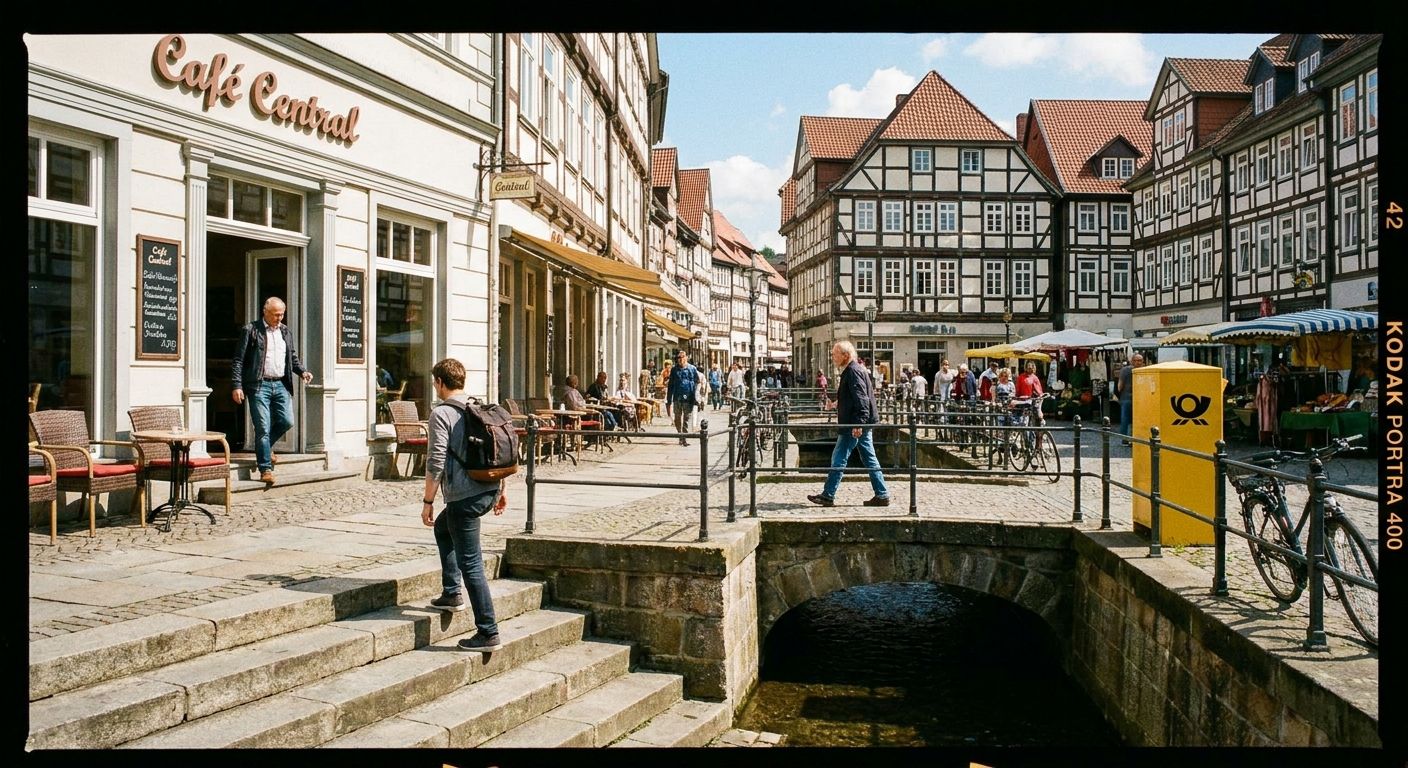
German A2: Route and Local Orientation Language
Learn to give and understand spoken directions in German using key adverbs and prepositions for routes and local orientation at an A2 level.

German A2: Spoken Time Relations
Learn essential German A2 temporal prepositions like 'seit', 'vor', 'für', and 'ab' to place events in time, describe schedules, and talk about duration.
Learn German A2: Everyday Foundations differently
Auracle is an audio-first learning platform built for busy people. Memorize anything without looking at a screen.
Hands-Free Learning
Listen, interact, and review cards entirely through audio. Perfect for commuting, walking, or at the gym.
Spaced Repetition
Auracle uses a scientific algorithm to schedule your reviews at the optimal time, ensuring you never forget what you learn.
Learn how it works